The 1–10 Grading Scale, Decoded: What PSA, BGS, and SGC Are Actually Telling You
Every graded card carries a number, but knowing what that number really reflects changes how you buy, sell, and negotiate.
What Happened
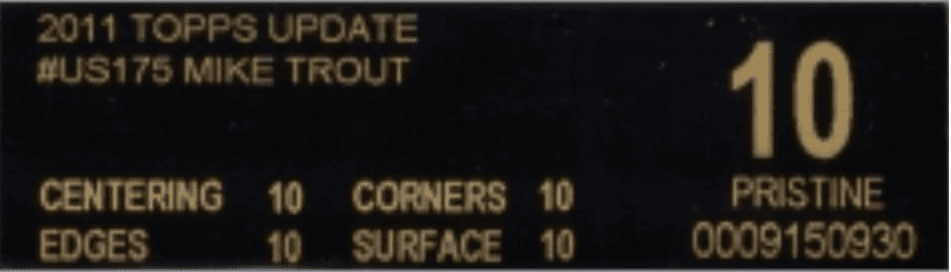
Card grading assigns a numerical score from 1 to 10 to reflect a card's physical condition, with PSA, BGS, and SGC as the three dominant companies using that scale. A 10 — Gem Mint — means a card is virtually flawless: centering at 55/45 or better on both axes, sharp corners, and a surface free of scratches or print defects. Each step down from there corresponds to a progressively more visible category of wear, from the minor single-flaw standard of a 9 all the way to heavy creasing and surface damage at the low end of the scale.
Why Collectors Should Care
The grade on a slab is not just a condition descriptor — it is a pricing signal, a negotiating position, and in some cases a trap. A card sitting at a PSA 8 and a PSA 10 can represent a tenfold price difference on the same issue, and the gap between a 9 and a 10 is often where the most money lives. Understanding exactly what each company is grading for — and where their standards diverge — is the difference between buying confidently and overpaying for a label. The cross-grading conversation is real: different companies weigh the same flaws differently, which is why the same raw card can come back a BGS 9.5 from one and a PSA 9 from another. That subjectivity is not a bug in the system; it is something every serious collector has to account for.
Questions Collectors Are Asking
What does a PSA 10 actually require?
Centering of 55/45 or better on both the front and back, four sharp corners, clean edges, and a surface free of scratches or print defects. Any single flaw that falls outside those tolerances typically drops a card to a 9.
Is a BGS 9.5 better than a PSA 10?
They are not directly equivalent. BGS grades on four subgrades — centering, corners, edges, and surface — and a 9.5 means the card excelled across all four without quite hitting the 10 threshold in every category. Whether one is 'better' depends on the card, the market for that specific issue, and which label commands a premium with buyers in that niche.
At what grade does a card start losing significant value?
It depends heavily on the card and the market, but the sharpest value drop typically occurs between an 8 and a 9, and again between a 9 and a 10. For high-demand rookies and key vintage cards, the difference between a 9 and a 10 can be dramatic. For lower-demand cards, the grade matters far less than the card itself.
What is cross-grading?
Submitting a card that is already graded by one company to a different grading company in hopes of receiving a higher grade. Because PSA, BGS, and SGC do not apply identical standards, a card graded 8 by one company may come back a 9 from another — though the reverse is equally possible.
Sources
Track this in the app
Track graded card values and pop reports in real time on the Collector Nation app.
Open Collector Nation