The Next Collectibles Boom Won’t Look Like the Last One and THIS is Why | Shivam Patel
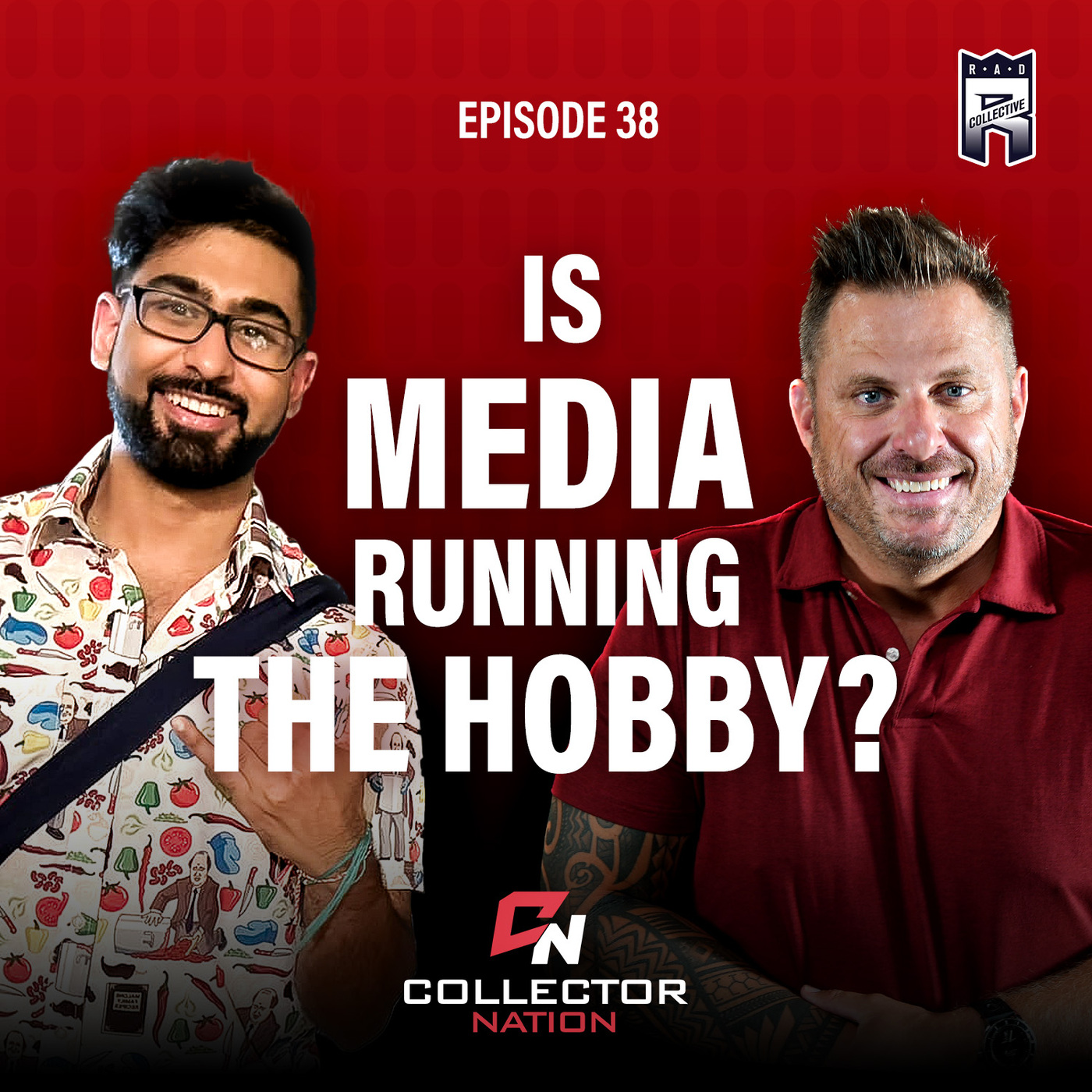
The sports card and collectibles hobby is entering a new phase—one driven by content, community, and digital discovery.
In this episode, we’re joined by Shivam Patel, a collector and content creator with a front-row seat to how modern collectors engage with sports cards, trading card games, and pop-culture collectibles.
Shivam shares insights on how media influences demand, why younger collectors think differently, and what the hobby needs to understand as it continues to evolve.
What You’ll Learn in This Episode:
How media and storytelling impact collecting
Why community is now central to the hobby
Differences between sports card and TCG collectors
How new collectors enter the hobby today
Trends shaping the future of collectibles
Connect with Shivam Patel
Social: @notshivam
Podcast: The Vaulted Podcast
Covers: Sports cards, TCGs, collectibles, and hobby culture
These corporations, such as the Pokemon Company International, they love scalpers. My advice is kind of look where no one else is looking and apply the logic of whether or not that item has multiple layers of collectability. So if it's very difficult for the average individual to collect, or if it's difficult for a collector to collect, that's kind of like something to pay attention to. Welcome to the Collector Nation Podcast on the Radcast Network. From chasing grails to calling bluffs, we're going inside the hockey. Are you ready to collect? Let's get at it. Here's your host, Ryan Alfred. Hello and welcome to Collector Nation here on the Collector Nation Podcast Network. We appreciate you for tuning in wherever you are, whenever you are. We never know when people are listening. You could be whenever you want, however you want. New media at its best. We're not linear, you know? That's why I love it. That's why I love content. And that's why I love this space, especially because I get to talk to cool guys doing some fun shit. And we got one today is Shiv Patel. He is, he, you know, he did want me to call him a Pokemon expert, but I think he might be a Pokemon expert, but he is. We're going to call him a master collector of all things fun, engaging. And he does a lot of storytelling himself on social media. What's up, Shiv? Hey, how's it going? Hey, man, blessed to talk about collecting and guys like yourself doing fun things. When I was a kid growing up, I collected everything, especially cars, sports cards. And lots of like random McDonald's one off merchandise. And so now if you told me 30 years later, I'd be getting to talk and do things and actually have a business out of it, I wouldn't believe you. Yeah, likewise, I couldn't tell you the same thing. They're like, I would be baffled. It's a good time to be alive. And new media is awesome. We've got this democratization of being able to get the voices out there and tell stories. And you're definitely adding a lot of value to the overall collected space, collectible space. And I know collectors across Pokemon appreciate that. And I enjoy watching your international stuff. That's a new perspective for me. So I'm excited to talk about some of those things today. What's happening? What's happening in the collectible space? What's the state of the union? I mean, like there's a lot of interesting things that are going on, right? Like you have Pokemon and just collectibles all and all, just like spiking and values across the board. Just anything, anything is going up in value. You have Logan Paul selling off his Pikachu illustrator through Golden. You have people just in the constant conversation of whether or not it's this space of bubble or not, especially when you have like people like Ken Golden, you know, saying that, hey, like this is. This is a space of being for the next five to 10 years. Then you have a lot of institutional foundations, financial institutions coming into play. There's just a lot of interesting things that are going on. And I mean, you know, like you said, it's a blessed time to be alive. And it's just a very interesting timeline that we're in right now where, you know, we can have a career through collectibles. Yeah. It's interesting. And, you know, I got brought back in. I had four, you know, four boys coming up that got into Pokemon, got into sports cards. And so, you know, I started pointing my network and, you know, into this and seeing the business opportunities and also my love and passion for it got rekindled. I didn't actually experience the bubble, if you want to call it, of sort of the, you know, 2020 and everything with that. But it feels different according to people that I talk to with what's happening now. It seems more sustainable. But it's hard not to, you know, you see the jumps and prices. You see the cards selling for what they are. So there's natural skepticism. But where do you fall on this pendulum? I think I, I think I agree with that sort of sentiment that you've received so far where like this one feels a lot more organic in nature. Like sure, like some people will be skeptical about it. But this is, this feels a lot more organic versus 2020 where 2020, you know, you have COVID, you have so many things that are happening in place where everything just spiked tremendously in value. And then it just came down almost just as quick. But it then, you know, prices kind of sustained itself. And I think that's what gave a lot more collectors and a lot more people on the outside looking in. A little bit more perspective in regards to whether or not they want to participate in this space in that aspect. But yeah, like I agree with that sentiment entirely. I mean, it's, when you start thinking, and I've heard, I've had, I mean, whether digitally or in person, you know, the rolling of the eyes and, and the, you know, thinking about cardboard is an asset. But I think I had Gordy Bonker on last week, a week before and he does a lot of vintage baseball. And you know, the people that are like, you know, that piece of cardboard. Well, I mean, what's artwork? I mean, you know, artwork is just paper with art drawn on it. You know, that has value in the millions, depending on what it is or hundreds or, you know, we're a, I don't know, we're a nation certainly in a world that collects things. And there's scarcity and rarity and value that gets put on these things, whether they're cardboard or pennies or, I don't know, Mattel dolls. And so I think that perspective is a little lazy, but you know, it's just do the rich guys get get bored and then pull out. I don't know. I don't think they ever get bored. I mean, I think for them, it's like, you know, it's a way to relate. It's like you said, the whole world of collecting. And I think since a dawn of human beings, it's sort of our way of being able to connect and relate with each other. And I think for the most part, like even like someone who like there might be a a wealth-based gap at the end of the day, we can relate with one another through collectibles. And I think that's just sort of how the wealthy guys participate in this space. They want to relate to what we're doing. And we can relate to them in that kind of fashion. It's more of like a humanizing thing. Yeah, I think you're right. I think what's been the most fascinating thing for me, Chiv, is coming back into it and being a tech forward guy and I can serve as health innovator. You have this weird dichotomy of there's innovation happening in the hobby. And then you go to a card show and everybody's still using a spreadsheet and a pad of paper. And it's like, I know that's a left turn from where we were, but I feel like it's all related a little bit to the changing industry. You know, where I don't know the old school card show guys and hobby guys, you know, versus the new school of tech and innovation and all these things. How do these worlds come together? And it seems like there's still a lot of a lot of blue ocean. Yeah, I mean, like there's there's a lot of of that. I mean, if I were to go to the national, you're going to definitely see a lot of guys with pad and paper and you know, they're just going through and writing everything down. And then you have you go to like a Pokemon card show, for example, the newest thing is vendor POV style content. And it's sort of a way to kind of, you know, one, act as security, but two, it allows for them to kind of keep track of every interaction that they're having. And it's very multifaceted because then they can also post that as well. So like they're they're getting every benefit of that. Like it doesn't hurt to have that. Yeah, what do you think about like as far as like digital collect collection management and scanning and, you know, that whole gamut of innovation? I like it. I think I think that space is great to have. I think it's more additive. I don't think it's ever subtractive. So any I'm all about if it's additive to a space or if it's added to something, then that's always a good thing as long as it's not subtractive. So I think like applications like card ladder or or you have collector. These applications that basically take an account of like what your tangible asset portfolio is, I think those are cool things. I think that's kind of awesome. It makes. Like the more the more we do this and the more time progresses and the more value is attributed to these sort of collectibles. Then the impact that those collectibles will have on an individual's life. Then I think it's great to have things that kind of keep track of those types of things. Yeah, and I mean, I think those things seem to be getting better and better and make logical sense to me because that was the first thing when I came into the hobby and full full disclosure here. Linux is a partner of ours and one of the leaders in scanning the cards. But you know, the first thing I did when I got back in, I'm like, OK, I know they don't go looking in Beckett magazines anymore, you know, for like sports cards. Yeah, surely there's an app for that. And there was that's what I went down the rabbit hole. This is probably 18 months, 24 months ago. And because that always just made the most sense to me. I think scan your card. You know what you got and you might know that general value and all those things. It's like, and it's good. But I don't know. There's also this fine line shift of everybody's a dealer now because everybody has so much data. Right. Yeah. And not that you don't want anyone to be uninformed. I'm not saying I want the 80s period where the only the dealers had all the power. They were jerks that their sports cards has. But it is sort of like, OK, well, if everybody expects 100% of TCG, who's making any money? Yeah, yeah. Everyone everyone knows what they have. Yeah. And that's good. But it's, I don't know. I find that sort of funny. There's also the bubble of the cards. So versus the everyday collector because those are seem to be two audiences. Let's talk Pokemon. Yeah, appreciate your thoughts there. Just generally I always like to riff a little bit on things that as I've come back in the last couple of years. But what's it. It doesn't they're different. The audiences are different. But you know, my boys and I mean, we're sports guys. But like we're in the Pokemon. I love the artwork. And I love, you know, like the affordability factor versus, you know, you know, five or 10 bucks for a pack versus 30, 40, $50, $100 a pack that some of the sports stuff gets into. And I know you by vintage Pokemon that can get in that area. What's the state of Pokemon with everything else? I mean, is it healthy things? Yeah, I personally think that Pokemon is in an extremely healthy place. Pokemon is a type of company that has always kind of printed to demand. Sometimes they don't. And it caught it pretty, it pretty much creates movements such as this right now, like in the last like a year and a half or so, Pokemon hasn't really printed to man. And when that kind of happens, the entry point for most collectors to be able to get, you know, what was accessible product becomes extremely difficult. And when that kind of demand gets bigger and bigger and bigger, then it creates much more of an upward trend as far as this hobby goes. So like that's where that's why I think it's a little bit of an organic thing like at the end of the day, like whenever Pokemon does slow its role in terms of production, then, you know, value does spike. And that did happen back in like 2019 around that time. And that like right now though, I will say it's even healthier because for the collector that wants to be able to get, you know, products, it's tough. But just recently, I know that in more so North Carolina, they just released out of brand new printing facility for Pokemon. So like now that might make, you know, the availability of Pokemon products is a little bit easier for the person. So like I think I think I think of the day. It's like very, very healthy in my opinion. Yeah. And I mean, what do you, I mean, just jump right in like it's interesting. It's the same retract, but it's like, how do you feel about the scalping if you want to call it that? I mean, I personally call it that I'd call it more just entrepreneurial behavior on some level, but where do you fall on that? I think scalping is kind of a byproduct of the American condition right now. I think it's, I think people, I think wages aren't really going up as quick as they should, or they're not as high as they should. So I think that's like a reason as to why people scalp. I also believe in, and this is a hot take that I have with most of what with some of my friends who also agree with me, I think these corporations, such as the Pokemon company international, they love scalpers. I think that. And the reason why is because scalping is a direct indication of demand and value behind their brand. And so if everyone could get the same thing, then there's really no value behind, you know, that specific item or that brand, it kind of dilutes the brand and that kind of fashion. If everyone can get it, then there's no like want behind it. And so I see that. And then I also see the side of like the average person who like wants to be able to buy like MSRP related product, but it's never on shelves. So they're adding that they're ending up having to spend, you know, quite a bit more just be able to get the products that they want. So like there's both sides of it, but I don't really think it's an entirely a bad thing. Yeah, it's very insightful take, especially on the brand thing, you couldn't be more right because when there's demand like that and the empty shelves, and it does increase brand value and demand. And it's, it is an interesting slippery slope, though, both sides of, you know, I understand it, but they're also, you know, OK, the guy comes in and he takes all 20 boxes. OK, well, 19 other people. People could have gotten them. You're still not going to have enough for you still have the complaining, you know, so it's like, yeah, I haven't ever been in Walmart and seeing 400 boxes get taken out. It's usually, you know, 20 or 30 boxes, which is, you know, might seem excessive, but it's not, it's not so much. The question really becomes more to your point at the very beginning, which is the printing, you know, are we ever going to get to the point where that just goes away because there's just too much, are they going to allow that to kind of continue. I don't think you'll ever continue just because like there's only like a limited amount of printing facilities available and yeah, Pokemon if they wanted to they can, you know, build from the ground up a brand new facility to print more. Well, like that process is still relatively slow. I think I think with that plus the fact that there's that there are, and I think that, and when I say there are, I know that there are institutional fundings, like financial institutions that are coming into this space that are throwing in lots and lots of dollars and money into this space. I think that's going to create a either one or two things. I think it can basically grow prices even organically as long as they're not pushing, you know, pushing down on the gas pedal a little hard enough, or if they push down hard enough, you can go pretty parabolic. But yeah, I just, I just think that like for the average consumer for being able to collect collectibles, it is tough and it is, you know, if you're there waiting in line trying to get something not everyone is going to get something. But like that's that's with anything collectibles related like not you're not going to have. You're not going to always have what you want and like what's made what makes it difficult in the Pokemon space is that Pokemon when they first came out in the United States, the tagline was got to catch them all. And, you know, people took that very, very seriously and very and to heart, but like Pokemon themselves stopped using that tagline within a couple of years of its release here in the United States because like they knew that you can't really catch it all and that and like even in the video games, you can't catch it all. So like people in Pokemon should also like understand that as well that you just can't catch it all and that's like the beauty of it right like being able to work hard, being able to grind it out to be able to get the one or two things that you want. There's merit to that and I think that, you know, then there's the aspect of like you have a lot of people who feel like they're entitled because like they feel close and personable with the hobby that they have and the joy that they have with it. There's a lot of, you know, discussions that we can have on that. Yeah. And as you were talking, it reminded me enough, I've had this a few times, if it was as available as these people want, they wouldn't want it as bad. You know, talk about meta being a little meta, but it is is true like if it was if there were 400 boxes on the shelf every time you went in the store, you wouldn't want it either. You know, so the scarcity on some level, I think we can argue whether it's scarce, I wouldn't call it scarce, but the level of scarcity drives that interest from the person that's complaining about it not being on the shelf at retail. Yeah. Yeah. Yeah. Yeah. Yeah. Yeah. I'm talking together towards creating the epicenter of where we are today of, you know, all this demand, seemingly not enough retail availability, and Facebook marketplace littered with, Yeah. Tell me, do you use Facebook marketplace? Oh, I haven't. I did when I first came into this hobby and then back in 2019, and then I was on there for like maybe like a few months, and then I was like, no, I'm just saying it. I think the way I've been participating in this space is predominantly through Instagram. And I mean, like, it's basically the same thing you could say, because it's on my peda. It just thinks enough for deeming friends and partners. And now I'm sure you get in those connections that if you come across a deal or whatever if you're brokering something, you just kind of slide into the DMs. Yeah. Yeah. I mean, that's just how it is. I mean, like, I don't necessarily have to use eBay. I can if I wanted to. But like most deals that I personally do nowadays, I don't even need any sort of marketplace for that matter. It's just through through Instagram. Now, do I buy things from these marketplaces? Absolutely. I'm on eBay all the time. I'm looking at things all the time, being able to find things, things that stick out, things that are unique for me as a collector to buy, when it comes to memorabilia with Pokemon Collectibles, with other anime based intellectual properties, I'm always looking for things that I want to buy because I'm always looking to increase my positions in other areas. So for someone listening, talking to Shiv Patel, he is a content creator, Pokemon expert, whether he wants to be or not, I think he is. Someone listening, they're pokey curious, Pokemon curious. What's your advice to them of how to enter into this or things to look at? I mean, I think the biggest thing is getting your 10,000 hours in, kind of like watching what people are doing, consuming content, asking questions, staying off in the sidelines, being very, very open-minded, and then understanding how adverse you'd like to be as far as risk goes. I think that's like a big thing, but I think that's just how it is. Putting your 10,000 hours in, if you really enjoy it, then participate, kind of like what you want to collect and like, I think that's just like the biggest thing. My biggest thing was that in the beginning, I was ripping packs, and as a content creator, at that time, that's the only way people were making content. And so within a month, I was like, I just spent $700 just to try and create a video that didn't generate me any revenue. So at that point, I was like, I'm going to take it upon myself to kind of create content. That's more educational and more informative, where I'm not talking about the degeneracy side, the degeneracy side as far as ripping packs goes, and just creating a informational way of being able to collect. And so like, not necessarily ripping packs, but maybe just buying the card that you want is the better avenue. And that avenue is usually the more financially safe and financially responsible route. Great. This entire space is kind of predicated on the gambling nature of being able to open something. Yeah, at least you still want to say, we got to at least acknowledge it. It is. Yeah, yeah. But I do tell people that kind of go down that route. I'm like, yeah, but the slot machine, you pull it 500 times and spend the money and you lose. You win nothing. And you scratch cards. And you scratch cards. Yeah. Scratch cards. Yeah. You're playing for a lottery of five grand, and 98% of the time, you win not a dollar. So with trading cards, you do have, you know, 20, 30% of the value, you know, I don't know what the average is. It depends on the product, but at worst, and something to collect or keep on to. And if you chose, if you choose to just be a hit, got a chaser and throw everything away, that's your thing. But a lot of people don't. Most people don't. And so I think that's where the difference lies, right? I'll tell you what though, a few things, and I'm kind of leaning into this. So follow me here, Shiv. Pack opening is entertainment. And I know that that sounds like a no shit thing to say. But I don't know that we talk about it enough like that, you know, like back to scratch card. I think that's more of a true compulsion of like, I'm going for the big money. I got to win it. And yes, you want to hit a big card, but there's just the int for me. And again, I spent 18 months ripping packs with my boys. That's how we got back into it, just to learn and know. And it went through a lot more than 700, about 70 grand, probably, and literally, but it was entertainment and time with my kids and like we enjoyed it. And yeah, we wanted to get hits and that was chasing, but it was entertainment. And you know, that's kind of what I'm going to lean into at my shop here collector station is like not shying away from that, like come whip some packs and have some fun. Yeah. I think overall, like there is a, there's a suspense factor into it. There's a thrill of being able to open up something. And if you, if you understand your relationship with being able to open up packs, and I think that's just like the healthiest route to go, like there's people out there that are not necessarily chasing after the chase car, they're there to complete a set. They're there to, and Pokemon specifically, they're there to build a deck there. There's so many different ways of going about collecting. There's just like no right way to collect. But yeah, I think, I think there's, there's a story there, there's, there's entertainment there. There's joy there. I mean, it's why I got into the hobby. I mean, I was watching, you know, a YouTuber, YouTubers such as like Lee and Hard, real breaking date, super duper Danny, like they were all just opening up packs and they were just having a good time. And I mean, I was, I was part of that ride back in the day. So yeah, like I definitely see that. I definitely agree with that. Yeah. What keeps you busy, you know, you're doing a lot of international shows, touch, I feel like it's probably a dual part there, Shiv. I mean, you know, both what I see on your content and, and you know, maybe give everybody a little bit of the international perspective at the same time. Yeah. So like what typically keeps you busy is that I do content full time. So I predominantly create content around collectibles and I will often partner with grading companies and auction houses to put out that piece of content. But when it comes to international stuff, I also work with conventions. So I've been working with conventions from the ground up since 2021. It started with collecticon, I worked with collecticon for four years when they first started as a regional base convention down in Texas. And then it's now become a national convention. And then through that process, I was working with smaller card shows in the process because pre-COVID, there weren't any TCG base card shows for Pokemon specifically. There were only card shows, I mean, there were only like card based events such as like competitive events back in the day. And now they're everywhere. And so I was working with small conventions and Miami, such as Miami TCG con I've worked with shows in Hawaii. And then, you know, about a year, a little over a year ago, I worked with Tokyo Comic Con. So I got invited out by Tokyo Comic Con, got asked to work with Stan Sakai, who is a big comic book artist as well as Mitsuhiroita the guy who drew base at Charizard. But yeah, the appetite for collecting internationally is just as strong as it is here, if not even more. China, it's very, very intense, Japan is very, very intense. Singapore is also very, very intense, I was just in Singapore and I got asked to come out there to produce content for Singapore Comic Con. So I work in tandem with a lot of these different conventions. And if there's a collectible avenue there, then I'm usually involved in that kind of capacity. Whether it's that, San Diego Comic Con, New York City Comic Con, it's not just limited to just cards, it's also working with a lot of these major publishers in the anime space, as well as as well as as companies, toy companies as well, like such as jazz wears and so on and so forth. So like I dabble in a lot of different things, but that appetite is strong and it's stronger now than it was like four years ago, three years ago, whatever, it's the strongest I've ever seen it. That's interesting, I mean, they're competing with us, not competing, but like more people want it. There's only some much product, right? Yeah, I think it's like, there's a push and pull to it, right? So like with Pokemon specifically, in America, there are Japanese Pokemon cards that are increasingly high in value and like you can take those to Japan and you get a lot more for in Japan, but in Japan, if a new set releases, that demand for those cards, those Japanese cards are going to be a lot higher in the United States. So like what they don't necessarily attribute a lot of value to, we attribute a lot of value to. So it kind of works in tandem and as far as like what's happening in Singapore and China and so on and so forth in other countries, the way they view it is that they're going, the demand is not only behind vintage, it's very, very high-end vintage that they're going after. Those people are going after everything, that's high-end vintage and then they're also going for anything that is of high demand as far as modern based Pokemon cards go. So like the appetite, the appetite that we share here in the States is the same sort of appetite that they have there and it's just sort of, it feels more of like a race right now if I were to put it, it's not really competition, but it feels more of like a race and races are competitive by nature. But yeah, I mean that's what collecting is sometimes, sometimes it is a competition. I have the only one of this, there's only a hundred of these and I own one of them. And then the added factor of social media being a thing, you have people being able to showcase those things and then you have people wanting that too. So it's a continuous loop here. Yeah, I mean it's a lot like what I've said about the loop of culture, content, sports and brands and all this stuff is sort of feeding one another. And then I think the content you're creating which is great and the ability to create it with these channels, like we talked about at the very beginning when I mentioned the kind of democratization, it's created this entire world that's sort of, I'm not sure who's the son is, but it also revolves pushing and pulling in an ecosystem that feeds each other. Absolutely. Yeah, and it all feeds each other. I think at the end of the day, like more people are wanting to get involved in this hobby and the more content is being pushed out, more people want to be able to participate and they're trying to figure out how to participate. And again, it just feeds itself, I don't know where that center is. Maybe that center is just like the joy of being able to collect and what comes with that is this. You know what I'm thinking the most all time we're talking, Shiv, is like, we got to get you on collector nation, man. Yeah, you guys talk about it, hey, we'll talk about that after the fact. As we wrap up here, man, the people that are coming in from an investment standpoint and it sounds like I want to summarize and it makes sure I've gotten it and the audience has gotten it. I mean, it sounds like you're cool with whoever's coming in. If you're coming in as an investor, that's cool. If you're coming in as a collector, that's cool and probably more cool to you because you're a collector at heart too. But if you are coming in from investment standpoint, particularly with Pokemon, is it as simple as, you know, like you said, I could agree more. And that's why when you said open, it's been your thousand, ten thousand hours, whatever I couldn't agree more than that's what the boys and I did getting back, you know, really taking it serious and getting back into it, ripping packs, looking at stuff, education. But I mean, is it as simple as what's printed the least and has the most scarcity, you know, go after that. I mean, but are there other nuances that Shiv Patel can insider tips for people that are investing to maybe think about? I mean, like, yeah, you can't, if you're very liquid, yeah, you can go ahead and buy some of the biggest cards available in any hobby that you want to and I've seen that. I know all the guys in Pokemon who are dropping millions of dollars, I know all of them. And they're faceless, they're faceless individuals and some of them are crypto whales, some of them created specific pieces of crypto. They exist. They're there. But if I think my advice is kind of look where no one else is looking. And apply the logic of whether or not that item has multiple layers of collectability. So if it's very difficult for the average individual to collect or if it's difficult for a collector to collect, that's kind of like something to pay attention to and take very seriously. When I came into this space in 2019, not only was I collecting vintage Pokemon cards at that time, that was extremely undervalued for where it was at, I was collecting very, very rare vintage Pokemon toys and I completed a set of 10, 12 toys, cost me about $7,700. I sold all of that for $110,000 in December, not that long ago. So there are collectors out there that collect things outside of Pokemon. It's memorability, all the things that you see behind me, these things have all gone up in value. And there's not that many people that will talk about that. They do exist and there are collectors out there. There are people in the outside looking at that want the things that I have behind me. So like, yeah, just look where no one else is looking, you know, apply that and back. That's helpful. I love that. That was juicy. If you were paying attention, you knew where to go with that. And if you don't shoot me a DM, I'll help you with the breadcrumbs. But what's a trading card maybe that you think maybe it didn't have the upside of the Pokemon did in 2019, 2018, whatever, but what's something that people might be sleeping on that you think should get more attention? Pokemon cards, not Pokemon, like non Pokemon, like non sports card, non Pokemon, what's a trading card, you know, I mean, I'm not going to lead the witness, but I'll throw them out there. You know, you got magic. You got. Yeah. You got magic. I think I think Yu-Gi-Oh is something that is slept on. I think one medium that is going to be, I give it here in the next like five years. And this is just my perspective because I'm taking it very seriously right now. And I'm putting my money where my mouth is on this is that anime. anime is a big, big cultural movement that's happening here in the United States. It's been happening for quite some time now. You look at Hollywood as an example and this is and just follow along with me. Yeah. A lot of major movies are failing. And that's why we see a lot of sequels and prequels to the same things that we grew up with. It's very, very risky for a production company to make something. And just recently, as of last year, there was a movie called The Demon Slayer Movie. The cost to be able to produce that movie was $3 million. They made $300 million more than that now at this point. And so where anime is becoming very, very relevant and very culturally significant in this space, I think that's where people should be looking at predominantly around animation cells and sketches. Japanese people and Japanese intellectual properties are very, very safeguarded. It's very, very tough to work with these companies. And they're very, very strict when it comes to their licensing process. And so if you can get your hands on a animation cell, and for those of you who do not know what an animation cell is, is that back in the day when they used to make these, these animation, these episodes, they would sketch on a piece of paper. And that would indicate a part of a frame for that specific movie or show. And then they'll put a piece of plastic over it called a cellulote and they would paint over that. Everything is digital these days. So stuff like that is becoming hard and hard to come by and as a collector to be able to own a piece of an episode that was very, very momentous and influential, that's what people are missing out on. And I think that's where things are going in this direction as far as collectibility goes. And then sketches from the people who created those specific intellectual properties are going to become increasingly more and more and more valuable. We're talking about like you show a kid today, a Gustav Klimt painting. And right now, like that painting, one of the paintings just recently sold for the highest amount ever for a public painting for $237 million, but like kids aren't going to know what that is. They're going to know what anime is. And if they've been influenced by that, they're going to want that. So I think like that's where people aren't really looking right now. And I think they should take that very, very seriously. Very interesting. And anime is something I kind of ignored, you know, it's been on my, it's not new, it's been around. I mean, in a long time. But it hasn't been something that was like necessary. Now I see it. And I'm like, and I hear my kids mention things that is definitely noteworthy. Right. You can, you can own a PSA 10 first edition Shadowless Charizard and just recent console on that is $550,000, right? Yeah. But imagine owning a sketch of Charizard by the guy who illustrated Charizard for that specific art. Exactly. That's a one of one. You know, I have a one of one piece of a sketch of SpongeBob. I have a one of one piece of specific IP things in regards to different anime that I can't show, show because that person has specifically stated not to do so. There's a lot of aspects that are taboo about it. But I'm putting my money where my mouth is I just spent $10,000 on two different intellectual properties on anime myself that should be here this week. So like I'm taking that very, very seriously, yeah. The shadow collector. Yeah. I want to be able to get as much as I want possible for a showcase it and then like people flock onto it because I've done the whole thing where I've shown a trading card before and no one cared about it. And then all of a sudden within a month later, people care about it. And then I have to spend like two X for that specific collectible. So yeah. That's interesting. So are you telling me unrelated, but you started there when I asked the question, you know, I go into the retail stores or something that one piece in UGO is always sitting there staring at me and available versus the Pokemon or anything else. Should I be buying whatever's there and throwing it in the box somewhere or ignore it? Maybe. I mean, like I think certain, I think with UGO, UGO is a fantastic IP. I think the issue is is that they haven't really created any more. It hasn't really created new monsters that are iconic. Pokemon doesn't have that issue. Pokemon is able to bring back new things all the time. So like UGO is essentially relying on a few different character. I mean, monster designs that are just continuously using and that can be kind of problematic. But at the end of the day, UGO does have really, really good sets from time to time. I don't know right now because I haven't heard anything, but they have sets that have specific chase cards that are highly valuable. I would participate if there was something hot right now that I could tell you, which I don't think there's anything hot right now. I'd be focusing on those things and getting the first edition sets of or packs of those specific items because of the potential possibility to be able to pull a chase. I would much rather own the actual seal product versus trying to rip it and chasing after it. At that point, I might as well just buy the chase card itself. Yeah. Look at one piece. One piece is really hot. I think it would be, I would be foolish to say that one piece. I think one piece is probably one of the most impactful anime right now worldwide and how it's even impacting certain or specific political movements. I'm not going to argue for those specific political movements or against. But I will say that like anything that has any sort of cultural impact, I think that's worth looking at. It's worth keeping an eye on. I myself don't really buy one piece cards too tremendously. I think the one cool card, the one coolest collaboration that I saw Toei do specifically with one piece was the Luffy Dodgers collaboration. I was there for that game. I was there to watch that card. But yeah, I think overall, I think there's impact to that. I think the more that kind of stuff happens, it's very important to look at. And I think, I know everyone knows this individual's name is Gary Hayes, he's known as King Pokemon. He was on Pond Stars from back in the day showing off his Pokemon cards. He said one thing that kind of stuck out and that was this. If a new trading card game comes in and it can last more than five sets, then it's worth looking at and it's worth the pay attention to. And I like that. And so, I think one piece is significant. I myself don't participate in the one piece trading card side. I have friends who do and they take it very seriously. There's a lot of big high-end collectors that I personally know that, you know, take it very seriously. But yeah, there's that. There's comic books. There's manga. There's everything. I've been buying it. I've been buying one piece when I see it though, I've got it like throwing it a box somewhere. I'm not even looking at it. I don't even look it up. I don't know. But I just, as sort of, maybe accidentally use the advice that the guy you just mentioned, which is just, I've seen it for enough now. And I know there's enough demand that it doesn't feel like surely it's not going to be worth less than the retail, you know, I've paid for it. Yeah. Yeah. I think it's here to stay. I think it's here to last. There's new trading cards, trading card games that are up and coming. I myself, I'll keep tabs on it, but I won't take it seriously until I think there's like a cultural aspect behind it. I know you're not necessarily the sports guy. You do everything I know and you've freaking held the $12 million of Mickey Mantle. But Bo Jackson, I like that set. I don't know if you've even seen that. It's kind of fun. Yeah, I've seen it. I've seen it. Yeah. I think it's pretty cool. Like, even though I don't actively participate in the sports card space, it's always good to see because like these, these are, you know, like, yeah, like Pokemon is fictional characters, right? Like you actually have like these influential individuals that, that sweat, blood, you know, yeah, yeah. That's sweat, blood, you know, cry, like these are inspirational people that have real stories that we all can relate to. And so like, I don't actively participate because I'm so spread then with what I do. But yeah, I just always think that that side is always cool. I mean, like, I mean, sports cards did lead this way for, for Pokemon. I create a level legitimacy for Pokemon to be its own thing, and I just think that's cool. Yeah. 100% agree. Hey, brother, gone a little bit over time. I appreciate that. So fast thing. You're so smart, man. You're doing a lot of great things, really admire what you're doing. Tell everybody where they can learn more about your content, any of your initiatives, things like that. Yeah. So on Instagram, I'm not shivam. I don't know how I came up with that name, but I just have it. On YouTube, it's at, it's a vaulted, like you're going to vault something. So I have that there. I would plug in my TikTok, but I'm barely on TikTok anymore. I'm just mostly on Instagram and YouTube and Facebook. Oh, I like you more. I like you more. Yeah, more. Yeah, more. That's me. Yeah. I know TikTok is the hottest thing ever for so long. I've stayed true to IG. I mean, I've got a good decent following on TikTok, but not I just, yeah, I don't like getting in that vortex. Yeah. I have a larger following on TikTok, but like I just never felt like there was a real sense of community on TikTok as a collector and as just like as a content creator. I just felt like a lot of people that are passing by that saw that piece of content. So that's why I like double down like really, really early on when TikTok was still really hot during COVID, I still double down on Instagram and right now I still think that YouTube is just kind of the king of things. Um, but I do think that the collector community exists on Instagram. Like there, there's no argument with that. It's, it's on Instagram and it's not going anywhere anytime soon. Ding, ding, ding, smart man. I love it, brother. Thank you so much for your time and appreciate you coming on. Of course. Thank you for having me. Hey guys, you're going to find us collectibles.show is the current URL. We will be moving to the collector nation dot com. Shortly, we'll have that redirect and everything with it and go follow shift, man. He's doing some great stuff in the space as fast names covering the gamut with his content. A lot of great storytelling and great knowledge on Pokemon and collectibles in general. We appreciate you for listening. Stay tuned for the next episode coming up soon. We'll see you next time on collector nation. Thanks for tuning into the show. Don't forget to follow us on your favorite podcast platform and don't miss the full video version on YouTube. You can find us at collector nation dot com or follow Ryan on Instagram at Ryan Alfred. Now get out there and collect yours.