Sports Card Investing Tips That Actually Work
SUMMARY
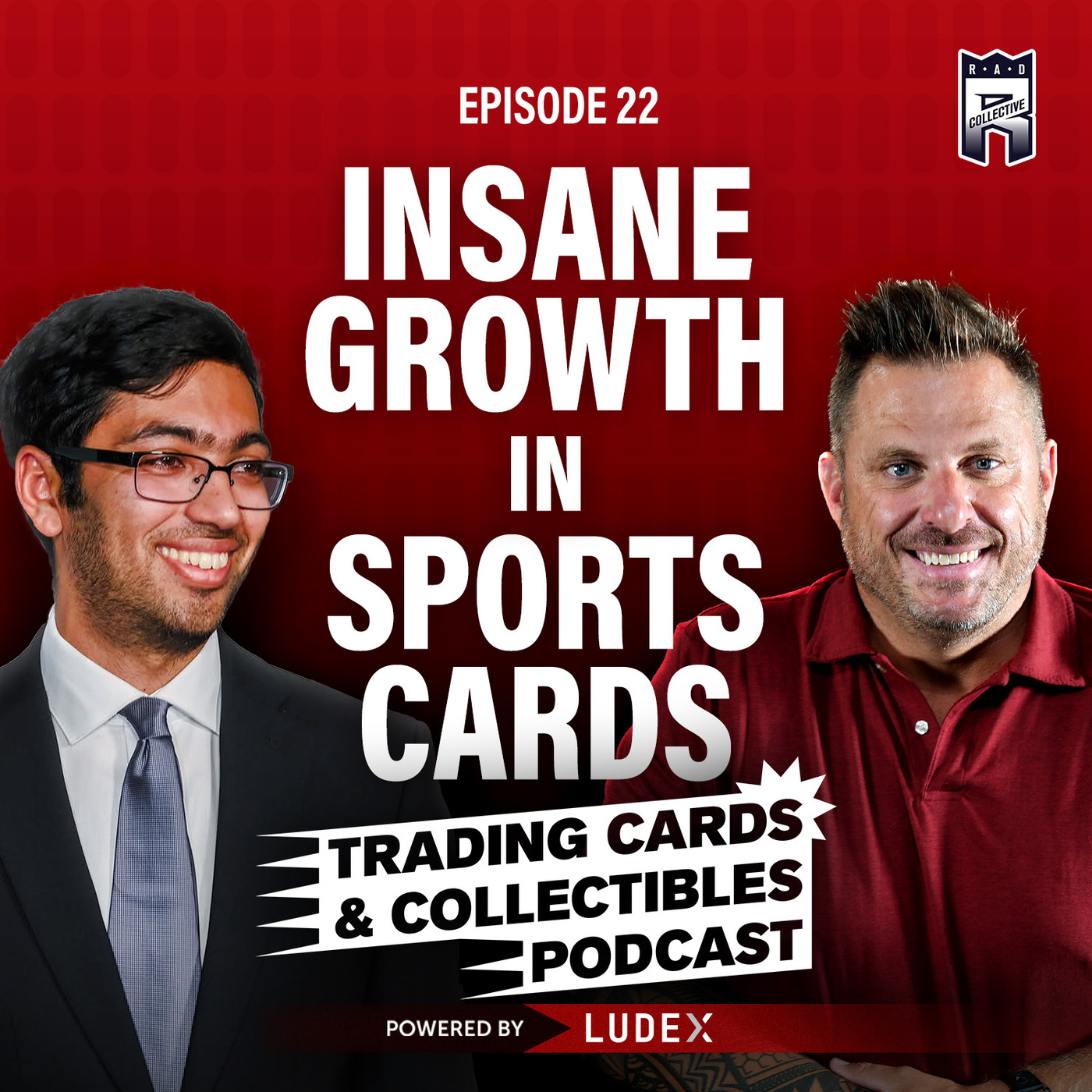
In this episode of "Trading Cards and Collectibles," host Ryan Alford welcomes Kunal Ahuja, founder of Sports Card Invest. They discuss the evolution of the sports card market, from the pandemic boom to recent, more sustainable growth. Kunal shares insights on balancing high-end and accessible products, the unique appeal of Pokémon cards, and smart investing strategies like buying undervalued players. The conversation highlights the importance of passion, market trends, and community in the collectibles hobby. Listeners also learn where to follow Kunal and Ryan for more tips and updates.
TAKEAWAYS
- Kunal Ahuja's background in sports card collecting and investing.
- The impact of the pandemic on the sports card market.
- The evolution of the sports card market over the past 18 months.
- The shift from speculative buying to more calculated investments in high-end cards.
- The role of international markets in the growth of sports card collecting.
- The importance of balancing scarcity and accessibility in card products.
- The differences between the sports card and Pokémon collecting communities.
- The challenges faced by companies like Topps in creating popular card inserts.
- Investment strategies for collectors, including the importance of market trends.
- The significance of patience and strategic buying in card investing.
I think a lot of people are chasing the current products, instead of looking at what's next, in terms of overall trend-wise. So for example, Caitlyn Clark, she obviously was out for the season, and if you just look at Google trends, her trend was up to 100, and now it dropped to zero, and now it's coming back up a little bit. It's just kind of a simple supply and demand thing. It's like look where people aren't looking, sell when people are looking at your player. I think Pokemon's got such a wider demographic, the collectability is incredible, and I think every time you go to a show, you see I guess just passion in the Pokemon industry, and it's a little bit annoying because the sports card fan go out of these shows, and now it's like damn 60% of the tables are taken up by Pokemon. Ryan Alford. Four young boys lured me back in, and it's been fun. It's been fun. It's a good time to get in. I know, it's crazy out there. All my friends, suddenly I didn't know collect, collect, and everyone in my network seems to collect, and so it's been fun tying all the pieces together, and getting them to talk to smart guys like you. Appreciate that. 100%. I feel like the last 18 months in the hobby has been so many changes, of course, with fanatics and everything. I'm sure it's been a ride for you. First, just getting orthodox back into, my time was late 80s, early 90s, and junk wax areas, unfortunately. I've got some cards from the early 80s from rookies and stuff. They're cool, but it didn't, unfortunately, I didn't grow up there in the hey, we're things start to get interesting with parallels and everything else, but that's been sort of the by fire and getting, I understand it. I mean, I was pretty deep in it when I was as a kid and teenager. So I mean, the principles are still the same in a lot of ways, but the variety of cards, brands, and of course technologies come a long way, finally. I would say a little slower than I would have thought once I got back into it, but it's been fascinating. Watching, like you said, just the growth of it and hoping that it were not in a bubble. I've seen a few posts here recently. I'm curious to get your take on all of it. Yeah, no, 100%. I think for me, I started collecting as a kid. I was local to San Francisco, so the Giants won the World Series in 2010, 2012, 2014. So that was a time where I was heavy into the sports card industry. More so on the collecting side, too young to think of it as a business, but I really enjoyed collecting and it kind of was what first sparked my interest there. And when I got back into it in 2019, for more of an investment side, I loved business, I've always kind of been a little bit entrepreneurial, obviously grew up at Silicon Valley, so it's an area where all the biggest businesses that you know were founded. So that's right around the block for me. But yeah, no, I mean, when I got back in, the industry was in a, you know, very interesting spot. The pandemic hits the year after and stuff just goes bananas. Everyone gets in, you know, prices just absolutely take an insane run from 2020 to 2021. It was a lot of euphoria and a lot of, you know, I would say unsustainable growth. And people were throwing money at, I remember the NBA bubble like TJ Warren has a 40 point game. And the next day, some of his cards are selling for $5,000 and $10,000. You know, it would be one game from Luca in the bubble and his market absolutely exploded at that time, Kawaii's market. Like there's, it was such an interesting time for the sports card hobby. And, you know, it was, I was still very need to it, but I knew right off the bat knowing anything about business that that was very unsustainable, kind of just like the weight in which people were throwing money at, you know, these cards and stimulus checks and just everything was, you know, an insane time. And, you know, thankfully, we were able to make a great business and build for the long term during that time. But there was always that awareness that like, okay, when is this going to calm down? And it did 2022 to like 2024, I would say was like a pretty slow period for us in our business. And in general, the sports card industry wasn't at, you know, close to where it was in 2020 and 2021. This time around, you know, we've seen a lot of great growth over like the last 12 to 18 months. And I would say it feels a little bit more sustainable. I think money is becoming smarter. People aren't just throwing money at base prisms that, you know, are pop 10,000 plus. Like they were back in 2020 and, you know, chasing after base prisms and all the young players and just speculation, which I think there still is a healthy amount of right now. But I think the big kind of part that's fueled this growth has been obviously one has been fanatics coming into the industry and doing promotions, you know, that way. But I think we've seen a lot of international growth this year. The amount of shows we've been tracking this and I've been going to these international shows. And every single year there seems to be an incredible amount of growth in Asia and Europe, which has been super interesting because as you know, with Asia, they love NBA, Europe loves soccer. And there, you know, the amount of money that they are bringing in and liquidity is a very interesting place that like our business is looking at right now. And then a lot of money is going towards all time. Great. So we've seen the biggest growth this year has come from like the Kobe's, the Curries, the Jordan, the LeBron's, you know, the Brady's, my home. So I think a lot of it this time is a little bit more calculated and slow-paced in terms of growing and it's more so a lot more new eyeballs on the industry and a lot more money being spent towards high-end, growl pieces that people hopefully one day look at as Picasso's, as opposed to like, you know, people throwing money towards base prisms of the next guy who dropped 40 points in a game. So I do think it's a lot more sustainable this time. Of course, you know, we've still seen some prices run up quite fast for some of these all-time grades. And I think they'll always be ebbs and flows in that area. But I overall do feel like this time, this growth is a little bit more, you know, I can ride my heads around. I can ride my head around it a little bit better than the 2020 boom. Collectibles.show is where you'll find all of the channels and learn more about what we're doing. And ultimately, hey, we want to hear from you. You do case hits at collectibles.show. What's you to send in your favorite pulls of the week? And here's the difference. This isn't about just value. Hey, we want to see some $10,000 hits had a couple of those myself a few months back. But it's not just about the values about what you're collecting. What means something to you? Share a story. Share a video of you holding up the card that you hit last week. That was your favorite player and you nailed it. So case hits at collectibles.show send in those videos. I want to know the stories. We're going to bring it to life here on the show. We're going to do a segment each week once we get rolling and get some videos in where we share that on the show with us. We want to feature you on collectibles.show. The president of upper deck made a comment like yesterday the day before it essentially said, you know, it's a lot of the 10% of wealth coming into the game, you know, investors and it's unsustainable. You know, like when boxes are a thought, you know, an entry boxes are a thousand dollars a box. Like there's nowhere for it to go, but down. And you know, what do you say to that comment, you know, from him? Like it's on one. I'll give you my opinion then I'll ask yours. You know, like we tend to say these things, you know, and there are times where there's clear bubbles, real estate, no eight, 2020 with, you know, we were printing money fashion, we were printing cards, you know, and it for whether it was right or wrong or indifferent, I think for the right, you know, we thought it with the right reasons and it probably was. But we'll stay out of politics and government to do complicated. But the, but for for trading cards, you know, there's these clear bubbles that you know aren't going to last. I don't know that I completely agree, but it does feel like we're teetering in a danger zone potentially. But I don't, I don't know that the genie's going back in the bottle. I don't feel this doesn't feel like a, this feels like something that's been coming versus just a trend in a box. The way, you know, COVID was its own thing in a circle. I mean, literally, you know, like one time, hopefully, ever, hopefully, yeah, yeah, I'll go on wood. But and you have these bubbles of things that just happen in, you know, in this period, this feels like it's been kind of a trending this way with, with investor money and certain things. So I don't know, what's your perspective? Yeah, I mean, I think, you know, I actually talked to Mike Mayhan, who was, who has finaxed collectibles about this specifically. Mike, Mike, Mike, yeah, the national. Yeah. So he had interesting thing to say, which was I think it's a big balance between making sure that they keep the scarcity, yeah, which keeps prices at solid numbers, but also have enough entry level products. So people who are getting into the industry aren't priced out because at the end of the day, if kids are priced out, if a lot of people are priced out of the industry, it does become hard for the industry to grow. If you have to spend $2,000 to open up your first box, right? It's just not what drives people into the industry. And so how he kind of laid it out was there's going to be products for everyone. There's going to be high-end flawless like products, national treasures like products that tops releases that like, yeah, this is for the top 1% of collectors or investors or whatever you want to call them or the top 5% to top 10%. And then there's got to be products that are affordable. And I think what could be interesting is, you know, how that kind of how the dust settles over time because there hasn't been kind of a time where we've had this much of as a disconnect between the average collector and like the top 1%, right? Whereas you have guys like Kevin O'Leary shine and all these guys dropping tens of millions of dollars on a single card and their index is what 20 million dollars plus in a couple months. And then you have these average collectors coming in with $10 looking to spend some money and make have some fun. And I think that's where like the big balances. And I think personally, I feel like from being in the industry, talking to people, talking to tops, fanatics, I think they're very well aware of like making sure I think a lot of people have learned from the junk wax there and a lot of people have learned from the COVID bubble, which was like, how do we avoid all of those traps that, you know, the sports card industry have seen in the past where a lot of people lost a lot of money because stuff was unsustainable. And I think that's going to be partially on top still like figure out what that balance is. And you know, now that they have the licenses, it's like how do we get those products that anybody can get their hands on. And maybe those are the ones that the print counts a little bit high. And they're not meant to be, you know, the cards that hold the best value for the long term, but they're a lot of fun for the average everyday collector to join the industry and maybe work their way up from. And then those, you know, top of the top products that the top 1% are going to chase and have a lot of fun with. And maybe those are the scarce cards that can have those long term, I guess like investment upside. So, you know, I think that's got to be where, and I think it is where tops head set. And if they're able to do that well, I don't think it will be, you know, like it was during the junk wax era 2020. But obviously companies have the ability, like tops have the ability to print money by printing more cards, making more boxes. So there's always that give and take. But I think, yeah, you know, the reality is you can't have, we've gotten to this place where I think, you know, kids are people that are trying to spend a hundred bucks or 50 bucks or whatever. You don't get a Porsche for 50. You know, like there's layers. And I think the reality is there's just going to be these, these levels. And it's okay to have good, better best. And if you can afford it and it's within your budget and it's reasonable and you want to invest or part of your collection, then you make that choice. And if, you know, as long as there's an affordable option, you know, this is capitalism, you know, like, yeah, it's like, yeah, I don't think anybody should be crying over the fact that, well, the, you know, national treasures is 10 grand. Well, you know, that's the Cadillac or the port, whatever your choice is for luxury vehicle, you know, we don't all drive Lamborghini's, you know, like it is the Lamborghini. And so you drive a Honda and it's a great one. And it's cool and it's reliable. And you're still doing what it needs to do. And so if you're buying at base tops and, you know, chasing whatever the chase card might be in that, that's okay. So I mean, I think some of it's based on what everybody wants to be able to get their shot at the $100,000 card. Well, if you want that shot, then you need to save your money up and buy the Lamborghini. Yeah. And so I think it's okay to have choice as long as there's that selection. And so, you know, I do want to get your opinion, the licensing thing, you know, two things can be true at the same time for me. I can respect Michael Rubin. I can like mayhem in both of those things are true. And as business people, as people, I've met both of them. I don't have no problem. I like them. I think they're fine for the hobby and and and have the, you know, they're they're they're running a business, you know, so as a business guy myself, owning multiple companies, I got no problem. These guys are these guys are killers, man, kill in business. They're great. I got nothing of the good things. But then I can also be kind of sad, you know, so it's like man, why couldn't that deal happen so that we have, because then that deal happens, then you still have downtown and kabooms and everything that I've had the license. It had just been, yeah, I've been owned by fanatics, but everybody had been wealthy. So I don't know. I got it's the nostalgia and wanting it all to happen at the same time, but also respecting, you know, it's business. What do you think about the licensing thing? Yeah. No, I mean, I think I'm in a very similar boat to you where like you have to respect it and change at some points. Like, I know people probably felt the same way when Topps Chrome left in 2009. Like, what is this Panini thing? And I think it did take Panini a couple of years to like come out with products that like people like nowadays. Yeah. Because I know what they're familiar with, right? That's exactly what I can say. I mean, it's like people are going to anytime there's change and you know, you don't have that nostalgia for stuff you've collected for the past decade. It's going to be tough. And there's going to be a lot of critics about the new products that drop. I know like Topps people are saying the new product doesn't look high quality. You know, and I think that's part of like evolving and growing and figuring out the top people talking about their own product. So it's not just people in general on the internet like talking about how top, you know, they miss Panini and how the new Topps product isn't giving them the same feel. And I think that's normal. Yeah. You know, when you look at 2009 Topps Chrome and then you look at 2010, like Panini standard, it's not going to, it's not the same. And I've talked to people who were going through it at that time, right? To where it's like, it's tough to get off of what you're used to. And you know, I personally would have loved Panini to stay in Topps to buy them out and figure out how to keep those iconic, you know, national treasures, RPAs, flawless. I love one of my favorite products of all time. So, you know, that's kind of just like the growing pains of figuring out how can we get the industry to like a healthy place. And I think that's where everyone's heads at, but it's going to come with a little bit of like getting us away from, yeah, oh, 100%. And I think that's inevitable. It's going to be tough for Topps to be everyone. I mean, I just, I know Topps has somewhat gotten by within licensed stuff, but you know, I joke with Brian Ludden with LudEx, he does the show with me on Fridays. You know, I joke that, you know, seeing Wimbee in the wreck league uniform on that Topps Chrome, no matter how imposing he was, he still looked like he was in a Y jersey, YMCA jersey, you know, dunk in the ball, because he had no logos on. And it's like, yeah, and and Topps had sort of the, and Panini has it to do a degree, but like, it just ain't the same. And it's not. I don't know what they're good. You know, if people buy stuff, they buy that unlicensed baseball, but I just kind of run away from it. And I don't know. Yeah. I don't know what, what says you with their future? Cool. If I'm being honest, like, it's tough. It's just tough because Topps had all that marketing behind all these products. They had all these players signing. They had, they had a lot going on and it was still tough to like get those products much more mature. So when you flip it and you have the smaller company trying to make their little lane, I'm sure they can make a lane, but it's going to be tough to compete with. Topps having a license, their promotions, their players, their exclusive deals, it's just going to be, I think it's going to be tough for Panini to like reinvent themselves. And I think that's what they're going to have to do at this point is like reinvent themselves to figure out, okay, you know, what can we do here that's going to get us the most market share or get us at least maybe one product that hits the mark. Who knows what that's going to end up looking like, but I would definitely say it's going to be a lot tougher for Panini to try to pull that off than it was for Topps. And it was still very tops for, it was still very tough for top. So yeah, yeah, it could be non sports stuff. Yeah, I think there's there is opportunity there, especially with emerging demographics getting into it more girls and women coming into it. And there's, you know, between movies and other franchise and IP. Yeah, I think there is opportunities there. I think you'll see more of that like starting to come talk to me about Pokemon. I mean, we're what does what's going to all collect? So to be honest, I've been a sports guy my whole life. Yeah, I mean, your sports card invest, but I heard some that we talked pre show a little bit of her Pokemon stuff in the product stuff you guys sell. I mean, is it what says you about the Pokemon, you know, industry in general? I think Pokemon's like, it's got such a wider demographic, I believe. And I think it's just super interesting. Every time they have like one of their five year anniversaries, like 25th anniversary or whatever, those are the years where just like the whole industry takes off. And people get back into it and all the nostalgia comes back. And I think it's a super interesting part of the industry in the sense that like it's all like from what I understand is so much higher percentage of collectors as opposed to investors. And everyone in the industry like genuinely just loves to collect. And I think that's kind of like the culture around it that varies a little bit different from the sports card side. I think the sports card side, you got a mix of people trying to flip, people trying to, you know, invest for the long term institutional money. And of course, you have a little bit of that in the Pokemon industry, but I think it's a lot more collector centered. And I think it shows like I see it shows like been do it. The boys I've done a few shows and like the people walking around that are Pokemon people, they are collecting baby. And they are like, you know, they're getting their last pass. You can see it. And then the sports card, the every 12 year old's a dealer. I mean, there's no card shows. Yeah, every car is for sale. And it's like, they're just flipping city, you know, they're like, yeah, my one dealer selling to the next 100%. I'm like, I'm cool with it, but it's like that it is a different thing with the Pokemon guys. Yeah, no, 100% it is. The demographics wide. Yeah, the demographics wide and like the collectabilities incredible. And I think those are like the two things that stand out. Like every time you go to a show, you see the, I guess like just passion in the Pokemon industry. And you know, it's a little bit annoying because the sports card fan going to these shows and now it's like, damn 60% of the tables are taken up by Pokemon. But it's cool. I mean, you know, but the collectibility is an interesting word, you know, like let's go down that for a second, because I think that's Pokemon, you know, by the nature of what it is, the art, different art artistic views of different cards and characters. And that's where, you know, the sports stuff, when they've dabbled in it, you've seen how hot it gets, kaboom downtown, downtown, man, color, bless, color, bless. So the desire is there for something different in the sports card market. But we seem to just set on how many different in uniform boring, you know, photos can we take of a player, you know, like sort of in action. I mean, by nature photography is not as, you know, dynamic as video. And so when you bring in the artistic side, you bring in more collectibility. That's why I love like this. I'm just going to, somebody's going to laugh at me. I'm going to get hate emails already, no, can all they're going to say this guy doesn't know something else. So you're just stick with it. But like zenith football this year, zenith football, that state of the art, very inexpensive. But I appreciated what they tried to do there. You know, a little more artistic, it wasn't a $500 card. You know, they were like four or five dollar cards. And so that to me, like bring, give me more of that in maybe more of the more desirable brands or something like in attempts. And I know that we've got their different things that they try to do. But that felt at least a little thoughtful with the hometown. And it had a little bit of the flare of the downtown. But I don't know. I think there's room to create more collectibility in these sets. Yeah. I 100% agree. I think pinny needed a great job with that towards the end to where there were a little bit more focused on like, okay, I think mango was super was a super great addition. Obviously, those were a little bit more recent. But I think they really like started a catch steam. Especially with like this last product that dropped like the mangoes are selling for incredible amounts. People love to collect them. Yeah. They're personally, yeah, no 100 percent. You know, yeah. Yeah. I personally was the biggest color blast fan. And downtowns and kabooms for me are like middle tier. I like them a lot. But I'm not, I feel like color blast. Just like the look of them were. That was my personal favorite, which I'm going to miss. But yeah, I mean, I'm holding all the quarterbacks from last year to color blast. I got like all this. Yeah. And I love that. Yeah. Oh, 100%. Especially when they have like the dual ones from this last year. Like LeBron and D Wade or whatever else. I think it was I believe those are Curry and Dremond. I'm hopeful tops, you know, has some stuff up it. I'm sure they do. I'm sure they do. Yeah. I really, one thing I will give tops a lot of credit on is I think the debut patches are super, you know, super interesting. I feel like it's like bringing back the logo man. But in a in a different way and adding like that iconic like each player is only going to have one debut patch. We saw, of course, like the Paul skeens, you know, the hype around that. So I think it's yeah, it's that's going to be the top basketball. The new top's basketball. Yeah. Yeah. Yeah. I think I've been in this in this move the last three weeks. I've just kind of shut everything down trying to get studio moved and we're open and kind of a mixed-use studio card shop. Yeah. Oh, cool. Like it's like trading cards live. Everything's filmed and on camera and I got a studio and podcast here or breakers and all that stuff. So it's going to be cool. The um, but as I've kind of had all the I've been watching, but you know, normally would have been ripping or doing something that I trade your deals, but I haven't haven't even opened the first pack. What's your thoughts on it? Yeah. No, I mean, I think for tops, it's it's a good start. Um, when you look at like 2003 tops or like any, I guess 96 tops or like other products, I think tops is going to be a pretty standard product and I think people were expecting a little bit too much out of it. Yeah. But, you know, not chrome. It's not, you know, the flagships. Yeah. No, 100%. I think chrome's going to be super interesting. I think that's where I'm going to hopefully have a little bit better of like a understanding of where this thing's headed. Yeah. But yeah, I mean, for a base tops product, it's, it's not a bad product. I enjoyed ripping it. Yeah. I think a lot of people will enjoy ripping it. I just don't think you're going to, you know, you're not going to pull a million dollar card. Yeah, you're chasing Cooper flag and what would be Rumbiados or something. Yeah. I mean, you got Cooper flag, I think the class is strong and, you know, it's, it's a fun rip, like, you know, most base products. But it's more so, I think comparable to like a prism or an optic probably in between the two, in my opinion, towards like, maybe I think prism did a little bit better of a job, like throwing in those black 101s and making a lot of stuff like the gold prisms became super collectible. And I don't think tops has cards that replicate that. But like, you know, it's their first product. And I'm sure they're going to evolve and like figure out, I do really like like the chrome and like the silver lining around like how prism presented itself and how tops chrome usually presents itself. So that's something that I do feel like it's missing with like the paper products. So like tops papers, it's not going to be as, you know, as collectible in my opinion. But yeah, they bought all those printers, supposedly that pen and any hand soap. Yeah, like, as we get together, you know, like, yeah. But it does like, I mean, what's the tops version of a downtown or a kaboom or a color blast? Like that's, that's kind of like my thing is like, they've had the opportunity to duplicate that. And what's, what is their, what's going to be their version of that? Yeah, I mean, I feel like they're trying with like, these inserts, but I don't think I think it takes a little bit of time to be honest for like these inserts to really start to gain popularity. Yeah. And I don't like any of the ones from the last one. If I'm being completely honest, I'd not love with them like design wise. But you know, they've got a plenty more products like try to reinvent that. And it did take Pinini a while to get there. If you look at like the first decade of like Pinini printing, there weren't many of those, you know, kabooms color blasts that took off. You know, I think along the years, we're probably going to have more of those stick. Maybe it's going to be like inserts out of chrome. Maybe it's going to be case hits out of another product. But yeah, I think that's definitely got to be something in their mind. I imagine of like, all right, what are we going to, what are we going to do to replicate all all these products that people loved? I know you do a lot of the buy hold sell, you know, with your show and investing. What tips do you have for the listeners like anything, any juicy stuff? Like what what's research, what's trending, you know, what should people, what should be on people's radar? Yeah, I mean, I think a lot of people are like kind of just chasing what's next or like chasing the current products instead of looking at what's next in terms of like overall trend wise. So one thing we've started to do to do a lot more recently is like look at Google trends. So for example, like Caitlin Clark, she obviously was out for the season. And if you just look at Google trends, like her trend was up to 100 and now it dropped to zero and now it's coming back up a little bit. So it's like if you can follow the trends and look where people aren't looking by these players when people aren't looking their way and maybe they're injured, they're out for the next six months, guys like Haliburton. That's where I feel like a lot of the value can be made. And where we look a lot is like kind of the low-hanging fruit of like, okay, we know the demand for this player is going to be more in six months that it is today. And we know a lot of people are selling and people are not really holding because this player is not playing for six months. So it's just kind of a simple supply and demand thing. It's like look where people aren't looking, sell when people are looking at your player. So that's something we've really done. It's just basic economics. Take it back. Okay, no one's looking at this player in six months when they're about to return. Everyone's going to be focused on this player. Let's buy now, sell in six months and you know, simple I guess business tactics. How about a retired player or, you know, a set that hey, if you're thinking about dabbling in, you know, the legends market or older cards and then yeah, we can all go think about buying a $50,000 Mickey Mantle or something, but let me know, you know, like, and more than that $500,000, $5,000,000. But maybe something reasonable that's a player that you would maybe circle. Yeah, I really like 90s basketball. I think a lot of it's overlooked. So there's kind of this in-between market towards like modern, of course, gets all the hype, gets all the eyeballs, and vintage has its market. So like if you look at 60s, 70s, like Wilts, they're nostalgic enough to where they've kind of got that fan-based of people. Maybe maybe they're 40 to 70 year olds who are interested in those. And then you kind of have, I guess you could say like Kobe's era. This is kind of true for like football as well, and baseball as well, like the mannings. I feel like they are in between being current players and being nostalgic, like, I guess like, I think there is a time where they're going to be looked at in that last batch, and that's where there's going to be some growth to be had. So I'm really looking at that era. I think the guys like Iverson, super iconic, but I feel like their collectability isn't quite where it should be because there's probably going to reach a time where the people who watch them growing up as kids settle down, they have enough money to buy their big cards. Maybe they've reached their 40s, reached their 50s, and now that market starts to mature, it becomes more nostalgic. So that's something I'm definitely looking at. Like players who retire it over like the last 10 years that haven't quite like been put in the nostalgic category, but aren't modern players either. I think that's like a break in between vintage and modern that often gets overlooked, and when those cards become vintage is when there's a lot of growth to be had. So yeah, I think mannings, one of the players on my list, and I'm like for who he was, I think incredibly undervalued. You look at some of his cards compared to whether it's a vintage all-time grade or a modern grade, you know, you can see that they're significantly underpriced in my personal opinion. Guys like Iverson, Garnett, there's a lot of players from like that era that I think are just wildly overlooked right now. So I guess we'll see how that plays out over like the next 10, 20 years, but as a long, long-term hold, I think that in between is a place that not many people look at that maybe more people can look at and do their own research and see what they think. Yeah. Garnett is from our town here in South Carolina, played with him. Wow. That's awesome. Hey, you basket all together. Wow. He was a little better. I was good. He was great. Yeah, he's a legend. I think he's undervalued too. There's a lot of guys in that sport here. It's like these guys, you know, top 50 to 75 all-time, you know, and they kind of go under the radar, but hey, man, it's been great talking with you. I'd love to have you on again sometime, and tell everybody where they can keep up with everything you've got going on, website handles, all that stuff. Yeah. Appreciate you having me on. YouTube sports card invest, Instagram sports card invest, our YouTube is sports card or our website is sportscardsinvest.com with the plural of the cards with an S. So yeah, I mean, we're always posting stuff for sale. We're always making, you know, newsworthy posts on Instagram, covering topics on YouTube like Ryan does. So appreciate you having me on once again. There's a lot of fun talking with you. Yeah, man, love what you're doing and keep it up and love the partner or collapse on time on something fun and appreciate all you do for the hobby. Yeah, appreciate you. Hey man, you know where to find us collectables.show. You'll find the full episode, all the links to canals stuff with sports card invest. A lot of good guys in the hobby. He's one of them. They're doing good things, keeping up with ways to invest and do it responsibly in the hobby. You can find me at Ryan Allford on all the social media platforms that blue check before you can buy it, baby. We'll see you next time on training cards and collectables. Thanks for tuning into the show. Don't forget to follow us on your favorite podcast platform and don't miss the full video version on YouTube. You can find us at www.collectables.show or follow Ryan on Instagram at Ryan Allford. Now get out there and collect yours.