Physical + Digital Collectibles is Future of Fan Engagement with Tareq Nazlawy
SUMMARY
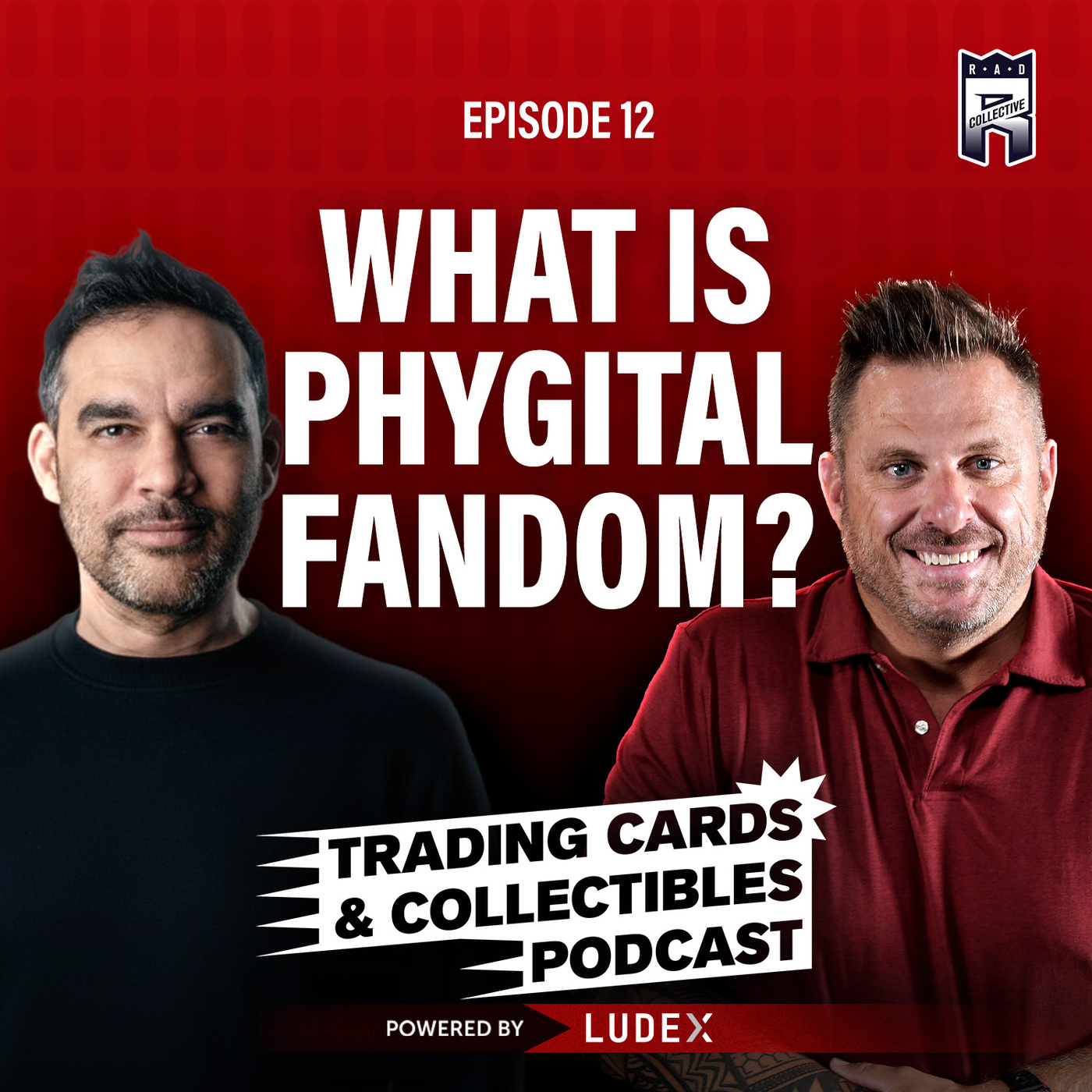
In this episode of "Trading Cards and Collectibles," host Ryan Alford interviews Tareq Nazlawy, CEO of Trace, about innovation in sports fandom. They discuss how Trace blends digital and physical collectibles to deepen fan engagement, using examples from tennis and Formula 1. Tareq Nazlawy explains how fans can collect digital “moments” as virtual ticket stubs, making remote participation meaningful. The conversation covers the challenges of innovation, the importance of user experience, and how brands can build lasting relationships with fans through data-driven engagement and authentic experiences. Listeners are encouraged to try Trace and share their feedback.
TAKEAWAYS
- Innovation in sports fandom and collectibles
- Integration of physical and digital collectibles
- Evolution of fan engagement platforms
- Challenges of innovation in established industries
- Importance of user experience and reducing friction in adoption
- Digital collectibles as virtual mementos for fans
- Data-driven relationships between brands and fans
- Examples of digital collectibles in sports, such as tennis and Formula 1
- The role of authenticity in fan experiences
- Opportunities for brands to engage with and understand their fan base
Life is life and you can't always be at the game. Sometimes it's taken place on the other side of the world but it doesn't mean that you give any less of a shit about it than somebody who's actually able to be there, right? And having that artifact of that obsession is something that we think every true fan should have and with it there's another fun to be had in that space as well and it can be product. Welcome to the Trading Cards and Collectibles podcast on the Radcast Network. From chasing Grails to Colin Bluffs, I'm going inside the hobby. Are you ready to collect? Let's get at it. Here is your host, Ryan Alford. What's up guys? Welcome to Trading Cards and Collectibles here on the Radcast Network. Your number one network for the past shows, the greatest hits and amazing guests. That's what I'm talking about. We're getting into the car today. We're driving. We're going fast. You know why? There's not a trace of anything around us but innovation. He is the CEO of Trace is Terrick. There's a lawy. I'm driving my best there, Terrick. You got it. You're all good, man. Thank you for having me, Ryan. Appreciate it. Yeah, man. I love what you're doing. I love innovators and I know it's hard. I worked with some of the biggest brands in the world in another life in the add agency world and watched innovation come alive with smartphones and everything else. And I think the innovation you guys are doing with fandom meeting, you know, this collectibles meeting attribution, which brands want. Hey, as a marketer and a business guy, and somebody back in the hobby makes a ton of sense to me. I'm glad that you're picking up what's putting down right into your right about innovation. Being a hard thing, the stuff that we're doing at Trace, which I know we'll talk a lot more about, but it's born from quite a few years of thinking about like what new business models could look like in sport and consumer goods, apparel and footwear and collecting is a very common theme. I used to lead digital innovation at one of the biggest sporting goods brands globally, Adidas. And to get companies that know that like there's another frontier to go and fight on to win tomorrow's business, it is quite difficult to get existing companies to do new things. So sometimes you just got to go do it yourself, right? Yeah, you do. And I applaud you because you know, it's tough because you have things that are making money today, right? You have your try and true. Like I'm holding up. They're not Adidas or Adidas. I was expecting you to maybe say Adidas because I hear that sometimes too. We'll come back to that. Get on here. Get on here. The Nike's here in my hand. So I do know the shoe thing, but I do know, hey, we're making money on this physical thing. But do you invest in potential in what you know might be coming? I think that's probably the hardest thing for companies. I'm sure you've dealt with that at Adidas. And now doing your own thing, you know, I mean, like and we're going to talk more or get to the nuts and bolts of trace, but just thinking theoretically on like innovation and stuff. You know, and if someone reads it, it has half a brain. We'll go, that concept makes sense. But our consumers buying it, absorbing it, doing it to the level today that you know that they will, that's always the challenge, right? Yeah. I mean, you know, you can be you can be right and theory, but if you're wrong with your timing, you're just wrong. I think it was like a Bill Gates thing or something like that when he said, you know, if you're early, you're wrong. And that's one of the hardest things, you know, is trying to figure out even if you see the big idea in the big vision about like, oh, you know, if people were sort of collecting live moments and they became identity signals, which were readable by lots of people and whatever, like that would unlock a lot of value, but like, you've got to prove number one thing, which is is a sports fan ready to do this mode of engagement. And can you create something which is compelling and joyful and fun enough for somebody to participate in alongside the other things that are competing for their attention. And that is that is not a trivial thing to try and achieve. But if it was if it was easy, everybody would be would be doing that, you know, you know, I think what you said about Trident tested, especially like the physical merchandise side of things, you know, coming from a sporting goods brand, I have a lot of love for merchandise, like I've just moved house and I'm trying to get my shoe collection down to under 40 pairs. It's hard. It's hard. Yeah, well, believe it, I've you know, I compete with my wife for class days just I'll let it go, you know, yeah, I love shoes too. I miss you guys, but I only I'm, you know, 40's strong. And I can't stop buying them either. It's just that that's the thing. And I will never try and make a case that like collecting things digitally as a total replacement that thing collecting things physically. But I think that we live in a world now where meaning is created more in the digital realm than it is in the physical realm and the manifestation of the carriers of meaning in the physical realm, physical still is a very, very important carrier of meaning. And it's also a very monetizable one. But like here's the challenge is that when people buy that pair of sneakers from wherever they're buying it from most of the time, people have no idea who that is, right? Which is why most brands have spent a lot of time building up direct to consumer businesses because they want to understand how like that consumer what makes them tick what they want, how to really maximize the value of that relationship with them. Data of course is at the heart of that. But you know, Nike is a consumer brand, right? If you're a sports team or if you're a sports league or even an athlete, like most of these businesses only just beginning to think about themselves as direct to consumer organizations. And they've grown up in a different world, right? They've grown up in a much more licensing oriented business where the relationship with the fan is is usually managed or controlled by somebody else, right? First, the broadcasters now like, you know, digital streaming, but merchandise, you name it, there's usually, you know, somebody paying a check to the right holder to take over those rights and say we'll take it from here, we'll do product and distribution, consumer relationship management, etc. So that you guys can just focus on like getting the best players and scoring the most points and putting on the best spectacle that you possibly can. And that's gradually changing, right? Which is where the that role of the of digital in understanding who that fan is and where they're engaged because most of them aren't anywhere near the arena quite frankly, right? Most of us are consuming sports somewhere else. That's where the role of like the idea of like collecting things digitally in marriage with physical merchandise. I think that's where the opportunity really is going forward. So you'll never find me saying digital is a replacement for physical. Just go check out my sneaker collection and you'll see that. No, but it has a chance to, and I think that's what you're doing with trace is we haven't connected them enough. There's so much opportunity in the digital space that it isn't about cannibalizing. It's additive. And I think that's where the real opportunity is is making it worth the addition, worth the time spent, worth it, and connecting those dots. And I would go a step further, they're becoming D to C companies, they're becoming data companies, if they're really smart. What you're describing, I mean, if this podcast is the heart piece, the other podcast is the head piece, then I totally get it. But in my mind, you're you're bang on with that, right? Which is data really is the harder of all of that. And as a fan, you know, and a consumer, we're a bit more sensitive about that than we used to be in terms of how we share our data. And we only really want to do that for the things that we genuinely give a shit about, right? Or care about. We think a lot about when it comes to back to the hard side of things, like I can tell you're a sports fan, right? Just by looking at your desk here, I mentioned just before we just before we kicked off that I'm an obsessive about motor sport, about Formula One. I've not missed a race in seven years, not a single one. I've only ever been to one, right? Because it's kind of expensive, right? It takes a whole weekend. And you know, the obsession for the sport is one of the only things that really genuinely compete with my actual marriage, you know? It's not level of religion. You're going to have to help me with that too, Tarek. I look, smell, feel, and act like someone that should be an F1 guy. Okay. And I haven't gotten into it. I can't say I've really tried. So it's more, you know, the battle of attention for a guy with four boys, four companies, not four wives, just one of those. And, and, you know, a love of college sports and NFL. So Tarek's going to be my buddy getting me an F1. I mean, I definitely think that there's only a certain number of rabbit holes you can live in. You know, like, there are some people who somehow seem to like know so much about so much, but like that, we'll have to sort of draw the line somewhere. I mean, for me, it did, I think here's an important understanding, like in terms of how you jump down rabbit holes, like it started for me with, you know, my best man from my wedding sort of coming over to stay with us in Amsterdam. And we were looking for something to like chill out on the couch and watch on something. And I, his wife wanted to watch drive to survive. And I was like, please, we could do better than that. By the end of that week, I'd watch the whole thing. And, you know, two weeks later, I had the sim rig with the wheel and like, you know, and then later I knew all of the corners for all of the tracks. And, you know, then, then I'd like to line and sink it. Yeah. But when you're designing a sort of a fan or a consumer journey, there have to be these sort of upper funnel and mid funnel and sort of lower pieces to that, you know, like how we catch your attention, how we sort of bring you right down the rabbit hole. And for me, like that mix of art and science in Formula One and I'm an engineer by training, you know, I studied, I studied engineering at Cambridge for a few years. And so the technical side of the sport was a big deal for me. And actually, some of the things that, some of the very first things that we did with trace was to generate a piece of storytelling artwork about what's really going on in this race for in a way that for basically for true fans to have into own. And, you know, we wanted to go past the idea that like, it just looks like a bunch of cards going round in circles over and over again. Like, what's the story here? Like the attend here or attend there? Like, how is this interesting? And there are so many layers to what's going on in a Formula One race, just like there are so many layers to what's going on in a pop in a college ballgame or in a, certainly in a baseball game, because, you know, good luck, you know, piercing that veil. Like broadcast has got limitations about what it can achieve in storytelling, because unless you know what you're looking for, you're just watching the physical athletes and objects moving around and trying to interpret what's going on, which is where the sporting data side of things has got, I think, so many awesome stories that can be elevated and used to actually capture that. In fact, you can kind of see it in my background here, I'm going to send you a couple of these things after. This is a story of a Grand Prix. It's the Abu Dhabi Grand Prix, where Mercedes and Ferrari would do kind of out to see who would finish second in the championship. And the story was unfolding by lap by lap by lap, right? And so we captured that in a piece of artwork that people really dug, because it really, it really kind of told the story. And turns out you can collect that, right? Like, you know, if I had something to show for all of the races that I've been following for the last seven years, it would be pretty cool collection. And the idea of like being able to, it's not just about like the athletes and it's not just about the teams and sort of the more sort of like the fantasy oriented side of like collecting, right? You know, I know, I'm not packed. I'm seeing what rarities I've got. It's not about my attachment to the player. It's about the game of collecting the hobby of collecting, right? Yeah. I think where we started with Trace was, well, there's another way of looking at this, which is not just supply based scarcity of these things that have like, you know, a signature on it, or there's only a hundred of this particular player or a hundred of this Pokemon with the particular foil behind it, you know, all of that stuff, I think is very, very relevant. And I go for it. But there's time based scarcity too. There's moments in time, right? Some of them matter and some of them don't. That's why we love sport. We turn up no matter what. And sometimes we get fed one of those like dramatic turning points in sporting history or in the history of the season or the history of the team. Was I here for it? Yes or no? That's what it is that we wanted to give to fans. And we want to turn what happened on the field with how everybody's feeling about that particular moment into something that you can have and hold on own and collect, like stamps in your passport. Because we think that kind of tree fandom is worthy of recognition. And the more you do it, the more you compound it, right? Like check, check you on it. All of the vaults of your collections, like every event that you've been part of, knowing that that information also unlocks the best of the sport. That's what Trace is about. I decided to segue us along Ryan. I like it. What it is that we do. And my next question was, and I'm still going to follow up with it. For our audience, Terrick, simple terms, how does Trace work with, you know, I know you've been doing this in a couple different sports, tennis now, walk our audience through like nuts and bolts, what Trace does and how it connects like this physical and digital and, you know, ultimately a fan engagement platform. Let's say you're a tennis fan and you're, I'll talk to you about that, the journey effectively. You'll be like, you know, the Shanghai Masters tournament is coming up, right? So you'll be checking now, like who's playing, who's not playing, you'll have just found out, Carlos Alcarez, sadly, is not playing at the Shanghai Masters this year. And then, you know, the tournament starts and you'll be seeing how people progress and you'll be checking the scores of, you know, which match, etc, until you start to get to the pointy and maybe you'll be back in your athlete, etc. These are the things that a fan will be thinking about as a major tournament like the Masters 1000s in Shanghai is happening. So where does Trace fit into that journey? Well, we're in partnership right now with the ATP tour. So if you're on any ATP touch point, you'll start to see like, oh, you can now come back your player and collect this match. So you'll hit the banner and you'll come to the trace platform and in the trace platform, be like, here's all of the calendar events. Who are you backing for which of these, these matches which are coming up and you'll pick your players and what will happen is we will take all of that information and we'll say, all right, you picked this match and you're back in that player. And then what we do is we take actual data from the match and all of the data that all of these fans have put in about like, who are they backing and fuse that together into one collectible for that match, right? And so now there'll be a record of what happened, who you backed, who everybody else backed, and we'll make that look super cool, right? And you'll, you can actually go check this out because on the 9th of October, you'll be able to go collect these things from the Shanghai Masters. So we take data from here and data that we collect, data from the ATP and we use, you know, a variety of techniques, including some AI staff and some manual creative staff to fuse this together into something that you can have. And the more you collect, the more you unlock, right? So more like gamified streaks and predictions and things like that that we kind of know and love, that change the outcome of what it is that you're actually collecting. And of course, there's a rewards component to that as well, right? So we've got some dope stuff from the tournament and, you know, you're always in with a chance to win this or that, like the signpost or the match balls, etc. But the whole idea here is that as I'm going through that experience that everything that I'm recording is now compounding over time. And so my idea is a tennis fan, if you like, is growing. And I'm constantly leveling up as in terms of like the proof of how much I really care about the sport. So that's, I don't know if that was simple enough for you, right? But you tell me. Yeah, I mean, I feel like I'm a good simplifier. Maybe my wife was at oversimplify, but it just gets me through life. When we watch sports entertainment or, you know, focusing on sports and you have this fandom, so you're into it. And these moments come and go and you watch it. It's really bottling up that experience of that moment. And because, you know, our memories are fleeting. We remember, hey, I watched that, but I don't have any hard drive that keeps that necessarily. Maybe I DVR did or something, but this was a record of and bottling up that moment for me for not only memory, but for collection. And that was my take away. Honestly, mate, you should just do all my pitches instead of me. It really is that, right? Like, I'm going to, I'm going to put something on my screen here just to sort of like give you, give you an idea of what it is. And like I said, I can send you some more, more things like this afterwards, but you just describe like, you know, I'm going to show you the graphic of what I got on this poster behind it. F1 is kind of that art and science mix, right? I mean, and other sports, you take other approaches with more like player names and image and likeness and whatever, right? This is the story of an F1 race. So if anybody watched this race, they'd be like, oh, that's the Abu Dhabi track, right? You know, I know it. I know these corners. And they'll be like, oh, here's every single lap. And here's where Mercedes will going to win P2 in the championship. And here's where Ferrari was. And here's where Alonzo pipped Lando for P4 in the championship. Like all of these tiny little moments, they're like manifest in something which looks kind of like a piece of, you know, data vis-a-vis digital art that is provably scarce, right? Because after that event is done, you cannot, we don't make any more of them. You cannot just like right click and save them. They're all blockchain-based provably scarce assets. Either you have it or you don't, either you were there for it or you weren't. And we think about this thing as like, you know, is immediate memory recall of what happened in that event. And even if I just want to like, whatever, stick it on my wall, I have it in my card collection. There's something, you know, visually arresting about it as well, which is ultimately collectible in its own right. Yes. Memento. Digital or physical. Memento, reminding you of that experience. It's a much cooler ticket stub. Yeah, it's like a virtual ticket stub for the 99% of people who cannot be there. Which by the way, you know, like I mentioned, one race out of a hundred, I'm actually less than one percent of everyone races, you know, like life is life. And you can't always be at the game. Sometimes it's taken place on the other side of the world, but it doesn't mean that you give any less of a shit about it than somebody who's actually able to be there, right? And having that artifact of that obsession is something that we think every true fan should have. And we think there's a lot of fun to be had in that space as well. And it can be productized. Oh, for sure. I see it. Have you gone down the rabbit hole of other sports? I know you're not doing it. Maybe like every day with an agreement, but I'm sure you've visualized or mine mapped or whatever you guys do, you know, how other sports would play out. Yeah, we do. And I wish we had even more time to do that because like, obviously, success for us, like, it looks like doing that across as many sports as possible. We're taking a good look at a couple there right now. Cricket is one of them. You seem to be focused on a lot of like, and look, I'm American to a fault. Yeah, I can very proud to be American, but I'm American to a fault to think that my universe is everybody, you know, like, that's an American trade, I think. Like football, baseball, basketball, you know, so basketball. So, so baseball and basketball both. So if we are actually looking at those, we're in a couple conversations, especially on baseball because baseball again, it's one of those sports where what's really going on is a lot, lot more than meets the eye, right? Yeah. I think like baseball teams as well as cultural symbols are from what I can tell I started to sort of understand. There's much more kind of like brand value in the, in the symbol of the baseball team than just what's going on on the field, right? Just like people are seeing in soccer, right? Like PSG, it's a fantastic football team, but like they're a, they're a brand symbol, like a Juventus or a Barcelona, they are bigger than just what's going on on the field. So baseball for sure, why cricket though? Like what's the common thread? Like I'm like, you know, motorsport, tennis, cricket, golf, combat sports. These are sports where like often you'll find a person who's obsessed with it that isn't surrounded by other people who are obsessed with it all the time, right? And it's difficult to go to. Like if you're a fan of one of those sports, the chances are that a view being able to like just go down to the, to the baseball field or to your college team or whatever is, is a little bit lower because like, you know, golf moves all over the world, tennis moves all over the world. So there's F1, cricket is, you know, most of those fans are in India, right? And, you know, cricket is being played on all corners of the world, although the audience is heavily concentrated in the subcontinent. And that's, I think, where we have the most to offer someone, right? It's like, where you can't be there, just like you're showing up for it anyway. And of course, there's a whole shit ton of data that we can, that we can play with there. But I lived in, I lived in Oregon for three years, right? And I definitely got my flavor for US sports basketball for me was my easiest entry point out of all of them. But college football, I really loved watching college football. I found it more accessible than watching NFL. And there's no sport where this can't work. I think it's just you kind of go, you go first, where your obsessions are the most close. And what you think the audience is really ready for that. If you're telling me, by the way, like, hey, what are you doing? Like, you know, just this has got NFL written all over it. Then I'd love to chat more about that. I think, you know, being more in the physical collectibles side now and seeing just how much of a heyday the trading cards, you know, like I'm again, or having an in raising, I think there's like some, I don't know, I keep coming back to sort of the purpose here, you know, the minutes of any game come and go, the moments deserve to be kept. And it's, you know, this minutes moments thing. Hey, I'm a marketing guy, dude. I'm like, I'm going down the whole rabbit hole here. I'm writing, I'm writing, I'm writing some names here. I'm writing some names. It's free advice. Steve Jobs paid a lot for it. That could 2008. So many the build, dude. I definitely, I do get it. And actually, like, you know, one of the things that we're exploring at the moment is that kind of mix of like, look, if we're here for it, we're here for it. Like, I should get something to show for that thing no matter what. Exactly. And actually compound over time, right? But there are some, like, there are moments, like, for example, in a boxing match, there's a certain number of points, uh, a punches which are thrown, right? If every single one of those punches was collectible, some would matter more than others, you know, some's going to be a knockout punch or knockout kick or whatever. We could be talking boxing or MMA or whatever. In baseball, there is a certain number of balls pitched, right? Like some of those matter more than others and some of them are more consequential than others. And so literally there is scarcity of moments. And you can make an event collectible, you can make like a tournament, a tennis tournament, you can make a tennis match collectible, you can make a tennis point collectible or a hit, you can subdivide the whole thing and cultural meaning if you like can be assigned at any one of those levels. And we have the technology to make those things digitally scarce and to connect those digital, digitally scarce items with physical things. So I imagine that like one thing I would love us to do would be to, you know, to make every punch in a fight, a collectible which you can get. Like, if you've been watching the fights like all season long, then every fight, there's like 864 punches, right? And the most engaged fans will randomly be allocated these different punches, you visualize that with like the actual physical motion of it and the impact and all that kind of stuff. And some naturally have more rarity and value than others because they are from one athlete or another athlete. And they resulted in, you know, a part of a combo or they were knockout punch or whatever it is and be the ability to use like real-time data to actually generate those items is here. And that's what we are using to be able to actually to do that. So yeah, there's like you said minutes to moments and I just jumped on it and we started to think about like not just this time-based scarcity but like every act in a match is potentially a collectible act. Love it. Terrick, you just said that and I think for our audience, I think what's really interesting about this is when you watch sports from home, you get to enjoy it and your fandom is there, you might be wearing your jersey, you might be doing whatever, but you don't really feel a part of the experience because you're just watching it. You're an observer. And you don't necessarily, you might say, hey, I watched that to your buddy or whatever, but it doesn't quite have the cachet of, oh, I was there, man, I was on the 40 yard line, you know, whatever it might be, you know, what this does is it documents your fandom and I come back to these moments that happen during something, especially when it's something iconic, like, you know, come back or whatever, you know, it might be and you watched it. And oh, man, I was there for that. I was at the game. But nobody goes, yeah, I watched it on TV, like that's somehow some cachet. But you know what, if you've collected a moment and have a collectible digital or physical showcase of that moment, you're suddenly in the game, like, like you are when you're there. And that's a really interesting thing here that is the innovation. I think, I think you're, I think you're bang on, being a fan has to be something which is more participative than just one way consumption of the content. And we are actually for, this is why in Shanghai, for the first time, we'll actually be fusing your participation and the thing and who you're backing into the actual generation of this virtual ticket stuff that we call a trace, right? And so you see yourself, along with your community of fans who are part of it, and that's because that's, that's reality, dude, right? Like the sport is nothing without the fans. It's not just about the action on core. It's about who was all here for it. And so, you know, we've been listening to the fan feedback and bringing those things together. I think is, I think is, is really cool. I don't think anything will ever replace the idea of like being there. It's like going to church, you know, nothing. But does it mean that our home get me better? Exactly right. And, you know, when I sort of think about like the missed opportunity here for me as an obsessive fan and also from business element, is that like, you know, the reason I have this stuff on my wall right here and, and by the way, like people bought a bunch of posters of these F1 traces, like we have no rights to be like a merchandise company, but we tapped into something where people, we spend like 50 bucks, couple hundred bucks at the end of the season on things to have. And why do I do that? It's because I can't wait for somebody to ask me about this thing, you know, like I can't wait for it to be like, Oh, what's that? It's like some kind of like crazy digital art thing or whatever. Like what's going on? Let me tell you, like, you know, that's the story of the Brazilian Grand Prix where, you know, Czecho Pérez and Alonso are like duking it out for the podium and Astamalan were like, you know, through the roof. Like I just want that conversation starter. And to be able to sort of do these things in a way where it's not just like, Oh, it's like a stamp on your coffee card and like, you know, everyone looks the same. It's like, now there's story in here, there's memory recall in here, there's like emotional investment in it. And you know what? Like if that accrues to, you know, your fan ID, which I actually like next time you go to a game, guess you something special, even better than maybe you actually, we get a bomb on a seat in an arena as a result of the fact that somebody's collected all these things from their couch. I mean teams and brands should know who these fans are and and take care of them. And not just to get their data at a market to them. Yeah, it all feeds one another. When you give an experience or a momento or you take care of them, they're going to stay sticky. You know, it's like, these are, these are fans, but they're customers. And you know, you got to treat them as such. And if you want lifetime value, if you want them to stay fans, then you're constantly evolving and improving that fan experience. And this is kind of that natural evolution. And I think of like, you know, panini and tops, even, you know, like they do the panini instant. I think if that is sort of there, you know, the world championship just happened yesterday, whatever sport football basketball, they come out of these panini instants they released the next week. It's like the cards from that game or some of that, which is getting it this, but this is like taking that and going like 1200 steps further, you know, and sort of the documentation of the moment in a more personalized way. It makes a ton of sense. I mean, that's definitely great to hear from somebody who spends all the time thinking about, you know, collecting stuff, right? So it does. I think you're, you're, here's your challenge, Tarek. And you know this, like friction removal. So I don't make it easy. I think, I mean, not a 10 fans for whatever sport, tennis, cricket, basketball, football, I think hearing our conversation and hearing the theory, not just theory, but the practice of what you're doing. It's like, sign me up. That sounds cool. But how easy can you make it? And can you do a retina? I scan and I'm in. I don't know. We're not quite there yet. But you know what I'm saying? I think that's what it is. It's like, I flip on the game. How do I not fumble around with a login in my password that I can't find and an app that doesn't want to load? And I'm trying to do this, but I don't know. I just want to watch the game. I'm like, it's how do you remove friction or keep that's the key, probably something like this? Yeah. Well, I mean, certainly it is. And the biggest friction is confusion, by the way, right? So like, even if it's like, you know, biometric login and, you know, it's super easy from a sort of an app perspective, which people are used to do, like, used to have, like, three, four apps open, jury as sporting event and whatever. It's still a new behavior, right? To be like, like, collect a match and like so that the most important thing is to think about, like, just through this journey, the basics of user experience design and what messages matter more at what moments. Some of them, you're more like digital savvy audience will probably also be asking, like, is this NFTs? Do I need to connect to wallet? Do I need to do all of that? And I'm like, no, you don't, right? Like, this is, yes, they're provably scarce assets. And we are, you know, your fan identity is something that we do have on a blockchain because it's got to be verifiable for any time down the line that you want to share that identity with somebody and remaining control of your data. But we don't have, this is not a crypto thing. It's not like a, you know, the friction in those experiences is really high. This is not a financialized behavior. This isn't the idea isn't like, turn up at this event, collect these things, and then flip them, right? This is, this is about primarily proof that I give a fuck about this thing, right? So like, if I give a fuck, I just keep doing it because we want to know who those people are that actually do give a fuck. That's the whole point. The 800 punches that happen in a boxing match, sure, make those tradable. Like, as an engaged fan, I get, I get sort of some privileged access to things that may have more culture meaning or more value. And like, of course, I want the marketplace for those things. But that marketplace is there for those people who are like bona fide fans, right? And the reason we do that is because that's the signal that we are trying to celebrate and create. It's that obsession that the sports team wants to know about, right? Like, who are the people that actually really we owe our cultural capital to? And how do I, not just by giving a little, also get a lot more back from that fan? That's also who sponsors want to know as well. Like, who am I really in front of, right? Who's it by association with this sports team or this sports league? Which fans and what can I learn about them? And can I even acquire them into my own ecosystem as a brand? Who are they? And that's where the identity signal of like I genuinely give a shit about this thing, the basic premise of it. Derek, it's really interesting. And I think I love this topic and the innovation and the the fidgetal digital, fidgetal, is that made up word on them that I just make that up at least. Someone's probably said that before, you know, nature of this. It's really cool, man. And I think I think you've got all the opportunity in the world. You just got to connect all the dots, baby, you know? 100% there though. I mean, I like it. We definitely are. And you know, there's a special source in here about like, you know, as you say, just like memories a big deal, you know, be able to sort of capture that energy, which is currently going missing. It's a special capability. And you can use that in a variety of ways, but you've got to stay true to the obsession. That's that's how we that's how we roll with it. You know, just don't mess that bit up, right? Authentic to the sport, authentic to the fan experience and everything works out from there. Derek, talk to me in the audience about where they can learn more, keep up with what you guys are doing and get involved. Yeah. So, well, I mean, first of all, you can find me on LinkedIn, Tarek Nazlawi, as you'll see the right there. Trace, where you can find us at trace.fan. That's where our website is. And if you go onto the ATP live app, you know, if you see that or the ATP website, you'll be seeing traces everywhere and you'll be able to go try it out and collect the, collect the matches and back your favorite players yourself. So that's what I would love you all to do. Go try it out and we'll be reaching out for what you think and we're constantly like evolving the experience together with the fans. Trace.fan. I appreciate you, man. Thanks so much for coming on. Thanks Ryan. Pleasure to be here. Appreciate it. Hey guys, you know, to find us collectables.show. You'll see the whole video. We'll have lots of added commentary and visuals from Tarek's team at trace. Really cool stuff. Trace.fan. Check them out. You know, to find me, I'm at Ryan offered on all the social media platforms. Hit me up. Tell me what you like. Tell me you want to see. Tell me what you want to collect. We'll see you next time. Trading cards and collectables. Had a couple of those myself a few months back. But it's not just about the values about what you're collecting. What means something to you? Share a story. Share a video of you holding up the card that you hit last week. That was your favorite player and you nailed it. So case hits at collectables.show. Send in those videos. I want to know the stories. We're going to bring them to life here on the show. We're going to do a segment each week once we get rolling and get some videos in where we share that on the show with us. We want to feature you on collectables. Show. Thanks for tuning into the show. Don't forget to follow us on your favorite podcast platform and don't miss the full video version on YouTube. You can find us at www.collectables.show or follow Ryan on Instagram at Ryan Oldford. Now get out there and collect yours.