Josh Luber on Fanatics, Trading Cards & the Future of Collecting | Hosted by Ryan Alford
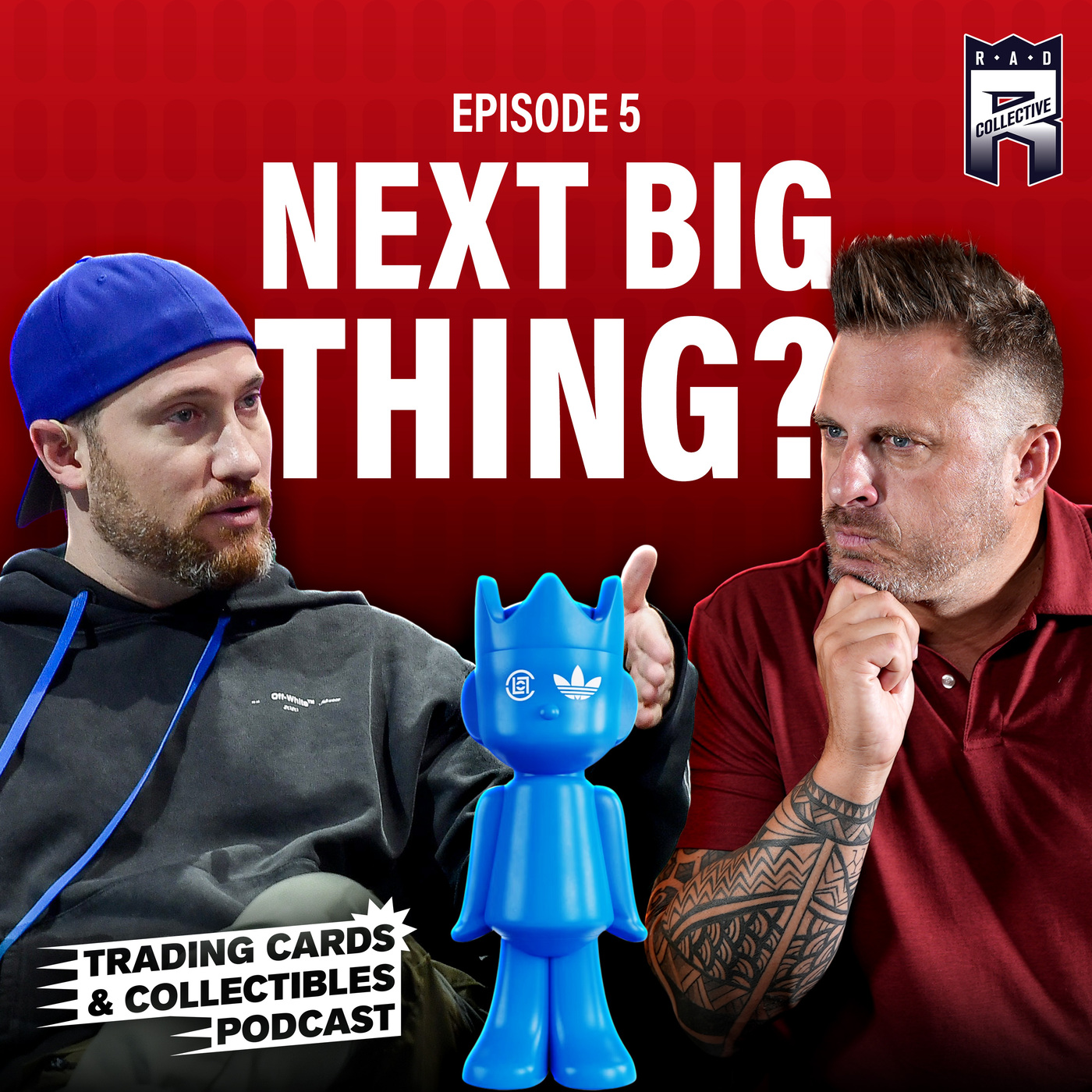
🎙️ Episode Summary
In this episode of the Trading Cards and Collectibles Podcast, host Ryan Alford sits down with Josh Luber, co-founder of StockX and Ghost, to talk about innovation, entrepreneurship, and the future of the collectibles market. Josh shares how StockX disrupted the sneaker and trading card industries by applying stock market-style mechanics like bid-ask pricing and authentication. He also dives into his latest venture, Ghost, a customizable collectible toy brand that’s capturing attention with blind box formats, rare variants, and long-term collectability.
This conversation explores the psychology of collecting, the educational value for kids, market challenges, and the cultural significance of collectibles—from sneakers to trading cards to toys. Whether you’re a collector, entrepreneur, or fan of pop culture, this episode delivers insights into how collectibles connect communities and shape culture.
🔑 Key Takeaways
Josh Luber’s journey: From childhood collector to co-founding StockX and Ghost.
StockX revolution: How bid-ask pricing, authentication, and standardization changed the marketplace.
Trading cards challenges: Why liquidity and standardization make them tougher than sneakers.
Ghost’s innovation: Blind box collectibles, player personas, and cultural storytelling.
Education through collecting: Teaching kids supply, demand, and financial literacy.
Market insights: State of the trading card hobby, Fanatics’ role, and the psychology of collecting.
Future of collectibles: Where sneakers, cards, and toys fit into culture and commerce.
All these products, they're all the same. All high-p economy products, they're all supply and demand-driven. Just having the leagues as equity partners in their own product, that should have been that way for decade. It's their product, it's their business. Welcome to the Trading Cards and Collectibles Podcast on the Radcast Network. From Chasing Grails to Colin Bluffs, I'm going inside the hobby. Are you ready to collect? Let's get at it. Here is your host, Ryan Alford. Yo, what's up? Welcome. We appreciate you for tuning in. We got to treat today, folks. You like collectibles. We're going to go top to bottom here. We're covering the gambit today, guys. We got everything from shoes to toys to cards. He's had his hands and all of it. He's the co-founder of StockX, the co-founder of Ghostrite. He is Josh Luber. I can't even keep up. You're touching everything that I like. How'd you do it? I just get to make businesses around things that I like, and that's it. I just happen to be the right age for the right history of the products that we grew up collecting, and then we're so lucky everything else, and happy to be here, but this is the fun stuff to talk about. I know, man. I think every kid growing up, if they were going to, you know, how you have to do in like third grade fourth, what do you want to be when you grow up? I think if the job description and path that Josh Luber took, I think 98 percent, I can't, and maybe little girls now too, but definitely little boys. Like this guy would have wrote down the path that Josh Luber's taking. I would like to have that. I mean, dude, I mean, it's, it is, you get to do the things that you wrote collecting and loving. I know you got a deep history there, but it's just cool, man, that you've, I don't know, made this ridiculous, I know nothing's easy. You've worked your ass off, but it's just crazy. The, the things that you've touched, it's almost like overwhelming knowing where to start with the successes you've seen, but congratulations. Thanks, man. I appreciate it. We didn't know that this career path existed when we were, you know, we grew up before the internet. We grew up before, you know, all of this, and it's fun now that to look at, you know, we both have young children, we both have young boys, you know, and watching now what his view of this is, and he understands some of this, he understands some of what StockX is and it meant, but like he just loves Pokemon cards more than anything else, right? And so now we get to be there to sort of guide them and talk about the business side of it. Like that, by the way, that is like the, the most fun part of all of this for me is like we had a conversation literally last night because he has Pokemon cards that he wants to get graded. And I told him that he has to fund it. So he has to figure out what card he's going to sell to pay for his, like, and him going through the math of, well, if I get a nine on this and sell that, I mean, like how cool is that? It's so cool, man. That's so cool. And I'm so glad you went there, man, because like part of why I started this show, like I've been doing podcasting and what and doing stuff that is pretty cool for most dads, you know, but they didn't want dads a podcast or an unsan marketing agency. That's cool. They didn't really want anything to do with it. And then they started getting into the hobby a little later. This is probably 18 months, a year ago. And I started, you know, using my connections, like just to get us in experiences, like, you know, a condo for Anders might have been on the show. And, and then it all snowballed into doing this show that I'm blessed to do. But the biggest rewarding part has been teaching them supply and demand, teaching them e-commerce, teaching them, you know, in a cool, fun way, because they want to collect and they want to know, you know, what's worth it. You're exactly right. Hey, if you want that, you got to sell something to make it happen. And that's been really cool and something that I really want to expand upon on this show, but is through that lens. So I love that you're dad and you're teaching them these things because I mean, shit, I mean, but he gets to say my dad started stock acts. Is there a bigger play for him as cool than that? He doesn't realize that yet. But I have a couple years, I think he's going to figure that out. My daughter who's a couple years older, like she's starting to figure that out. And as kids start to understand what shoes people are wearing. But, you know, if we all grew up, like our first businesses were all flipping trading cards and, and, you know, buying and selling cards when we were a kid. And so now to get to do that with with my son and part of it is, it's exactly right. You know, you mentioned this sort of, you know, education of the economics of supply and demand and having those conversations, which obviously is we as parents, we all want to help our kids, you know, grow and become smarter and learn these sort of things. But I had this realization early on at StockX when, you know, we were very fortunate to be asked to come and speak at a lot of different places. And because it was sneakers and, and I would go and I would talk at many different places all over the world. And by far, the best ones were always when I got to go speak at a school, a high school or college or middle school. And, you know, even though they all came, they wanted to hear about 30,000 hour sneakers with the time that I met M&M. When I got the economics of it all, you could actually see them like refocus and be super interested in that part of it as well. At least most of them, some, you know, still want to, to goof around in the back. And then the lion afterwards of people that wanted to come up and talk to me. And some of them were about what's it like to meet M&M. But most of them were, what do you think it would be a good idea if I bought this and sold this or whatever, like really. And, like, and then, you know, 10 years later now for me, having that conversation and doing it with my son is, is obviously super rewarding. But like, that was a realization early on in terms of what we were doing that was like, oh, okay, this is a really good, like, entree into education and everything else. Well, led to starting StockX. Let's talk a little bit about that story before. I want to spend the majority of the time talking about Ghostfrike, because a lot of, you know, people can find the Josh Luger story on StockX. But for our audience, for people, you know, sit in the table, talk to us about that. And, you know, at the damn shoe game, man, insanity. Yeah. There's obviously a lot to that. I'll say one of the most important parts of sort of my story of starting StockX is that, you know, I'm an entrepreneur. I've started and run, I don't know, maybe it doesn't companies at this point. And there was a probably good four or five before campus, which is the company that became StockX. And all the companies that I started before that, none of them had anything to do with sneakers or collectibles or trading cards or any of my personal passions. And almost intentionally, like I almost intentionally tried to avoid creating a business related to sneakers so that it wasn't just an excuse to play with sneakers. And also, you know, sort of pre-social media at a different time with sort of the businesses you could build online. It was like, well, am I going to build a sneaker store? There wasn't as clear of as many opportunities. So, but it wasn't until I created Campus, which was a side project, while I was at IBM. I always, in between every business, I had some corporate job to pay the bills and sort of jump to the next one. And so I was at IBM as a strategy consultant and I was running campus on the side, which was like, you know, the, the, the back it for, for sneakers, right? The price guide for sneakers. And, and that was, we started working on that in 2012. And it wasn't until 2015 that I met Dan Gilbert. So I was doing this on the side for three years, nights and weekends, just trying grinding and trying to create something and do something and just really find a way of what was going to be my next business. How do I leave IBM? What is this, this next business that I can create? Now, I wasn't exactly sure what it was going to be, but I had a pretty good, you know, sort of at least, um, path with, with what I'd created in in Campus. Now, trying, is there a real business within the sneaker industry? And I talked to everybody in the industry, Nike eBay, Foot Locker Complex. You name it. And there's never a good fit of who to work with and who to take campus and evolve it to the next level. And it was really just, you know, there's a lot of just luck and serendipity involved in any, anyone's success story. But for me, you know, in April of 2015, I met Dan Gilbert, Dan, who's the owner of the Cleveland Cavaliers and Quick and Loans and pretty much the entire city of Detroit. And the short version is that he was trying to build the same thing. He was trying to build a marketplace for sneakers based on, you know, stock market mechanics. And that's an even longer crazier story because Dan's got no ties to sneakers whatsoever. But, you know, he understood the value of the, you know, StockX, the real business is not sneakers. It's the bid-ask model. It's the pricing model. It's the marketplace part of it. And it was just fortuitous to me that maybe the only other person, the whole world, trying to do the exact same thing at the exact same time, happens to be one of the most successful business people in the world. And so I ended up selling campus to Dan. That was sort of the data layer. And then moving to Detroit to work with him and his team to turn that into to StockX. And so I moved to Detroit in 2015 and then, you know, we launched StockX the next year. But it was very much a granular step by step had no idea where it was going other than in this direction. And I got lucky that I met Dan. We got lucky that we had an amazing team that we worked on it with at StockX. And, you know, and here we are. But yeah, the whole thing is nuts. What's something that maybe people haven't heard or known about that story, you know, with StockX? Like, what's something that's maybe a nugget as we turned to? I mean, you know, that rocket ship. I mean, I watched that from afar is, you know, someone in, you know, tech and marketing and my kids that were younger, but got where sneaker has pretty fast. I mean, I wrote you a lot of checks indirectly. Sorry, not sorry. I know. I know. And maybe what's a scoop or something that was their turning point with StockX? Like, what was the day that you went? You know, you're on. I mean, look, you just nailed it. Like, the biggest thing is, like, Dan, get what happened to be doing the same thing. You know, but I do say smart ideas find fortune and luck. And so, I think, you found you made your own luck there. But I think, you know, it talked to me about something that's maybe not out there or something that was just the the game changer turning point. Yeah. Well, so I'll give you two sort of one in the beginning and then one sort of the day that we knew that this was going to work. So first of all, you know, business is just people. That's it. And I was unbelievable fortunate that the team that Dan had in place in a particular the guy who was the CEO of that company before I got there Greg Schwartz, who then became the COO and my co-founder and building StockX, he and I ended up being perfectly complimentary in every way. And, you know, in skill set, in temperament and personality and sleep schedules, I mean, like, we were effectively co-seos and, you know, running that company. And I didn't know him before. And I mean, it could have gone wildly the other way or it could have just been not as great. And so much of our success as a function of our partnership and being on what to build that company together, that's, you know, that's starting it. But, you know, we, we got together in June of 15. I moved to Detroit. We launched StockX in February of 2016. And then in September of 2016, was the first time after we launched that there was a big Nike drop. It was the Jordan one bread, the black and red sort of OG colorway. And from February of 16, when we launched until September, September of 16, we were grinding out two trades a day, four trades a day, six trades a day, just slowly, you know, couple, couple more sales every day. And by the time we got to September, we were doing about 60, 60 sales per day. And it was like, like, we're grinding and just trying to figure out if this thing's going to work. And that day, we sold 301 pairs. And from the moment that dropped happened in the morning, and we started seeing, you know, just a higher rate of sales every day, you know, we had all dashboards on our phone, that we can see all the metrics for the company. And we were glued to our phone all day. And we just realized that like, you know, this is, I mean, it's a company jumps five X that day. And it was the realization that we always knew that the power was in the model, that it was about the pricing models, about the ask, you know, it happened to be that we were selling sneakers. And to see what had happened was there were so much liquidity that came into the market at one time from Nike, right? That for us, all of a sudden, then the spreads between bid and ask were, were getting smaller. And so the trades were moving quicker. And to see all that happened kind of in real time and the data in real time and the customers and the people on Twitter and everything else, that was the moment that said, oh, this is going to work. Like this is, this is a better model period. And we didn't make up the model, right? All we did is copy parts of the stock market and areas of finance and apply it to areas of commerce. But that was the, this is going to work. Now, we had no idea that it was going to be the size and scale and success and brand that it was. But that was the moment that we knew the model was the right model and then it was going to work. And by the way, just for a context, you know, so we did 300 sales that day, I've long since, you know, I left stock X in September of 20, so almost five years ago. You know, when I left, we were selling somewhere around 35,000 sneakers a day. So, you know, we were nowhere here, scale or success or anything in when that that really happened. But it was understanding the mechanics of supply and demand and the model that it was like, okay, we're on to something here. Yeah, man, there's brilliance and all of that. I'd love to explain just briefly the whole eBay model, which is, you know, for some people like bidding and, you know, you establish value by how much someone will bid versus your with the bid and ask. So that'd be part one. But I just to comment like the way you guys tied into these cultural moments and I'd call it borrowed interest until you created your own. And it's like because you have all these large brands, you know, Nike and doing these issue releases and feeding into that and having this engine, damn, it was smart. I mean, in it, everything makes sense to successful, you know, it's like, I'm not thinking of that, you know, like after the fact, you know, you don't appreciate the grind and the doubt, you know, everybody believes it when they see it. Not everybody believes it, though, before they see it. Yeah. And that's to the fruit come the spoils. But talk about that bid ask and anything you want to expound upon on that last point I made. Well, look, this is my favorite part of all of it. And, you know, I've sort of become an accidental economist through all of this. But the model is really really. Collector and economist, uh, yeah, Josh Luber. That part is true. At the most basic level, anyone who's ever used eBay understands eBay is what's called a listing based marketplace, meaning that anyone can go list whatever they want. And so if you want to buy a pair of Jordan one breads, then you will go and you will put in the search term and you will get thousands of listings of everyone selling theirs. And, you know, this one has a picture this way and this one has a receipt and this one has a cat in the back of it. I mean, all the like, but the reality is is that a Jordan one bread is an asset. It's a it's a single standardized thing, particularly if we're selling brand new shoes. Um, you don't need pictures of all different ones. I mean, if you think of if you go buy a share of Nike stock or in New York stock exchange, there's not thousands of people saying buy my share, buy my share, but like, it's a it's a standardized thing. We know what a share of Nike stock is. And so we create what's called a product based marketplace, meaning that the product is the page. And as opposed to listing and we create that catalog on stock X. And so we create one page for the Jordan one bread and every bid and every asking everything is all at one page. And that creates the efficiency and the transparency around around the dollars and the data. But now you know, if you want to buy a pair of Jordan one bread, there's one place to go and you don't have to go all the way around. And so our goal, our entire goal in building stock X was how do we create a product based marketplace? How do we create where we can sell one page? And so everything that you've seen that we've done is a function of that. And in order to do that, you have to standardize that product to be able to sell it off of a stock photo. That's kind of like that's kind of your rule. Because if I'm if I have one product page, I can't have pictures of all the different listings. So you have to have a stock photo. So in order to do that, we had to do a couple of things. First of all, we only sell brand new or dead stock sneakers on stock X. If they're used, you would want to see how used and all the different variants. And so it's only brand new, comes with the box, comes with a lot of accessories like we know exactly what that is. Second, and what was more complicated was we had to authenticate sneakers. And we created authentication centers. And I've since lost count, I don't know if stock X probably has 14 or 15 all over the world now. And authentication is a value. And if you're a 14 year old kid to save the volume, I need to buy a pair of Yeezy's, you know, knowing that you're not going to get a fake pair, there's real value in there. I'm not saying there's not. But it's really just an any to play. It's a red herring to the overall value. The purpose of authentication is authentication is one part of standardization. And you need to standardize in order to have a product-based marketplace. And you need a product-based marketplace to be able to have that ask and that's the business. And so everything drives back to that. And if you look at now 10 years later, the companies that won stock X and go, stock X goes to go to a widely different from a brand standpoint and customer experience and in UI. But at the core, we both have bid ask. They call it something a little bit different. There's like an offer, but same thing. And it's product page and it's bid ask and they authenticate. And that's it. Everything else is everything else is gravy. Everything else is brand. Everything else is is how you move beyond it. But at the core, it's how do we, and by the way, obviously we're copying the stock market and there's one ticker symbol for Nike. And every bid and every ask happens at that ticker symbol for Nike. And so you never have to worry, you never worry, you're going to get a fake pair, a fake stock, whatever, right? So that's what it means to have a stock market of things to copy the bit ask. And that's really the key to the whole thing. And so that also then became the sort of benchmark as stock expanded. And we added other products, which is, is this a product that can be sold off of a single product page with a stock photo and everything around it? And so that's really what we built. And it happens to be start with sneakers. It happens to be that sneakers work really well for that. But it doesn't necessarily need to be the only thing. As we've expanded and who knows as they continue to grow, there may be products that look wildly different that ultimately are sold on that site. Great explanation. And I hadn't, I don't know why I'd never, I don't know if you had thought I would have like crystallized it with a single page thing. You know, now that I'm like, yeah, yeah, they do. I thought I don't know how many things. It's one page, it's always in its different sellers, but it's all on that one page versus eBay, the Wild Wild West of 100,000 listings. But sneakers versus trading cards, trading cards that get opened out of a pack. They need to be authenticated sometimes, but the variability in the quality versus a new pair of shoes. That's a fascinating thing that obviously pretty obvious once you talk about it, but it's actually a very different thing because it's a trading card that's been open out of a pack. Is it ever brand new? I mean, you can say it's near a minute, all those things, but that's kind of a fascinating, I don't know, you know, comparison because they almost convinced they make them factory better at times than others. You know, like there's intentional, I don't know, imperfection in the cards. Well, that's a whole another can of worms. And what's interesting is is obviously most trading cards that are made through machines and computers and everything else that go into it. But if you look at all the cards, all the vintage cards, they were all hand cut. And so you have, that's why you have just wildly off center cards, you know, from the 60s and 70s and 80s. There really aren't too many centering issues anymore, at least there shouldn't be. One of the reasons why stock X has not been wildly successful in trading cards is that obviously can't sell raw cards because raw cards have can be whatever condition they can be. So never have one page or it'd be very difficult. Right. And so it's just like a new, excuse me, a used pair of sneakers. So can't sell raw cards. Now, you can sell graded cards. And that's perfect in theory. Except for the fact that the overwhelming majority of trading cards have very small number of total population of cards in any one grade. But the exception of like 89 up to that Griffey and 2018 Prism Luca and, you know, maybe two dozen other cards. You know, and the pop of any one grade, one card is, you know, it's just small. And so with such a small amount of total population, the liquidity for bid-ask that happens becomes very small. And so it doesn't work that well. What you need is for any product, you need to have some large a number of quantity. When Nike drops a pair of sneakers, there's a million pairs or 100,000 pairs or like it's, it's, it's, it's not 20. And so StockX model works better for unopened wax, where you take a box of, you know, car that are still sealed, because at least that's fully standardized and the quantity is the same. Now, there's other issues because wax generally comes from manufacturer and it goes to a deal or a card shops and there's other issues. So, you know, this is around the specific nuances of supply and demand for cards and why it works okay, but not great for the StockX model. How have they been like transition to go try, but is that been a, is it a growing sector for StockX, you think, the trading cards? You know, honestly, I'm not really sure. When I left in 20, the trading card industry was in a much different position, right? This is pre-finatics and that was me obviously leaving StockX to start fanatics collectibles, but the amount of cards that were out there and then we also then were right in the middle of the pandemic and then we had 21 and the crazy right, you know, everything that happened in 21 and the crash afterwards. And I think a lot of it, there just wasn't a a prioritization for trading cards because of everything else going on in the economy for the core business. And so when I left, you know, the trading card team got at least one person smaller. And so I honestly, I don't really know, but again, if you just go back to the core of how good it is for the model, it's okay, not great. So it makes sense that management wouldn't overly prioritize that versus products that are great for the model. It's such a rocket ship. We could do a whole show on it, but I want to focus on ghost right of both that and fanatics. I mean, talk about that rocket ship ride on fanatics and then let's build a ghost right. I'm going to let you kind of take it there. It's all the same story and not just because it's me because all these products, they're all the same. All hype economy products, they're all supply and demand driven, you'll have finite supply. They all sit at the intersection of culture and commerce. They'll have then collectors and resellability and authentication issues and, you know, and they're all products that are equal parts, you know, consumer good and financial asset. And for me, you know, I happened to get back into trading cards pretty significantly in 2018, 2019, at the summer of 2019, I stepped down as CEO at stock X and then I was spending a lot more time on trading cards and by then also ramping up the trading card business at stock X. So both personally and at the company, I was spending a lot of time and sort of, I got to see what the state of the industry was and it was very clear that what did happen was going to happen. I mean, the trading cards were going to explode or at least, you know, significantly grow from where they were in 2018, 2019. And that too, that the current companies in the space were pretty much relics of the 80s and 90s. It had been the same people, the same team, the same technology, the same structure. And rightfully so, I mean, you know, it had been a call to a sleepy small industry for the, you know, 15 years before that. And so there was just this opportunity that was pretty clear. And so I left for the sole intention of trying acquire the licenses for trading cards. And I was actually partnered with somebody else for about two months and then I met Rubin and we sat down and talked through it. And every serious business person I've ever met, we spent six hours and for six hours, he asked me the same question in a million different ways, which is how big this be. At some point, I finally just said, I don't know, but it's really big. It's way bigger than we think and it's growing, you know. And he's you know, everybody looks at that size. Basically, it's worth my time in effort to go after this. And we left that room that day, which was the Tuesday before Thanksgiving of 2020. And we said, we can do this together. And what it was my idea and it was my vision, it was my sort of plan. But again, the day, I mean, it's, you know, 95% his relationship with everybody in fanatics and the credibility and support and structure to be able to go out and actually do it. And ideas are worthless, right? Execution is the only thing that matters. And I was fortunate to find the perfect person to partner with to go and do that. And then we were able to acquire all the licenses for baseball basketball football cards, you know, over the next year, over 21. And then as everyone knows at the end of 21, beginning of 22, acquire tops. And then for me, personally, you know, once we realized it was going to be as big as it was, then it was like, great, you don't need me to run this company. And I don't want to run a company this big and this much stuff going on. And so we were fully aligned. We hired Mike Mayhann as a CEO now. And then I left that summer. And Ruben was the first check in the ghost, right? And it was, you know, about as much according the plan as anything can be. It was, you know, a great success for, you know, for me, for, for us for the, for the business. But I really truly believe for, for the hobby and for the collectors as well, to have a company. And, you know, the, the leagues and the, the PAs became equity partners in financial collectibles as part of that. And I don't know all, forget all the details and which one is which and, and all that. But, but just having the leagues as equity partners in their own product, that should have been that way for a decade. It's their product. It's their business, right? And, and I know why it wasn't and, you know, we thought about things differently and we thought about licenses differently back then. But that's what you want as a collector. You want the NBA to care about NBA cards and you want the NBA players to care about NBA cards. And that is just a net positive for everybody as we continue to grow and build that hobby. And so, but for me, you know, I left that summer with a very specific purpose of creating Ghost, right? Because the collectible toy space, it's big enough to matter. It's big enough to work with all the most important brands and artists and companies and, and sit at the same intersection of culture and commerce the same way the, the rest of the products do. But it's not so big that you have these monolists in the space that already, you know, dominated and sneakers obviously Nike and Adidas and trading cards, fanatics and the NBA. You know, the collectible toy space you have Funko, which you're probably familiar with. There's a company called Bearbrick, which is made by a Japanese company called Metacom. Obviously, everyone's aware of what's been going on with Popmart and LaBubu in the last couple of months. But there's not a whole lot of real big companies that dominate the collectible toy space. But at the core, they're like economics of it are the same. And so, I wanted to be able to have the chance to create a brand based on all the same economic principles of supply and demand and market-based pricing and all the things we learned and created at StockX have been collectibles. And, you know, as you can see, I mean, literally we're in the process of releasing NBA right now. And the go straight NBA set, mine as well be a trading card set. Like it is in function and form, it is almost identical. The only difference is the canvas that we play with is a, you know, is a two-inch collectible toy versus a flat piece of paper. But the rest of it is the same. And in fact, the collectors are often the same as well. And that's kind of a fun place to be, which is like we get to go after what is, you know, a big market and but doesn't have a lot of big sharks in it yet. Talk to me about the name goes right, goes tell stories. Hey, I'm a writer myself. So it immediately resonated with me. And then, you know, there's uniqueness, but also, I don't know, some mystery intrigue in the whole thing. Talk to me about the naming and, you know, I don't know, some of that organic stuff. Well, first of all, when we created Campless, which was the price guide for sneakers back in 2012, this was like the blog era. I mean, there were, I don't know, 100, 200 sneaker blogs that were out there at the time. I mean, this is where all the sneaker activity took place. And if there were 200, there was 198 of them that had the name sneaker or soul or kick or flipping it, you know, is it was sneaker news or, you know, kicks on fire or nice kicks. And it was like, if I'm going to build a consumer brand, I either need to build a brand. And, and, but I'm not going to try to fight through the noise and like, which one am I between all the others? And that kind of stuck with me as we named all the other companies stock X and zero cool and go straight. Obviously, fanatics collectibles is fanatics and Ruben wants everything to be named fanatics. And that's their point of view on it. So that alone, we knew it was going to be something unique and stand out, but it really is a function of the product itself. So, you know, go straight is a blank canvas collectible. So, you know, this is a ghost, which is this this three printed ghost was the entire business plan in 22. I just walked around with this and ghost has no face. It has no gender. The ghost itself is not a character. This is a blank canvas. It can be an MBA player. It can be a pencil. It can be, you know, a random design. And that's what trading cards are, right? The physical form of the trading card is the same every single time. The value is about who's on it, the condition, the scarcity, but it's a blank canvas product. And so knowing that and the fact that as collectible toys, we just naturally work with, you know, other partners where we create either IP or or characters or other things on top of our canvas. This idea that as a blank canvas, we're now telling the stories of other people. The ghost is not a canvas. The ghost is not a character. It's the other person's story. And what's a ghost writer, right? Is a person. So that sort of how the ethos of the name came about. And we obviously then then back into calling these ghosts, which I don't know what's a ghost look like. I don't know. But like, you know, this is let's go say. And so it is very much, you know, intentional through through all that. And it makes sense as we continue it through no matter what partner we have for ghost right. I'm surrounded here. If you're not watching the YouTube, you have to watch the YouTube. So get over there and check this out. You got to see my my co partner who's remarkably silent. Yes. He's sitting there with a one-of-one yogic. Yes. They're probably the best player in. He's fine. That dude might be top five all time. Like if you really look at his skill set, he's unbelievable. It's best. He is the best. And I've got here on set, Ronald Acunia, Jr. We are Atlanta Braze fans grew up in the Dale Murphy area. I'm aging myself here, Josh. Bob Horner. Dale Murphy, Jersey, which I got upstairs. Yeah. I mean, I looked at Atlanta for 15 years, man. I'm all about it. Bob Horner, Raphael Ramirez. Are you kidding me? Yes. And then but now Acunia is the guy. I mean, he's he's kind of gotten universal. But this ghost right is out of 100. He's I love what you're doing. I think you nailed it. It crystallized it for me when you're talking about the toy. There's not there's no differentiation really. The toy thing. It was kind of a wide open market. There's no there's no tops, you know, it's what and the reason why it's because almost all collectible toys are characters. They're IP hardcore collectors will know like Astro Boy or cause, but it's just like Spider-Man, right? As opposed to having a blank canvas where it can be anything, it can be Acunia, it can be yogic, it can be a basketball, it can be a pencil, it can be, you know, whatever it is. And it just gives us more range to be able to create those products, you know, with those people. And you know, that Acunia, by the way, is one of my favorites. What you're holding is so we did the MLB release in August. We're now in the middle of the NBA release. And for for both of them, we created a limited number of what we call 400%. So there's three main sizes. The same size is a bear brick, which is kind of the the leader in the space. So so this size which actually hold up here's a Jimmy Butler for the set that's going on. So we call this 100%. But this is basically two and a half inches tall. This is what the primary product is for the sport releases for we did WNBA in December, Major League Baseball in August and now doing NBA. And then there's and they're all sold via blind box and we can talk more about that. But then there's this size, which you have the Acunia, which is we call 400% these are 11 inches high. This is kind of the flagship product for your like hardcore toy guy, collectible sort of stock X, you know, customer. And most of the ones we sell non sports are this size and they're in small runs, 150, 75 mean small runs. And then these, we basically don't make these are more promotional. They're all one-of-one of each player. And this happens to be Yokech from the set. And so we do have a bunch of these emotionally at different places, restaurants and events and stuff like that. But we don't sell these nearways much. And so what you have is. But if you want to DM them, you might could get in on that. I you know, let's just say everything's got a price tag Josh. Everything has a price tag. We do sell, you know, the one-of-ones occasionally because we can't keep them all. Right now, I'm keeping Yokech and NBA. We'll see what happens if we let them go. But what you have is we did a limited run of only seven players from the M.O.B. set. There were 20 players total in the set where we made 400% versions of those. There was obviously big demand and the other players are Otani, Judge, Soto, Trout, excuse me, Bryce Harper and Paul Schienz. And those were set were sold separately at a fixed price. And so you have one of the, you know, the only 400% of it and I guessed right being in South Carolina that you were a brace fan. So you guessed right. And then Don Staley. That was a lost honestly. The other one I was like, right, I was like, what else do I have South Carolina? So for WNBA, we only did the blind box this size. And for the WNBA because they have so many great players that have already retired that are part of their collective bargaining, we're able to have Don Staley in the set even though she's no longer an active player. But obviously, you know, maybe already one of the greatest college coaches, you know, and and I imagine, you know, people around there are probably pretty big Don Staley fans. They're huge. And they, everyone will die over that. The, and what's cool though, Josh, is this Akunya is probably going to sit on this desk in this studio on every episode. Because it looks like the perfect spot. And not only is it cool shit, it is Ronald Akunya and it's out of 100. It's already like a rarity. I mean, but it ain't going nowhere. It's maybe in for sale. It's staying right there. And look, I'm going to even open one of these. Josh was so kind to send some of these. You've got the best of like pack opening, you know, like, because you have the, you know, you're ripping it. You don't know what you got. You've got the parallels. You never know. This is out of the 2025 MLB season gameface. While I'm opening this, Josh, talk to me about, you know, how many of each of these like for NBA, that release coming up, the dates and everything related to it. So unfortunately, I couldn't get you early boxes of NBA as that's available shortly. But MLB set, which released in, in August. And so what we have is they come in, you know, box like this where you have a case that has 12 individually packaged ghosts in there. And then you don't know what player you're going to get. And obviously, you know, you hope that you hit Otani or Skins or Akun here. I mean, there are stars. There's only 20 players in the set. But really, what people are looking for are the rare variants like in trading carts. So this is one that I actually hit. This is a one-soto gold crown. So this one is number to 10. This is one I bought. This was a, a Skins gold number to 10 that you could get a good deal. You had to buy one Josh. Come on. Well, so one sold on eBay for 1200. And so that I convinced somebody I that pulled another one to sell to me for slightly less. So at least I got a deal versus what eBay was. But I mean, it's talked to me about what's in the Skins number to 10, right? So yeah, exactly. That thing's ridiculous. So God, I'm holding two things that are, that are still foil or, you know, foiled up here. What am I holding? Once the bullets are green or the, is that what you call in foils or figurines? Yeah, whatever, collectable toys. It's, you know, so there's a, there's a little card that goes with each ghost. And it'll tell you who the player is. If you don't know who the player is and, and just a little information about it. So, is this give away the parallel if it is a parallel? No, it doesn't. It does have on the back all the parallels that exist. So, but it doesn't give away the parallel if you, if you have one. And we started that to know maybe the player, but then the, the real reveal happens on, on the toy. Right. And I'll tell you what, I have an extra box sitting here as well. So I'll open this box, we'll open that one and we'll see. Yeah, let's do it. The, uh, and then, you know, you know, lights better than never on those NBA ones. If you just say, I got you, uh, I have Mr. Paul Skins. Nice. I think, basically, I think Otani's probably the best hit. And then Skins and Judd look like they're selling second best. And then actually, after those two, would I just, I just hit Verlander. So, we also have one famous fan in the set. Also, something we took from trading cards, if, you know, you're familiar with like, uh, Kobe's, uh, Tifa card. And so, in the WNBA set, which cannot December, the famous fan was Aubrey Plaza, the actors and Canadian. And then, the NBA set, actually, the MLB set is Mark Walberg. Mark Walberg's wearing a socks jersey. Again, this is the intersection of culture and commerce and sports and, and then the NBA set, the famous fan is M&M wearing a pistons jersey. So kind of like full circle on all that. So, yeah. Very cool. Yeah. Mr. I got Mr. Paul Skins. I got Skins on the base. I think that he's cool. That is awesome. Head spins. Very cool. It does it. The hat is kind of the ghost look, I guess. Like you said, like the crown or that's kind of the calling card, right? Exactly. And, you know, we spent a lot of time real, real number. We spent eight months and we worked with 14 different toy designers until we got to a shape that we liked. And what was interesting about the crown was we wanted something that was noticeable that was identifiable and say, okay, we know that's a ghost, but something that can disappear in the design if it needs to be and doesn't stand out. And so, you know, sometimes, like you don't even notice, like this one has been one of the most popular. This is actually a 3D NBA basketball and you can actually see like sort of made it pebbled. That's awesome. The crown is almost irrelevant to the design of this. Obviously, when we do the the blind boxes, you know, the gold stands out and the parallels are very clear. But otherwise, I mean, this is kind of just Jimmy Butler wearing a blue headband or right? And it's just like just as who it is. It's Jimmy Butler. So, yeah. Exactly. And that's kind of how blends in with schemes here for the black uniform and everything. Right. Exactly. You get the custom mustache. It is. Yeah. Well, by the way, the mustache, I'm glad you pointed that out because, you know, again, business is just people. And we got so lucky in that one of the few people who works with us who I didn't know before starting this company, our designer Pedro is unbelievable. And the details like look at the back of a coony. Look at his hair, right? Like how cool was the back of his hair? He's got the the the the color of dreads or whatever you call that. I'm probably not doing justice to what something stylish is these days, but his hairs are ridiculous. Right. Right. And so like that level of detail and design is fantastic. And so like and the NBA set like them and M1 has all of his tattoos. And so yeah, that's kind of the fun part about this being able to create our interpretation of the player as a ghost. But also, obviously, very clearly taking a coony is real hair and the real the way he wears it and pulling it into it. I mean, these guys, the culture, the intersection of culture and commerce is so obvious because that's it right there. Like these guys, the players have their own personas and, you know, the coony has got this these braids that anyone, you know, like that's a cultural and just I don't know, part of his overall like zoo exuding his star power, you know, and you're bringing that to life on the collectible in a 3D way. And that's what really stands out with these. And how's it going? Like how's the business? We've only been selling ghosts for a year. We started the company in 22. We started making ghosts in 23, but we didn't sell our first ghost to August 24, making physical products and dealing with factories and tariffs and all the other stuff is, you know, it's a joy. So we've only been selling for a year and we're only now ramping up and getting to the first seasons of the big IP. We've done maybe 10, 12 releases, but the MLB set, which just came out was only the second and now NBA is the third. And so we've now gone through one season of our big three IP WNBA NBA Major League Baseball. We also have WWE and UFC and they'll come a little bit later. But now we get to go like in season two and the WNBA season two will come out in December. We'll have a different design. And what you see in your holding just the, well actually you can see in Don Staley and the MLB players, they have the same eyes, they have the same look for this set. We call that game phase, the idea sort of like the elevated intensity of athletes. But you can think of that as like pinini prism, right? Like that's 2018 prism. And then next year be 2019 prism or whatever, right? So we'll have one design that goes across all of the leagues, all the sets. So we've now had one that has all three for game phase and then there's a new look that will come out for WNBA and that and each set will make a little bit more. There'll be different parallels, different chase elements in September. The NBA won Cooper Flags in the set. WNBA, Caitlin was obviously the huge chase last year. Literally, the Caitlin Clark has an R on her shoulder, meaning that this is a rookie ghost. This actually is a Caitlin Clark gold, which is probably the most expensive one in the set. By the way, the the Caitlin Clark one of one sold for $30,000. This size, right? And there's a bounty, there's a 30,000 hour bounty on the Otani one of one. This size also, the one of one has a firecrown, which I don't think I even have any of them because they're their impacts and you have to find them. And so yeah, I mean, it's like it's going great, but it's early. What matters more than anything is the long-term value of the ghost, right? There's a Caitlin gold on eBay right now for like five grand. No one's hit it, but also one sold for like $2,500, $3,000 last month. So what is this in a year? Is this $2,500? Is it $5,000? That's the real measuring stick of the success of ghosts right long-term? Same thing with the larger ones, but like the the blind boxes because, you know, we also, you can also have them graded. So this is a company called AFA, which is the leading grading company for collectible toys. They primarily do Star Wars, GI Joe, Transformers, Human, you know, sort of vintage toys, but we had them make slabs for ghost rate. And so in the same way that PSA changed the value of trading cards, you know, this is a sort of an and any to play. We have to be able to grade ghosts, have them, you know, authenticated, graded, et cetera. And also just an easier thing to display and sort of look cool on there. This is Diana Terasi, gold number 10. And so all that to say is like it's early, it seems great so far, but like it's all about the long-term value and this sort of continued collectibility about it. Because as you know, collectors collect, like they want to collect the same thing every year, every season, every and one or two times is, okay, it's interesting, but what's really interesting is like who's buying the third year? And like I got to collect them all this, you know, so that's the idea. This is built as a long-term collectible. It is not a sort of flash of the pan or one-off thing for us to sell. Like this is about long term. You're taking everything that has cooked on, you know, trading cards with parallels in the numbers, you're taking all of the things that create that sizzle and create the hype. But then you've added the spin and found sort of this blue ocean with the toys, because there's just nothing like this out there. It's super smart, man. And it's, I don't see any reason that this won't be, you know, a rocket ship itself in its own way, you know, to what people want to collect. It's right in there. And you brought it up because I was going to go next, so congratulations on all this. I think it's really cool. But what makes people want to collect? Is that just a, it's like, everybody's just a natural collector, you know? It's like, I don't know. It's like, I mean, I'm a dude. Hang out with guys. I got four boys, you know, like, but guys just like to collect shit, you know? I don't know. Man, they do. Man, if I could answer that, I don't know. I'd be the world's richest psychologist or something. Gary Vanichuck is a friend and investor and I've known him for a long time. And I also think he's you know, one of the smartest people I know, particularly in this area, he said something, usually I, you know, the things he says doesn't surprise me because we think the same way. But he said something that I caught last week about that he thinks that collectors and are going to be sort of a new pillar of culture next to music art fashion sport. That is a big statement. You know, that is a really big statement. And like to really understand what that means. And I don't know if I fully buy into it, but I understand why. And I certainly think that there's some like real potential that it becomes. I mean, you know, it's never going to be as music and sport, right? Or just music film and sport. It's just, you know, dominate culture forever. But it's interesting, right? Like to think about the importance and the, again, sort of like, it matters because of its intersection with culture. And these things were all cultural assets. So I don't know, maybe we get to that point, then it's a whole different ballgame. I love it, man. Working, everybody buy what's going to be coming out, keep up with everything going on and try to get in early before, you know, like it just goes like everything else and goes, Hey, why are bonkers? The values go up and you've become richer than you already are. But I get to tell you the way the trading card market is right now goes right as a steal. And if the trading card market keeps going where it's at, I'm selling my cars and just buying more goes. Yeah. Should you think that market's got to is going to come down? I've been listening to everything I can of all the smart people talking about the market right now. Chris McGill, Chris Hodge had a really good pot about the bull market. I want to say that every one thing everybody needs to understand is that the last run saw a lot of base cards and things that had huge populations go crazy, right? The Luca 2018 prison PSA 10 hit like $1,400. Right. Thanks. And now what we're seeing is only the really true scarce product. Luca PSA 10 was $110, you know, six months ago, it's still $110 or whatever it is, right? Like that stuff's not moving. It's about the true scarce products. And that's a much, much, much different scenario than what happened in 21 where the whole market including all of these. And then what happened is because then those people that held that had that Luca and sold her for 14 hours, then they had money to go back and buy it. So you just don't have that same like full market thing happening. And so I think if there's any indication that this won't end the exact same way, that's it. But you know, cycles things go up things go down. And you know, if some of this stuff goes up a little too much more, then I'll definitely sell out of some cards. But actually the best point that anyone I heard so far is Cage said, and I listened to this yesterday, that one of the best things about bull markets is it brings cards out of hiding that maybe you the seller wasn't willing to sell before they were tucked away in the collection. And you didn't know. And that is awesome to see some cards that you never thought you'd see or never ever shot to get that pop up. And maybe there are a little more expensive than you want. But like that is truly like I think one of the best parts about it. And then if the market's hot enough, then you can flip some other cards that you don't want as much to go after that grail that you always wanted that you never even knew where it was. So that that's a great part of this as well. Who do you collect? I collect a lot. Most of sort of my like primary goal on a day-to-day basis is I collect Black Prism, NBA Black Prism from 2013 to 2021. True Black, one-on-one, basically any players. And actually here's like I just got a package back from from all that was in the vault. So nothing really special about this other than it's a 2015 Black Prism pouch this all in a bull's uniform. So not as you know, but I just think that Prism is the most important brand of the last, you know, 15 years and they're going away or at least NBA Prism's going away. And then after that, it's all where they go away. You think this is the end? Well, it's the end for this. It's a license for basketball, right? Yeah. It's the end for basketball and football. What can be made in non-licensed? Well, non-licensed. They would still have to get the players license, the PA license to turn around and make that, which maybe they do, maybe they don't, I don't know, I don't know if any incident. That's a whole lot, another episode of just madness. Totally. In a super interesting one, but it's not it. Maybe I'll get you on for that. A round table of. I sold and left the NAX collectibles in the summer of 22, but I still buy trading cards almost every day, right? Like I am non-stop. I'm still, you know, I was at the national. I'm actually taking my son to the Dallas card show in a couple of weeks, the first time that he's ever been to a card show. So I'm excited about that. And the nation's a fire hose. We went for five, I mean, all four or five days, dude. That is a freaking, I mean, it was awesome and overwhelming at the same time. Were you spending most of the time creating content? Yeah, I was shooting doing behind the scenes like man, man on the floor. I walked around asking people what's in their case and stuff, getting content for SI. And but then I hanging out with the sports card nonsense guys. It's geo and some of the, you know, so it's, it was a little bit of both, but my boy, I had two of my boys there. So I mean, we got, yeah, I was work, it was work gameplay. And I think I got some national cases here somewhere. I don't know, this is in the national now. I've got something, but I picked up some, some good cards. I was like, it's like a candy candy store, but it was like so much candy, you know, it's like, overall, yeah, it's the best. I honestly like, I was there at the national and most of the time, I was doing breaks for Ghostrite, but I like to be able to just put my hat down and go and just shop and I just like bouncing from table to table and fight my way in there and see what's going in on. That's a fun part. It is. We're carrying my boss and Ghostrite. I can name, I don't know what price points, if you want to talk about that or what's, you know, anything you want to do, but let's tell people how to get them. Well, this is a good place to end for a couple reasons. One, most ghosts are so direct on Ghostrite as what we call blind Dutch auction. And we don't need to go again. Like I said, I'm an economist now, but we don't set the price for most of the products. It is an auction in which it ends up setting a fair market price where everybody pays the same amount. And you can learn all about it. We've been doing this. We did this. It's not actually, did this just not expectables. I think this is the most fair way to release a product where everybody pays a fair price. And the NBA releases is going on. The NBA release starts September 16th. But other than the releases that happen on Ghostrite, a lot of the sport boxes are sold through breakers. And all the big trading car breakers break this, Blez and DACA and Cherry and Pac-Man and everyone else. And so there's an opportunity to buy into breaks and buy it that way. And then otherwise, every now and then, we do have a few fixed price products that will show up on Ghostrite. And so, you know, it does as we continue to grow the catalog. But and we're not going to go down this this path. But I will say that the blind Dutch auction, the pricing mechanism at Ghostrite, that's the real business. In the same way it's stock X, the real business was about bid-ask and single product page. And all the other stuff we talk about is important. And it matters. And if we're a collector, that's what's most important. But for us as a company, as we evolve, that idea of how to bring valuable products to market, I think that's a really important key point. It's smart, man. And you got to get through ad collective. You know, are you bay live? I need to be breaking some Ghostrite, you know? I mean, the four boys you're getting. Let's go. That's right. I'm talking about. I love this stuff, man. I want to, like, when we hang up and we open all these boxes, I can't. I got to save some for the boys. But, you know, I'm going to go hide this Acuna. And now I'm going to take it home just to bring it right back to the studio. Oh, yeah. Really appreciate you, brother. Let's stay connected, man. We got a lot in common. And I love hearing your stories and what you've done, success you've had and your wisdom in the collectible space. I know you'd have a lot to share with our audience and love what you're doing with Ghostrite. No, thanks, man. Listen, we need more people like you and the hobby. Like, there's so that the ratio of smart people talking about collectibles in the hobby to the hobby, it's got to be one of the smallest of any industry ever. And so the more people that, like, so this is great. And so however I can do to help, as you guys grow, you know, please let me know. I appreciate you, brother. Hey guys, you're going to find us collectibles.show. That's the website. You can link to all the social media content. We'll have, of course, in the show notes, links to Ghostrite, all of Josh's stuff and the stuff that's not for sale, this Acuna, Jr. Never for sale. That one, this is NFS model Acuna always here on collectibles on SI. We appreciate you for tuning in here in the early stages. What are you collecting out there? We want to know. Send us what you're collecting. Talk about it online, drop some comments in the YouTube's. And of course, you'll give Josh a follow along with Ghostrite. We appreciate you for listening. See you next time on collectibles. Thanks for tuning into the show. Don't forget to follow us on your favorite podcast platform and don't miss the full video version on YouTube. You can find us at www.collectibles.show or follow Ryan on Instagram at Ryan Oldford. Now get out there and collect yours.