How a Mariah Carey Demo Became a $54,000 Iconic Collectible| Alex Bruh CEO of Wax Poetics
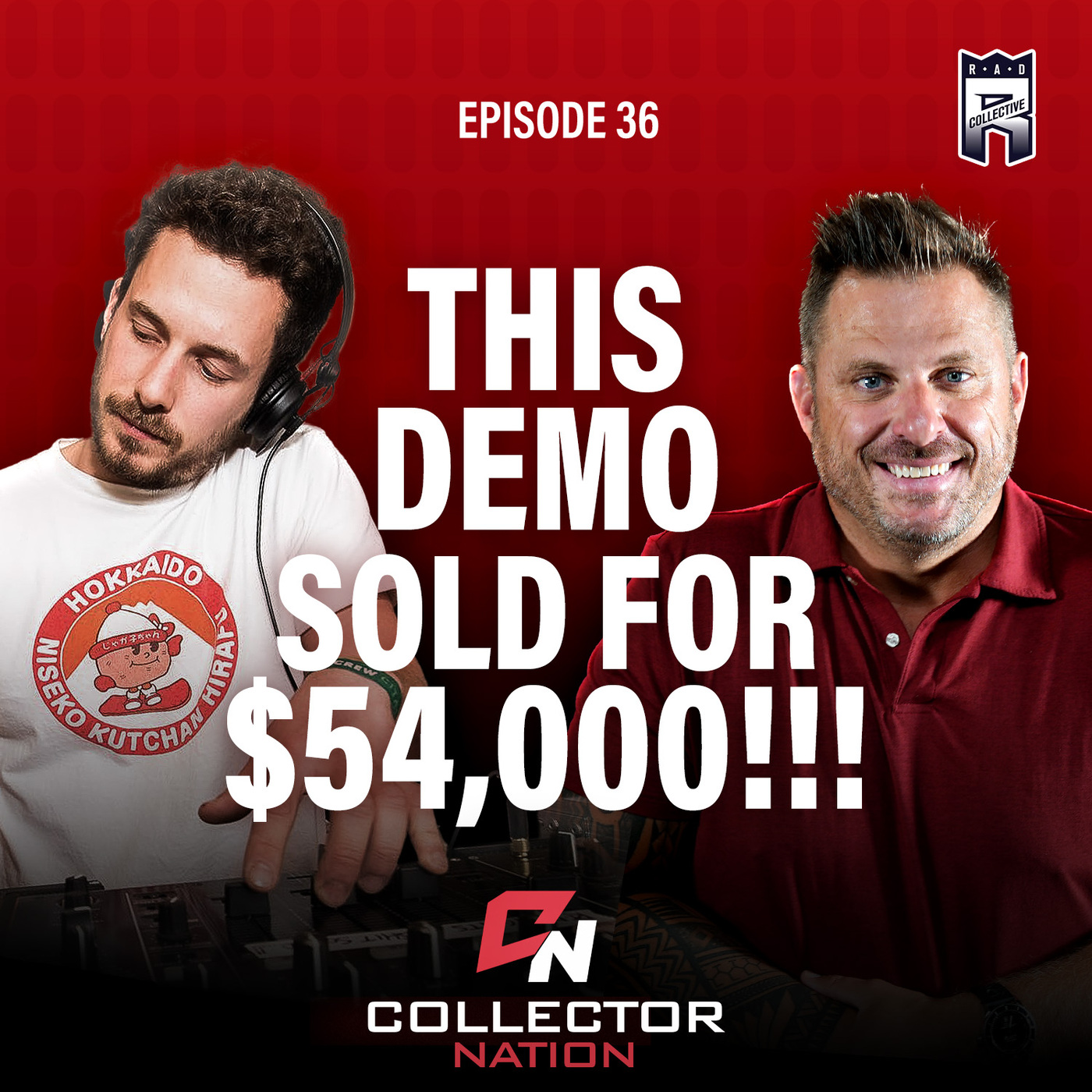
Shownotes:
In this episode of Collector Nation, host Ryan Alford sits down with Alex Bruh, CEO and Co-Owner of Wax Poetics, to explore the explosive intersection of music history, hip-hop culture, and high-value collectibles.
From the lost Mariah Carey demo tape that just broke a world auction record, to a never-before-released early hip-hop recording that Alex calls “one of the most historically significant pieces of hip-hop history ever,” this episode goes deep inside the stories behind the music.
Wax Poetics has worked directly with artists and producers behind Mariah Carey, The Rolling Stones, Beastie Boys, Bootsy Collins, and more, creating an editorial-driven collectibles marketplace built on trust, storytelling, and cultural preservation.
If you care about music history, hip-hop culture, vinyl, tapes, rare recordings, or alternative collectibles, this is a must-listen.
Topics Covered:
The untold story behind Mariah Carey’s lost demo tape
How a leaked snippet sent Reddit into a frenzy
Why Wax Poetics believes storytelling matters more than transactions
The future of music collectibles and auctions
A mystery hip-hop recording launching this January
Why this upcoming release could change hip-hop history forever
🎧 Follow Collector Nation for weekly deep dives into collectibles, culture, and the stories behind the biggest grails.
Someone had not us, not Arthur, had leaked part of a demo about 10 years ago. And we knew this thing was going to get some attention. And the minute we mentioned it, all the Reddit forums exploding, all the fans are like, oh my god, this thing exists, this thing is real, I can't believe it's out there. I actually asked the artist that we're working with in January, if I could mention this item. Unfortunately, I can't tell you exactly what it is, but I can tell you, I think it is probably one of the most historically significant pieces of hip hop history ever that we're going to be putting up. Welcome to the Collector Nation podcast on the Radcast network. From chasing Grails to Colin Bluffs, we're going inside the hobby. Are you ready to collect? Let's get at it. Here's your host, Ryan Alfred. Hello and welcome. We're always bringing you what's new and hot in the collectible space. And hey, we're trying to make it a little different. There's all kinds of stuff happening in the look. We are a collectibles universe. We are a man was made to collect. I'm just the more people I talk to and the more I know how I am, I collect shit. Look around me. This is the only half of it. And I got stuff everywhere, but I love it when culture, commerce, and music, and everything come together. That's why we've got the co-owner and CEO of Wax Poetics, Alex. Brue. What's up, Alex? Josh, do you roll in? How's it going? Hey man, I'm blessed to be here, blessed to get to talk to you and do what I love and talk to people that are, I don't know, having cultural impact on, you know, collectibles and music and I don't know, I love what you're doing, man. Thank you. We're excited to be here as well. Let's shine a little light on what we're doing in the cultural space for you guys to. Yeah, man, it was, you started to educate me before the episode. I had not heard of Wax Poetics. I've heard of the term Waxing Poetic, obviously. And so that immediately caught my attention, which, you know, someone creative naming the company. Long time ago, I had no idea it was 25 years old. Yeah, but I know you're helping transform it, but let's just set the table for the audience. Alex, I mean, what you're up to, Wax Poetics, pass pros of future. Sure. I'll give you the medium length story, I suppose. So yes, Alex, I'm CEO and co-founder of Wax Poetics. Right now, we are a music collectible's marketplace where we run auctions of incredible music memorabilia that comes direct from verified artists, producers, DJs and collectors. But what we really do is we kind of layer in this storytelling element around everything. So we, right now, we sit at the intersection of the traditional medium model with this marketplace model kind of layered into it and we're kind of aiming for that sweet spot right in the middle, which is, you know, something that I think we think has been kind of underserved and missing in a lot of the collectible space and particularly in the music collecting space. And yeah, and your point, you know, you raised quite rightly while we are a year and a half into this new part of this project. Wax Poetics has actually been around for almost 25 years. It's our 25th birthday next year. And yeah, so we started in 2001, not by me, and by the original founding team. And the reason why it started was, born in New York, everyone listening to hip-hop at the time, no one really kind of reporting on it credibly. And the guys were saying, hey, you know, this is a real art form, you know, and it deserves to be kind of reported on, you know, with the kind of respect that it deserves. So really is talking about hip-hop and you've got this like incredible line from, if you're listening to hip-hop, you're actually listening to Sam Porsche, I'm like, funk, soul, disco, jazz, and it's already this like time capsule into the past, right? Kind of perfect for collecting. And it became super influential. Across artists, DJs, producers, collectors, and branched out from hip-hop to all genres. And yeah, fast forward to about four or five years ago, just four COVID hit myself and Dave, my co-founder. We took it over. We were both fans of the magazine, both big record collectors. And we're like, look, there is, there's something really important here. You know, it's a beautiful brand. It's got a great community around it of collectors that we think, you know, have kind of been maybe like underserved in the space historically. And yeah, we took it over. We didn't know exactly what we're going to do with it at the time, if I'm being completely honest, but like there's something, there's something really important to do here in the music space. And yeah, and then how we kind of got to this point, kind of two things quite so depressy happening at the same time. You know, we were looking at, we have a journal that people collect. We have an audience of collectors who are now in their, you know, in a phase of their life where they are actually investing more in their collecting. And you know, we're actually like, hey, we're actually not in the publishing space or in the collecting space. And then at that same time, Sotheby's, we're doing their hip apportion. And they wish to ask us, and they're like, hey, we'd like to be part of it and have the full run of wax critics in there. We're like, amazing, like a huge huge honor to ask to be part of that. But it kind of made us step back and we're like, you know, no shit on Sotheby's, love Sotheby's, but like, why Sotheby's doing hip apportions? And what Sotheby's know about hip hop and what Sotheby's know about music? And that's where we come from. We know this stuff. And, you know, we've been part of that culture for about point 22 years or 23 years. And it's like, let's go and do this. And, you know, there's something really important to be done here, connecting that, you said at the start, very correctly, culture, commerce, collecting, and kind of joining all those dots. So, yeah, so we've been running out that for the past year and a half. We've done items artists with everyone from Mariah Carey, which is how we originally got in contact and rolling stones, Beastie boys, Bootsie Collins, Louis Vega, Arthur Baker. And yes, been a really, really exciting part of the journey. Awesome. And I love this concept. I'm just now wrapping my head around. I think I saw it and I felt it when I was on the site. But this editorial driven collectible market, like, that's cool shit. And it's, you know, it's one thing, like you said, those of you who, whoever throwing stuff up on auction, it's like brand disconnect number one. And it's not, I mean, they have trust in the auction area, but not trust in the hip hop space and sort of credibility. And not to knock their credibility, they have their credibility, what they do. And it's a really natural brand play for a historical publication that's in the hip hop and music and cultural space to make this pivot really smart and make, and as a brand and marketing guy first in a podcast or second, really makes a lot of sense. Thank you. We think so too. And it's not an easy transition space, you know, what physics are very pure, you know, brand. And you know, we kind of are very, and we still are acutely aware of, you know, that needs to be treated with, like, real respect, you know, in the music space, especially. And we have an audience of, you know, very passionate and very die hard fans who love what we do. But we'll tell us want to do something wrong. So, yeah, we were very, very conscious about making that move. Yeah, because you think journalism and public, you know, publishing and being, you know, like it's sort of, in its pure sense, the furthest thing from commerce, usually. But so that's a very difficult pivot to make even if it's the right one. Exactly. Exactly. Now, I think there's always been, you know, a bit of, I say, maybe unhealthy tension between culture and commerce. I agree. And, you know, the real talk, you know, taking over backspetics, like, we love it. But we also know that for it to survive and for it to grow, we have to build this model around it. And, you know, there has to be a commercial element to do that. And that's kind of where we kind of landed with this. And, you know, yeah, again, we try and do it in the right way. But again, it almost, it almost makes work when you kind of play it forward, like perfect sense to your point, you know, the whole space in collecting is built on trust and credibility. And, you know, I'll have to say there's probably nothing that builds that trust or brings more credibility in the space and publishing magazines around stuff. You know, it's not the most, it's not the most sensible business decision ever, but it's we do it because we love it. And, you know, we know it, you know, we talk about stuff because we love it and we work with artists because we love them and we want to kind of bring that connection to culture and that physicality of the items and the physicality of magazines, we still print magazines, you know, it's doing it to a year, focused around the artists that we have that we're doing auctions with. And, and yeah, it is kind of really bringing that that connection back into that music space that's your point. Yeah, we feel just makes sense. You know, you know, if you're listening, I don't care, you know, if you're going to you should buy something, but I don't care if you buy something, but you need to go to the site because I'll say this is that was kind of bouncing around. It felt like, and again, I'm an, I'm an ad guy, I'm a creative guy. And so none of the thought and curation and the beauty of how you set these products up and kind of told the stories, the narrative of what you were selling. It felt very much like a journal, a professional polished journalistic approach to an auction listing. Like, I was thinking, this is content I'd want to read, even if I wasn't going to buy this. I'm just going to say that, that really means a lot, you know, it's something we work really, really hard. It's intentional, but it doesn't, it's not lost on me. It is completely, it was, I again, I just appreciate that I was going like, wait a second, they're selling me an item here, but I'm learning and I'm enthralled by the visuals and I get it's all going on and it's beautiful. Thank you, you know, it's, it's really important for us. And, you know, to your point, that word intention was entirely correct. You know, we're very intention about how we, how we show up, what the stories are that we tell, the imagery, the photography that we use, you know, how it's presented. You know, I was listening to one of your other podcasts earlier today. You kind of mentioned this thing that kind of really stuck with me. You know, this idea that, you know, trying to build the space that is like, you don't want them to chop, you want them to stop, I think that was correct. And it's similar with us, right? You know, yes, obviously there's a transaction element that we obviously want people to come and purchase with us and collect with us. But it's more than that, you know, you can cover and you can discover these stories and, you know, you can kind of get a bit lost in there and, you know, you go from this artist to that artist and whether you end up buying something or not, that's cool, but you kind of want to come in and, you know, discover this thing and, you know, it is, it's the stories, the stories that matter. Yeah. And we try and do a good job as we kind of telling those. Yeah. Well, you can get them to shop and they become a customer, when you get them to stop, you leave a mark that stays with them and it's building brand, because you can do both. This is what's lost in this environment now and I hate it because I watch it with marketing, brand and storytelling and all of that gets lost in trying to make the sale, you can do both. And you guys are doing it. I'll be honest, and I'm building my own collectibles and trading card story in my studio, in my place. And I'll say this, I'm going to have an e-commerce development, but I, the part of what we do, I am absolutely going to take inspiration for what, you, it isn't, I have nothing to do with hip hop or anywhere in your space, but I will say the beauty and thought and the journalistic approach to the auction though, that is, that's not being done anywhere else. And so that was very interesting to me in a way to stand out. But really more for like, thing through the value of the consumer of what it is, and knowing your audience, so many people don't know, you know your audience, that's clear. And I want you to talk about like, how in making this pivot, how you get connected with these items, like, where they come from, like, where, where the stories originate from all that stuff, because it's kind of all one in the same, I would think, to a degree. Yeah, it is. I mean, like, the beauty of kind of entering into collectible space with a brand, like Quax Plexix, is it just opens up doors to the right artists straight away? You had permission. You had permission to ask. Exactly, we had permission. We had permission, you know, and people are interested, and you know, they respect who have come from and they kind of trust us to do things in the right way. And that is something, you know, we also always try and do. I think what's been really interesting for us is, you know, Quax Plexix has kind of been famous for, yes, we have prints on our cover, you know, we've got Marvin Gaye on our cover, but we also go and like explore like, the unsung heroes, you know, the unknown scenes and kind of really shine light on those. And I think what's been really interesting on this part of that journey is reaching out to a lot of those, you know, artists and producers. You know, I think, again, the reason how we got connected to us through the Mariah Carey take and we're reaching out saying, hey, you might be interested in this thing, Ryan. And here we are. You know, that is working with, you know, a producer called Arthur Baker, who is like super, super influential, you know, he's worked with everyone from like the Rolling Stones Fleetwood Mac. And, you know, how do we do it? Well, Dave Macco found a, hey, we want to go and do this thing, he jumps in a flight, he's in Miami, he's at Arthur Baker's house for like three days. And like, a lot of these artists that we speak to just, they have huge votes of these items. They've just got there, right? They're just sitting around and they've got these like, original reels like Bismarkey and, hey, here's the Mariah Carey demo tape and here's the Rolling Stones recording that I did. And, you know, the studio layout that I had for new order and you're just like, oh my god, it's just so many of these things. And then your point around like, where do the stories come from? They just come out. They come out and you kind of, you know, the Mariah one blew my mind as we kind of got into it because there's like 10 different layers to that tape and the story behind it. But, you know, I think what we try and do is give the story space and tell them properly. And, you know, I think that's where, you know, the Sotheby's of the world kind of miss out a little bit. There's a very trans actually focused thing. And again, no shit about them, they do a great job of what they do. But, you know, I think particularly in the space that we're talking about, like giving those stories space and letting artists tell those stories and shining like on those artists. That's the important thing. And, you know, using where we've been to kind of get those. Yeah, you know, it's artists are interested in talking to us. And I would say, I think they kind of dig a bit deeper when we go there because they know what we're going to go and do with that. Yeah. So, yeah, it's just a Sotheby like and so they have to take some pride in that. I think they're different than being featured in your magazine, you know, like it's, you've built the brand, you've built the culture or the respect. And, you know, and that's lost today. I hate it. But it's lost today what it takes to build that trust in that brand. And you have to have passion for it because it's, you know, it's not a quick get get rich fast road. Being that thoughtful. I think though it can be lucrative in a lot of other ways though. You know, and I would imagine, you know, that there's pride in all of it. Yeah, you know, I'll say it's, you know, your point of like it's not a quick thing. It's not, I'll say it's a 25 year project to get that. So, certainly not easy. But yeah, you know, we do see a real high scale opportunity here. Yeah. And, you know, we've also, you know, just close investment round. And I'd say there's not many music magazines, nearly relatively niche music magazines out there, you know, raising money at the moment. And I think that it's kind of testament to, to the history that we have, and you know, the vision that we have of, you know, we want to go with this. But yeah, you know, the passion is an important thing. And I think people kind of respond to it. And I hope they do. Yeah. Are you guys taught to me about some of the items both that have come and gone that might be, you know, interesting, like unique things like the Mariah Care mix tape or demo tape. Obviously that's cool. I got my attention. I don't even, I'm not even concerned about myself a fan, but as a collector, I was like, damn, that'd be cool to have. But, but talk to me about some things that are, you know, just cool things that you've had, things that are coming up, the types of discussions you're having. And is it truly like endless, what's out there? That's a good question. I might start. Yeah. Because I think, you know, one of the things that, when we start this, like, I think I think we think a lot of people, when they think music, they think small, right? And we say, that's crazy. Music is huge. I'm going to give a nod to my co-panda Dave here, one of his favorite phrases of, like, music being the glue of culture, you know, it sits at the intersection of all of the different touch points that you got. Direct line from music to, like, sport, fashion, film, art, TV, gaming. And that makes it huge. But then even just within music itself, you know, we're not talking about records, we're talking about, like, the photographers involved in it, like, the original prints from that, you know, the test shots, the stuff that they wore in it, you know, the producers behind it, you know, the reels, the instruments, like, the actual scope of that is huge. And, you know, endless, maybe, it's certainly very, very significantly huge. That's for sure. In terms of some of the stuff that we've had, kind of, like, three that come to mind, I think, kind of start middle and where we are now. The first auction that we did was with Bootsy Collins, James Brown's bassist, parliament, Funkadelic. Incredible, you know, when we launched it, didn't really think we were going to get Bootsy Collins as our first artist. You know, another one that's just got this incredibly rich history. And he had a James Brown fine slip, which is very well documented. So James Brown would famously find his musicians, his session musicians, if, like, they played a note wrong, if they turned up late, if they're, like, their suit, the tile was out of place. And it's been one of those things that's, like, super, like, myth-sized. And there it was, you know, we go around and he's like, yeah, I've just got one of these lips and it's like, I'm James Brown. It's too high, I'm probably, I'm probably, yeah, do I, do I, do I, do I, do I, you gotta, you gotta be, hold on, you gotta be hold on, you gotta be hold on, you gotta be hold on. Yeah, Boish. Yeah, James Brown. Yeah, I love James Brown. But I have heard those stories that he was a perfectionist. He was, he was. And, you know, there was a lot of pressure being, being part of his, part of his band, you know, not people, they know about these things. And, you know, not a lot of them exist anymore. And so again, you have, like, here's Bootsy Collins for our first auction. And here's this James Brown fine slipping like, my god, like, I've read about these things before. I've watched YouTube videos about this thing for like, here is one that actually exists in, like, pristine condition. And that was very cool. And then I think second one is part of Arthur Baker's first auction that we did. And he had an invite from a personal invite from David Mancuso to his summer solstice loft party. And that is one of those, again, not everyone knows about that, but the people that know about that. Like, that is just like such an important thing, like such a piece of history. And, you know, it's just seeing one of those in real life. It's just like, you know, sports cars, right? The tiny cars. And just like so much history attached to one single item. And, you know, seeing how much interest people have in that, you know, for what is a fairly niche, you know, relatively niche item, and, you know, was pretty incredible. And then, yeah, you mentioned the, well, I've mentioned a few times, but the more I carry tape, that was a pretty crazy one. And, you know, Arthur just has this. So he, the story is Mariah 1988 shopping her demo around, trying to get signs. The very famous part of the story, very well documented like in her book, in her autobiography, it's like a real part of the Mariah Carey law is, you know, she goes to this party, and she gives a tape to Tommy Matola, and Tommy goes off, and he gets in the season like a limo apparently he listens to the tape, he turns around and he tries to sign her the rest of his history. What was interesting about Arthur is that you've got this other side of the story that no one knew about. So he was at the same party, he got given another tape, the same demo, like a different version of it by Brenda K. Star, you know, they had this whole thing there in the studio with Mariah listening to this thing, their mind's blown, it's like, oh my gosh, she's going to be huge. He tries to sign her, obviously Tommy gets there first, and that's it, and there's this whole other side that no one knew about. So when we put it out there, you know, we knew this thing was going to get attention because someone had not us, not Arthur had leaked part of a demo about 10 years ago, and we knew this thing was going to get some attention, and we just, the minute we mentioned it, all the Reddit forums exploding, all the fans are like, oh my god, this thing exists, this thing is real, I can't believe it's out there, and kind of seeing what an impact, you know, these items can have in, you know, communities that, you know, historically wax pessex, you know, might not be like so close to what we don't we talk about, but it pushes us out there, and it's like there's much bigger scale, so that was pretty crazy to see, we ended up breaking a world record with that item last week, which is kind of cool. Can we speak to what it went for? It went for $54,000. It was the highest value, thank you, it was really cool, the highest value cassette ever sold on auction by a female artist, and yeah, you asked what was coming up, I actually asked the artist that we're working with in January, if I could mention this item on this, I can't tell you exactly what it is, but I can tell you if you are into hip hop, that you want to follow us, because I think it is probably one of the most historically significant pieces of hip hop history ever, that we're going to be putting up in January. Wow, circle that, it's good soon, it's good, we can't name the article, can we even broach these artists? No, unfortunately, I can tell you it is, can you give the involves a very early recording of one of the biggest hip hop artists in history. So it's going to be very interesting, it's going to be, yes, it's going to be, yeah, breaking news here on the show, Alex Brue, CEO wax platyx releases the, or say it again, Alex, perhaps the greatest, what, I want you to use your words, your eloquent, most eloquent than I will be, the greatest release in I think it's, yeah, probably one of the most historically significant pieces of hip hop history. Wow, breaking news here on the show, I love it, man, when's it come out? We're going live on around the 12th of January, so we were talking before we said there's no one down to Christmas. Yeah, we'll have to come back, we'll do a follow-up Alex, you got to promise to come back on to do a follow-up once that goes and yeah, maybe hits. How long will it run? We're going to run it for a month, so yeah, we launched around the 12th of January, we're going to come back to talk about what went down on that piece. I'd love to, I'd love to, and then I think we can just tell you exactly what it is, what you know by then. It'll be fun to die, that's awesome, dude. I mean, how did, again, how did, can you talk to how that came down, at least broad strokes? So that is an artist that we've known for a long time, I'd say he's been a friend of wax classics for a long time. We've been talking just a lot about his history for a very long time, he comes to Amsterdam quite a lot as well, so we hang out whenever he comes here, and you know, his, he's a very, you know, kind of traditionally like wax classics, like home-land artists. I would say one of the best DJs in the entire world, just if you get a chance to go and see him, just go and see him, he's incredible. He's got this incredible past that no one knows about, or that word documentary is a very private guy, and he went to school with this artist that we are talking about. We were talking for a long time about some of the stuff that he has from his time within. He was in the first ever group within, and you know, there's a load of like photos, there's like recordings, and you know, there's, he's just always had these things, but it's always, you know, one of the things that we're very acutely aware of, and what we do is a lot of these things are very personal, and you know, they mean a lot to the people that they come from. So, you know, we're never about like, you know, trying to push artists to go and do this thing with us. It's like when the time is right, when you're ready, we're here, you know, we'll go and do it in the right way, you know, we've been kind of chatting about this for a long time, and now the time feels right, and kind of ready to tell the story, and you know, all the other stories that he has, which are many, and yes, so that's, it's been a long time we've been chatting, and you know, I think we're very keen to make sure we do it in the right way for him. I've got a guess, just based on what you said. I mean, I know my hip hop now, but I don't know, I'm not going to say it. I'm going to let that one live, but if it's what I think it is, I think you're right. It's anywhere in the space that I think it is, unbelievable. And it's going to be fun to watch that come to life. I mean, that was a fun job. I mean, you know, like, I don't know, it's stressful. I know, like, we're talking about all the sexy stuff, but it's, I know, I do want to dig into some of the journals, journal, you know, the publication and making sure number one, I get one here in Easy South Carolina regularly. I don't know how to get on that list, Alex, but we need to get, I want the publication here. And, but talk to me about, you talk, you mentioned the artists that you're doing some releases for, they get featured that makes, hey, total centers, you make sense. Twice a year, what are the release dates? What's that process look like? What do, what could people expect out of that that might be interested in the journal part of it? Yeah, it's been a really interesting part of this whole journey of like, how do we evolve, how do we evolve the Mac? You know, the real talk, you know, it was like, do we evolve the Mac? You know, how does it come on this journey with us? You know, we keep coming back to this thing of, you know, collecting is irrational. We live in this irrational space. We operate in this irrational space and releasing a Mac is an irrational thing. And that's why we do it, you know, we do it because we love it. And, you know, it's a really important part of it. So, we look at them as, I suppose our interpretation of an auction catalogue, we think it's some much more engaging version of it, you know, kind of telling, kind of going deep on some of the artists and some of the items and less, here's the item and here's the story and more actual storytelling that you're going to want to pick up, you know, what we've always done, you know, you can pick up our journals and five, 10, 25 years time and the stories are still relevant. Yeah. And, you know, and so, yeah, that's our kind of, I'll take on it. We're doing two next year, April and TBC, but probably October, November. Does each one have the items that are coming up or are they, are they items that already went? It's going to be a little bit of a mix like if we are in time, you know, obviously we have print deadlines, so if we are in time to kind of give a bit of a, I suppose a tease of what's coming up, we will, but that is, you know, we just kind of play that one a little bit by it, to be honest. Yeah. So, yeah, we've got two full mags coming and then one of the things, you know, we're in, we're kind of in this weird space because we have been around for 25 years, but we're kind of in start-up mode in, you know, we're chatting to investor a couple of weeks ago, it was kind of made this quite interesting point, it's like you're the first, you know, I speak to a lot of like tech companies and you're the first company that I've spoken to that is, you know, raising a seed round after 25 years. That's kind of cool. Yeah. Which is true. Exactly. And part of this process is testing new print formats as well. So alongside those two issues that we're putting out, we're going to be testing kind of like more quick firezines that we might be able to put out across individual auctions that we do and just really kind of testing and seeing like how that works and what people respond to and what they want to see more or other, what they want to see less of, you know, we see a real opportunity that, you know, print is not just a nice to have, it's like a real kind of core supporting part of what we do. So yeah, we're in trial and error Yeah. And look, I mean, the magazine itself is a collectible. I mean, especially done as beautifully as you guys have. And I think it's interesting putting my sort of like brand marketing guide back in there, bear with me. But there's a lot of legacy brands that that fold or go under because maybe they're core if what they were, they didn't pivot and they shut down really great brands that might could have pivoted into something that then could leverage that trust and value that they had built. So it's awesome that you guys are able to sort of do that. I mean, and versus, you know, okay, print is it used to be solely alone as a, you know, as a way to do business is difficult. But you guys somehow, you keep the heart of the brand, but you pivot to somewhere that has value for you and the consumer in today's market. Yeah. And it's hot. It is hot. Yeah. And, you know, we, we had a lot of, when we took it over, it wasn't like, right, we've got this great idea and this is what it's going to be. As I mentioned at the start, we, we didn't really know what it was going to be. We just like, there was something here and it's important that we do and the brand is great, but, you know, we don't want a site that's covered in banner ads, you know, that just feels like a bit of a race to the bottom. And, you know, there has to be something bigger around it. And, you know, yeah, you know, I'm really proud of kind of where we've ended up with with this model. But it is hard, you know, having a transitioning a brand like that, you know, brings a lot of tension as well. And, you know, what artists do we or don't? We work with it. Is it about the artist? Is it not about the items? And, you know, there's a lot of a lot of things we've got to figure out. And I'm not, you know, it's cast here and say, we've got it all figured out, but, you know, we're certainly on the right path. But yeah, you know, we talk a lot about making sure that we respect that legacy. And while also knowing we've got to build a business house as well. And, you know, I could see pivoting even into, I don't know, the crossover sports of and music and, you know, not to push you too far. Hey, make one pivoted time. But, but, did you said, music is at the intersection of all these things. And I think as long as you keep that as a thread, I mean, I'm not saying just go, well, you're going to go to a Michael Jordan basketball. No, but if Michael Jordan's in a music video with Michael Jackson, that's interesting. Well, this is a thing. And like, you know, it's already happened. Yeah. You know, we get that we get this kind of question quite a lot of, like, you know, is it just music? Do you go out into other cultures? Like the point is exactly what you're saying. It's already happening with a lot of the artists that we're working with. You know, they've, you know, we've got Nike Air Force One Delassel shoes. Yeah. Sneakers. And we've got a triple quest. Yeah. You're in the sneaker world. You're in the fashion world. We've got like games that people have done, you know, music for us. Like, you're in the gaming world. Like, it's already happening. And, you know, I think we can be in danger of tying ourselves up in knots of trying to figure out how do we go into this market and how do we go into that market? And actually, you know what? Let it happen. Yeah. And, you know, and that, that stuff does, does, just start happening by, by who we're working with. Yeah. I think you let the story. It's central, you know, it's music culture and hip hop guide be the thread. And what shoots out of that comes naturally by the power of the story, whether it's sports, whether it's movies, whether it's, you know, an actor, you know, it's, it's guided by the story. Exactly. And, you know, your point around, you know, yes, we started with hip hop, but we are much more than hip hop. And it very quickly became that, but it's a perfect example again, you know, hip hop in itself is straight out to all those other genres I mentioned. Yeah, it's feeding everything. And hip hop, feeding country music, I mean, it's like, it's the guy in South Carolina who listens to gunner music. I hear the inspiration of hip hop in every song now. Yeah. Yeah. So yeah, you got a good thread that creates natural extensions. Exactly. Oh, man, could we talk all day, Alex? Give me some deets, give our audience some details, where to find the site, where to sign up for the journal, etc., socials, all the handles. Well, if you want to stay fully up to date, I'll head to wastes.com, join our mail list. Yeah, I would strongly encourage anyone listening who's into hip hop to make sure you're on that in the time. So, yeah, waxpatics.com. A lot of our stuff we put out on Instagram, wax, underscore, proetics. And we're, can't pick a lot of good stuff out on YouTube now as well. And see if we find it as wax, wax, dot, poetics, wax, underscore, poetics. You'll find us on there. Yeah, if you search on Google, on YouTube, you'll find them. Exactly, exactly. But the best place is to get out on my own list and keep an eye on what we're doing, because yeah, there's our 25th birthday next year, and we've got some pretty big stuff lined up. I want a prince like sanguitar. So do I. That exists for under six years. Well, well, yeah, there's two different questions there, right? No, it is, it is prince, I think it's 10 years since Prince died next year, April next year. So, you know, we have our best-selling prince issue up there for the artists and producers that worked with him. So, you know, I think he's the greatest producer in all time. I think he's the greatest. Yeah, well, I mean, just all around like genius. I would agree. And I think, you know, I think one thing for us, you know, every person, you know, is involved with that special because I think loves prince. And, you know, I think that's the, that's the north star for us. You know, get into that prince vault and see what you're there. There's no telling. Alex, love what you're doing, man. Really appreciate you for coming on the show. Love to have you on regularly and to talk about that hip-hop item that's coming up. Thank you. And look, I appreciate you kind of giving us some space to, you know, shine light on the music as well. I know it's maybe a bit of a tangent fuel for your normal listeners. No, they're like, hey, collector universe. That's why we're trading cards and collectibles. I gave myself a lane, you know, both selfishly and because I know that there's crossover, I guess. And, you know, we'll talk about all the trading cards you want. But, uh, and I love them, but I also love culture and music and the crossover. And again, we collect all kinds of things. And this is some, and honestly, man, what you're doing with the editorial, with the editorial meeting commerce is some of the best I've ever seen. Thank you. No, it really means a lot when I appreciate it. Hey guys, you want to find us collectibles.show soon to be the collector nation.com. That's coming next month. For now, hit collectibles.show. Find the full length episode. Get the link to Wax Poetics. I'm telling you, go for the story. Stick around for the merch and all the unique stuff. You know, you wish you'd gotten that Mariah Caretate. Maybe 54 Gs, but you know what? You know, it's one of the biggest pieces of music history in hip hop and just music overall. Appreciate Alex for coming on and we appreciate you. We'll see you next time. Thanks for tuning into the show. Don't forget to follow us on your favorite podcast platform. And don't miss the full video version on YouTube. You can find us at collector nation.com or follow Ryan on Instagram at Ryan Alfred. Now get out there and collect yours.