Beyond The Price Tag: The Shocking Emotional Power of True Memorabilia
SUMMARY
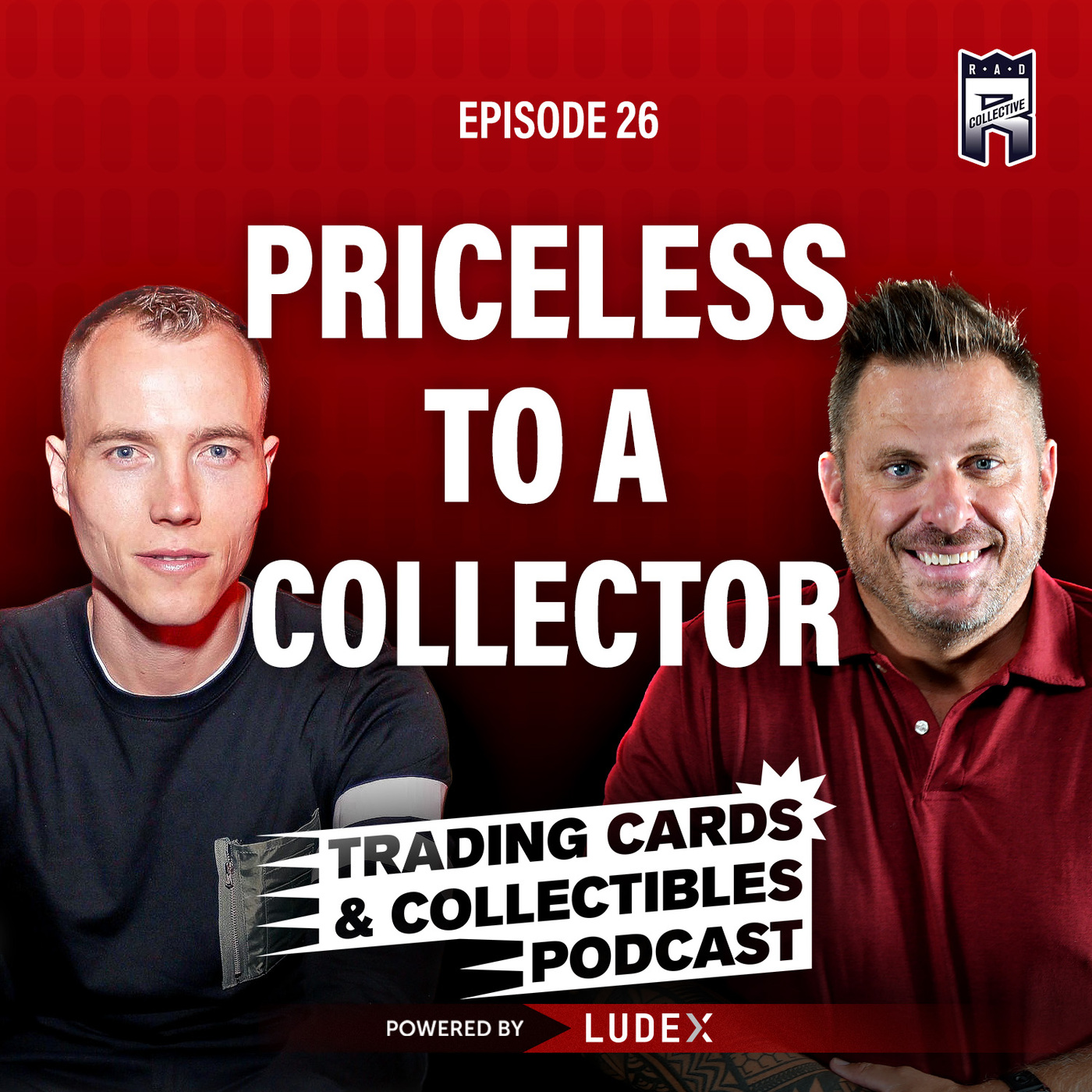
In this episode of the "Trading Cards and Collectibles" podcast on the Radcast Network, host Ryan Alford interviews DJ Skee about the evolving world of collectibles. DJ Skee shares his journey from music to memorabilia, discusses the importance of authenticity, and explains how collectibles capture cultural moments and personal memories. They explore the intersection of sports, music, and art, highlight the mission of DJ Skee’s company The Realest, and emphasize making the hobby accessible to all collectors. The episode offers insights into trends, nostalgia, and the future of the collectibles industry.
TAKEAWAYS
- Overview of the collectibles industry, focusing on trading cards and memorabilia.
- DJ Skee's background and entry into the collectibles market.
- Discussion on the value and potential of memorabilia compared to trading cards.
- The intersection of culture, music, and sports in collectibles.
- The importance of authenticity in memorabilia and the challenges of fraud.
- The role of storytelling and cultural significance in collectible design.
- The impact of projects like Topps’ Project 70 on the collectibles market.
- Emotional connections and nostalgia associated with collectibles.
- Strategies for making collectibles accessible to a broader audience.
- Future developments and upcoming projects in the collectibles space.
The music in the street vinyl is kind of like the baseball cards for artists, like 50% of people buying vinyl never even open it, and they don't even own a record player. So it's being treated like a collectible, and of course we all want the one-of-one. Who wouldn't, and go sell it if it's going to change your life? Absolutely, but... She'd also be doing this for fun! Welcome to Trading Cards and Collectibles Podcast on the Radcast Network. From Jason Grails, to Colin Bluffs, I'm going inside the hobby. Are you ready to collect? Let's get at it. Here is your host, Ryan Alford. Hello, and welcome to Trading Cards and Collectibles here on the Radcast Network, where your number three sports show in the universe today. Actually, DJ Ski. Yeah, number three on the sports charts for Apple Podcasts. We appreciate everybody for listening, watching all that good stuff. We love you. We appreciate you. Hey, you know why I'm number one? Because we've got the best guests. You know, we're going... I can go so many different directions. You know, I have a host of few different shows. I'm talking to Ski about a lot of things, but... He needs no introduction. What's up, DJ Ski? Wasn't Ryan, are you, man? It's grateful to be here, man. I don't know if I'm going to help the show anymore, but... Oh, I'm going to be a month's rate company, so... Yeah, man. I just want some hardware. You know, I've talked a pre-up so with DJ Ski. You've got some hardware just can't buy there behind them. You've done a few things in the music industry amongst others. Tell him, all right, I'm just going to... You know, we're going to do this just because... Not everybody knows anything, but... For our audience, anyone that hasn't heard of DJ Ski, why the hell are you so damn famous? I don't know if I'm damn famous. I mean, I've just been fortunate to be in the right place at the right time and around the right people. Yeah, I call that talent. If you look at it, right? I'm always just like doing cool things. Big fan of music, right? Like, music and sports were always my foundation. I thought it was going to be a pro athlete. Made my way in the music industry. And it was fortunate to be around some of the greats of our time. And got known as being first to introduce or play... Everybody, Kendrick, Post Malone, Lady Gaga, Bieber, Travis Scott, first TV, all these guys that have been around them early on. And help play a small part when other people weren't paying attention to them to shine a little light on them, and I was watching the platform that I had from, you know, clubs, radio, mix tapes, TV, whatever it was at the time. And, you know, from that, you know, been able to expand. And, you know, it was always entrepreneurial, launch businesses, and really, you know, fortunate to take me back to my first business, which was, you know, the collectible industry. When I was seven, I was selling trading cards out of my garage. And now, you know, trying to build a category to find business in the memorabilia side, you know, leveraging the best authentication in the world and working with the biggest partners. And it's really fortunate to have a lot of success early on. Yeah. You know, talent is like real, knows, real talent sees in those talent. I think that you're a curator of what should be more noticed. And like, it's sort of like, that's what I've sort of like, I always like go deep like on guests, like getting underneath, like, what is this person good at? Why are they like a someone's best at yourself? Like, some of the connections you've had. And you know how to identify value. And value is a loaded word. But you do know how to, you know how to, you're a tastemaker. Like, you've probably been called that before. But I think that's what it is, man. And now you're doing it with the realist, what you're doing there. But how did you get that skill? Like, is that nature a nurture? I think it's honestly nature, right? It's just something that's always come natural to me. I was always just fascinated by seeing what's next. And it's interesting, right? Like, I'm not responsible for all those artists that I mentioned. They're all have this incredible talent that comes from that. You know, I've always been able to see things, you know, I think my, my skill of anything is identifying things and seeing where the, the puck is going, right? Before others do a little bit early, whether it's an all the artists that I've mentioned, whether it's, you know, early on doing a lot of work with beats by Drave, a lot of brands, even doing some of the first YouTube content, music space, and really diving into collectibles before it became, as popular in mainstream as it was, it was obviously big, right? But we saw what was happening. I launched, you know, a lot of my activities got in early in the card space, right before the pandemic. And then obviously when that stuff happened, was able to double down. And now we're doing kind of the same for memorabilia. And then the sector, well, it would be focuses on cards. We think that there's a lot going on over here that, you know, hasn't really been like, you know, optimized yet. Yeah, that's why we're here, baby, because this is trading cards and collectibles. We are giving the audience where they, we're, we're taste making ourselves. Exactly. Curating. You know, like looking at where it's going. Like we see cards and I was like, look, look at RPA cards and these things, right? And like the jersey itself should be worth more than a cut-up piece of it. Like it's just like, you look at very obvious things. If you were to ask somebody on the street when it comes to, I think if you're just like, my, my witness test for anything, right? Is like, ask somebody that has no idea and just get what an obvious opinion is. And if you were to tell somebody like, say a player whose RPA card is sold for four million and their jersey, their debuters, you're something sold for four hundred thousand. If you were to ask somebody on the street, like, hey, what's more valuable? Artificially scarce item with a piece cut-up put into it. Or the actual one that was worn, actually scarce that doesn't have to have a number on it. They're both valuable, right? Not saying that has to be one of the other, but I just think that like the value preposition is going to change over time. It's just, if you were to ask anybody, it just feels obvious in that sector. And I love cards. It's why I'm here in that. But you know, we've made, you know, on the business I've realized kind of a focus on the, on another category that's just been kind of ignored. I love the fact because it was so apparent to me. Like my kids got me back into all of this with my four boys. I mean, I was a collector growing up like yourself. Yep. It was on the shelves. You know, like I say, like every other, I guess, red-blooded American boy, they went, cards and collectables went on the shelf and cars, college and co-eds. Yeah. Great way to print it, right? The new topic. But then, you know, a lot of guys my age, like coming back into it because either kids are nostalgia or whatever it might be. But here's what I love about what you're doing and what I think is so smart. And what I see myself is this intersection of culture, music, sports and now collectables. These are universes all revolving. I don't know what, which one's the sun? But they're all in this space and it's coming together and that's why I love what you're doing with the realist. I appreciate it. I mean, like, yeah, that's my life, right? Like I thought it was gonna be an athlete got into music and collectables were, you know, I was collecting things in both realms of that. And that's where, you know, so fortunate, like I kind of really made my name and the collectible like the design seen by my work with tops, putting out kind of, you know, when they approached me to do project 70, I was like, hell yeah, like other baseball cards. Like who wouldn't that was our dream? And then I had to really think like, all right, what am I gonna do design-wise? I didn't want to just like, I needed to do something that had a story and that made sense and that tied into culture. Like, you know, my start music was mix tapes. And it mixed tapes. We'd throw together covers of like pop culture and like put our name on it and Photoshop them. And I was like, let's treat the players like artists and combine music and sports. It makes sense to me. And I thought there were just some iconic album covers and, you know, that's what I did. And leaned in on storytelling, putting a hundred little details into every card. Like, yes, you can obviously see it's curvy pocket prints. But did you know that there's this behind the monkey motorcycle that represents this and this represents game seven and this represents his catch. And like all these different layers, so if you dig deeper, there's many more stories, but it's still like beautiful aesthetically. And it's led to us even creating products like, you know, behind me, I'm hanging our, you know, collectible vinyl that we launched with the MLBPA and we launched in Japan with Otoni and by the players, you know, the day that he had the greatest game ever, which is just, you know, Kismet and insane. And, you know, like, yeah, that's what it's about. You know, I always had the reason we launched this is it's literally vinyl records. It doesn't have music. Otoni's not singing on here, but we're treating players like rock stars. And if you look at, you know, in the music industry, vinyl is kind of like the baseball cards for artists, right? Like 50% of people buying vinyl never even open it. And, you know, they don't even own a record player. So it's being treated like a collectible. And for me, it was a chance to get product into the hands of collectors that didn't care about cards necessarily, as well as give people that wanted to see, like, this broader 12 inch by 12 inch kind of, you know, beautifully displayed our high quality print, that, you know, we're limited on cards, like size wise, right? Like, there's the Otoni card. Like, it's a lot bigger space to play with. And it's very easy to display. It's like, yeah, that's just fun to me, right? Like, it's, and it fits what I do. But it connects all these dots that make so much sense with, you know, the scarcity that's kind of happening with, you know, limited edition limited prints. The athletes themselves being so tied to culture and in music and all these other things. Like, I don't know. I think it's perfect. And I do have a white wall that's really empty over here. I'm going. Let's go. You know, like DJ's key. I need it. Listen to me. We'll put it in the background. Are we doing our set right now? I need to dress. I got you. I need to set it. All right. I'm going to hold it. Bella, you get, you get it. Oh, easy. Easy, easy. I'm going to go with the J-Skey about all things. Collectibles, entrepreneurs, the realist. Talk to me about, you know, we're talking a little bit about what's in the realist, but the evolution of that company. Where did all come from? Obviously, some of it's so clear to me, but I love it to hear it in your own words. Yeah. I think like for us, it's like everything that you said authenticity meets engagement. We want to do like really legitimize kind of, you know, and for us, everything starts with identifying what's real. I mean, going back to Operation Bullpen, the FBI just estimates up to 50 to 90% of memorabilia and stuff at the time might be fraudulent. And we've seen it, right? Like I bought from the biggest auction sites and scene items that were not real and like there's not that much accountability when you think of like who's authenticating items at the end of the day to letter of opinion. There's no certification required. Anybody can launch their own business. It's a space wildly riddled with fraud. Especially is, I mean, we saw what happened with, you know, car porn. Like we see these jersey things like it's, there's too much money in there to be taking risks. And I really realized it when I, you know, I launched a fund in the space and we looked at like what we could buy with, not only for the first time I wasn't just buying with my own money. It was with other people's monies if it was a fund. And we realized like the provenance is everything. We have to be 100% certain. We can't spend a million dollars on an item that, yeah, we think it's real. Because if it's not, it's not like it's worth, it's only worth 800 K. It's like, no, it's worth $8. So like, and just seeing how much fraud was out there and seeing kind of like in looking at the landscape, seeing baseball was the only sport and league that took it serious and actually used this like witness based program that's routed in evidence collection. We were like, why is every other property not only sports like a concert is no different than the music show. Like, why are all these of their entertainment properties not leveraging this layer of authentication to protect fans and then also monetize their goods? We saw most of these items being leaked out, $10 million Jordan Jersey, Michael gets no money from it, the bulls get no money, the NBA gets no money. So none of the rights holders that made that valuable, not made a gold, are participating. And we wanted to build a program in the infrastructure to allow us the one protect fans, like I built this for myself, but then secondarily to allow the rightful rights holders to go direct to consumers and give their fans a way to get closer to it with ultimate trust in a way that engages fans in a deeper way and gives them these assets that have the potential to really appreciate overtime and stuff as we think about it. And that was really the foundation of just modernizing an antiquated industry with authentication and then also with a marketplace. We don't charge buyers premium. We don't have, we're not third party, we're not taking those things. We're from the source. Like we document them. We fully transparent in the whole process. And also like we want things at every price point. That's where we're making hard-line goods that are affordable and you know, $49 that everybody can walk away from. Not only are we setting records for selling gold gloves and silver sluggers, you know, $100,000 plus. That's not accessible to anybody. We wanted something that everybody could afford because that's not going to be your first purchase. And last thing I'll say is like it's really about onboarding a new demographic. Like for me, I always go back to growing up. It was the 89 Griffey card. It was the most valuable one, right? 120 bucks. I think it wasn't back it. Like couldn't afford that. And we're buying packs. And you know, I got hooked because I was still able to buy cards and you know, for 10 cents and for 50 cents for a couple bucks. And we're at the pack for that. Like a lot of things now are just getting to unaffordable. And we're going to, you know, alien in a whole audience because they just can't participate. And that's why especially in like the memorabilia and the auction site land. Like for us, we want to have things across every price point because some of these first purchases not going to be, you know, $100,000 item. It's going to be something far less than that. But we have to hook them early. And there should be things for everybody. It can't be just go exclusive. And it's about, you know, that's what this shows about. Like don't get wrong. I'm in the business. I mean, I'm turning my home town, like literally easily South Carolina bought a building here. I moved out of downtown Gravel in the fast-screwed cities in America, small city. But it's a little suburb, easily South Carolina turning into a hobby studio. And it's about collecting. You know, it's about sitting in a stagio. You know, like it's great. There's no problem with these kids that go to shows and they flip something, make some money. I love it. I'm teaching my boys how to do that. But I also want them and really put an emphasis on the value of collecting something. And it meaning something, you know, like, and what that meaning gives to you and this remembrance of that. And like stamping that in time, I really love that that's what you guys are doing. And I feel that with what I've seen. No, I appreciate that. And like Ryan, you talk about it all the time on this show, right? Like I've heard you talk about like, yeah, of course, there's like a business behind it. Like we're here from those things and it's great. But that's not the foundation of this. And I think actually that's where we're in a big risk. Like everything is right now about, especially in the card side. But I mean, you could say about everything, right? Like people at the market. Like people are gambling on everything. It's about flips and what you can do to make money. And I saw what that did to the sneaker scene, the street we're seeing, right? And like, those things don't last. People will move on to what's next, whether it's the Labubus, whether it's, you know, play stations, whether it's sneakers, whether in cards happen to be hot at the moment, especially with, you know, some of the innovations and breaking is great and awesome. But what turns me off is like, when I'm a kid, like, of course, going back to my story. Of course, I wanted to came Griffey Jr. card. I'd buy a pack and try to get that and with love to get that. But you know what? I was happy when I got any Minnesota twins card. Because I love them. Or when I got other players that I like, nowadays it's like, even if you get your, unless you get the hit, like kids are just throwing things away in the trash. And it's not, it's all about just what is the hit? What is the money? What is the money? What is the money? What is the money? What is the money? What is the money? What is the money? What is the money? What is the money? What is the money? Which sounds a lot like gambling to me. And I think that that is not a stable outcome long term. And what has me really scared, especially in the card sector of this, this world. Because it should be cool. Like, regardless. Like, yes, of course, we all want the one-of-one hit. Like, who wouldn't, and go sell it if it's going to change your life? Like, absolutely. But she also, we know this for fun. Because you love it. It's a way you engage the sports. And like, you know, for me as a Minnesota sportsman, right? Like, I want those, you know, twins' players and things. Like, that's why, you know, that's more meaningful to me than one outside of the cash. Yeah. I mean, mine is, and I'm doing it, and that's why I, you know, Twisted your elbow a little bit, is part of my reason for doing this show, is I want people to send me stuff that I want to collect forever, and put on my walls. Like, Matt Caesar, one of World Series four, the Cubbies, and now as an artist, did this one-of-one Michael Jordan for me in my radical colors, my brand colors, and that will never be for sale. Like, and I had, and I did this with the boys. Like, I went to Clemson. We're from South Carolina. So we're Clemson guys, through and through. Bleed Orange, not a good reason for us, by the way. But we collect Trevor Lawrence and all the guys. And like, so with the boys, we make a, you know, it doesn't matter, it's a $2 card. You know, like, we're, if we get a Trevor Lawrence, it means something to us. And I just, I always want to be an advocate for, it's the two sides, investment in business, and then collecting because, I'll tell you what, that pops Project 70, to this day, if I see one of those, I buy it. Like, it doesn't matter. The value, it's his fun. And I told Brian Lundin, and I were told about this last week, on the show, I was like, there's so much room, and I was like, so disappointed, it is like the few artistic showings that we've had. I hope, top, top swear higher you, to do some killer, like, replacements of kaboom and downtowns and all this stuff in the cards, because what you did with Topps Project 70, and other things, we need more of that. Because, you know, I don't need to see the guy, you know, fielding a ball for the hundreds of times. Like, it's cool and all. I want to see the artistic interpretation of this, and it doesn't have to be one-on-one, necessarily. It's just different and collectible. Yeah, I think you nailed it, right? And I think, like, we're fortunate art cards are having a moment right now. And I think when we look back on this era, one of the catalysts of cards exploring is going to be Project 2020, which is before what I did. Project 70 and those things afterwards. And, you know, it just on boarded a whole new demographic because people, you know, artists participating in it were some incredibly talented artists there, and they were able to bring in their communities that weren't card buyers, while also, you know, taking card buyers and showcasing them these different styles and also creating real value from it. Like, obviously, there was a bubble in those things in that burst, but I think, like, it actually probably some good buys long-term because I think the nostalgia of that era, especially with us all being home in the pandemic and looking at the site every day to see what was there. Like, there was this moment in time that you can't recreate. Even for me, going out and doing that, like, it was one of the most fun projects I've ever done that's led me to, like, actually, like, here's the Otani card that I did as Project Project 70, which was based on his walk-out sign that the song at the time was Jiu Jitsu Kaisen, which is the anime show. And he loved it so much. Like, I really leaned in and saw it tell, like, the show he posted it up. I dropped it off. I went there to do an interview with Mike Trout and left the Cloud House attendant. Some of the Otani ones, next day, I ended up on his Instagram story. And, like, seeing players, like, really react because we dig into some of that. It's unique. And, like, they see the cards, and the basic cards all the time. And they get asked to autograph this whole time. But that has thought and creativity and culture, like, built into it. That's different. Different is a winner. 100% right? And that's where, like, it's just fun for me, right? Like, and that's what's important. And that's how we onboarding generations. It is doing those cross-cultural collaborations where all sides can benefit. And that was a great example in the tops of the team there. It was behind it. It did such an incredible job of that because you were able to take this artist world and this. And, like, when you hit on these collaborations, there's too many collabs in the world right now. But when they hit and they're right, like, it just serves as an accelerant. And I think we're going to point back to that as being a crucial market, or a crucial time in the hobby, that probably would be a lot of nostalgia, 10, 15, 20 years from now for those. So, you know, not investment advice, but I actually think, like, anything from early Project 2020 to, you know, even through some of the Project 70 stuff, those are going to go down as a lot of kids that's going to be the first moment that they have with cards. The same way I'm talking about my Griffey card, you know? That's why I buy every, I buy it because I like them because it's different. But I also think there's a, it's incredible. Maybe there's a sneaky play along, in terms of strategy. Who knows? But it's cool regardless. Because it doesn't pan out. It's just cool and different. It's like the first thing, like when I have cards like that, when I'm showing like a non-collector, somebody's like, whoa, what's that? I mean, it is. Like what stands out. And that's what true art should do. And that's what DJ Skie does talking with my man. He is the curator of culture. So, what are you excited about today as we sit here? You're doing a lot of like, cool shit. But like, what's, what's like really got you popping off? So much. I mean, like, it's been an incredible year for us. I mean, working like, or we've been fortunate to do it at the highest level. I mean, at the Super Bowl this year, we had three clients, Philadelphia Eagles, Kendrick Lamar, and Serena Williams, who we often indicated and took all of their memorabilia from, which is insane. Right. It's like, yeah, like it's instant. And we're like working hard. That phone in the floor, or did you just say, like, you're doing the biggest, like, yeah. Okay. All the more. They're there. They all happen to be doing Super Bowl, like, the same year. It's just insane, right? Like, we, I'm just so passionate and excited about what we're doing at the realest and like, you know, bringing these, yes, it's authentic products. Yes. Protecting fans for the first time, giving IP and rights holders a new way to engage with their fans, while making these items available legitimately, not through just like the back door, where they've historically been. It's also like how we create new things, and on board a new generation, and storytelling a deeper way. I always say, like, we're just storytellers through, like our medium is, you know, your medium is, is the podcast. Our medium is physical IP, right? We have a bottle of confetti from the Super Bowl that represents, you know, the one of the biggest, you know, moments if you're filled, I'll be equals fan in your, your life. And to anybody else, you don't really care. But to, to them, it's wildly valuable. And we're able to preserve these moments. And I think in an era of, AI of deep fakes of fraud being everywhere, and what's real and what's not, us being able to dictate that, and legitimately provide fans that is wildly valuable. So to be able to do that, and come with cool collaborations and projects, and, you know, go to Japan, and open up pop-ups with MLPPA, and launch products with like, Shell Hayotani in the World Series, that he has the greatest, you know, game in the, you know, CS before, and goes down to one of the greatest series ever, is just, you know, dream come true. Like, still, still got to pinch myself. Still tired. Yeah. The World Series, freaking awesome. I mean, I got to be honest, like baseball is like, number of like, four for me, for sports. Like, but I'm a sports junkie in general. But that World Series, and really a lot of the playoffs, like, like, Virginia made me, for the sport, and like, I have a so cool, like, the other night, my four, we know, we rarely get, where we can like, sit and like watch, all one game together. Like, sports happening. Lots of stuff. All four of my boys made, my wife was already, like, you know, two hours of sleep. We're just sitting there watching that last game of the World Series. It was a school of shit. And it was just like, I don't know, the moment, and how much tense, how tense it was, but the excitement, like, it was just an awesome game. I mean, the thing that people complain about baseball or what make it, most exciting sport in moments like that, right? Like, the dramatic causes, like, like the strategy, like the randomness, you know, you know, the last play LaBron is going to get the ball, right? You know, Tom Brady is going to be able to throw the touchdown. You know what's happening? In baseball, might be Miguel Rojas, the number nine hitter who wasn't even playing in the series, hitting a home run to when everybody thought it was over, right? Like, and then make a move into play. I mean, God. Okay, thank everybody for building LA again. It's a crime. It's insane, right? So you never know what's going to happen. And it's just, you know, I mean, I think, but I think like, it was the best thing that happened for baseball is this. And hopefully they can carry on. And hopefully, you know, there's not a work stoppage, you know, next, next, yeah. In 20s, yeah. And like, I think that, that we catastrophic the same time, or really took a lot of momentum out of baseball when I was a kid, right? Yeah, because they've got that going now. I think they really do. They did pick that out. But I love about what you're doing, though, with the realist, you know, we can't all go in these things. Like, either unattainable, monetarily, logistics, whatever it might be. But, you know, physically, but like, putting them in the bottle, like, stopping time in a way and making these collectibles, and then knowing the authenticity is there, and the trust is there. That's what collecting is about, though. It's kind of like, look, attention is fleeting. Moments are fleeting. We're pulled in so many of our ways, but having these things that bring back nostalgia, bring back reminders, and being a moment that is sort of captured in time is really cool. You know that. I mean, like, look, I'll show you what's behind me. I have a 91 twins world series, trophy paired with a picture of me and my mom at the, you know, during the 91 world series, and all of them are passed away. But like, for me, yes, as a Minnesota sports fan, the last men's championship we won. There's the opus on field. That's the smallest part. For me, that tugs on my memories as a kid. My memories with my mother, my memories with my father, right? Like, everything else. And that's what this trophy, when I see represents that moment in time. And yes, like, to me, it's priceless, right? Like, value in it. It's a gold trophy, but it's being there. And that's what I try to be. That's what I hope this represents. Like, it's confetti. It's a novelty product. Let's keep it real, right? Like, it's confetti. We put a lot of effort into collecting it, which is why, you know, it's still like a $60 product because we literally are on the field at the Super Bowl collecting it. We literally seal it up, protective tape, with trackers on it. It can't be opened up unless one of our representatives is a new factory. We want to make sure that, even the factory, they're not trying to get cute and add in more confetti or take any of those things. Like, we want people to know what they're getting is real, right? And from the source, because it represents so much more. Again, to a lot of people, like, yes, on paper, Philadelphia Eagles won the Super Bowl on February 9th in New Orleans. There's going to be some kid that is, this is going to be sitting on his desk, 20 years from now, because he represents what he remembers watching it with his family. And that's far more important than the outcome of the game. This is just what encapsulates that. And that's what I'm trying to bring. It's like the same nostalgia that some of these items bring to it to me in memories. We want to preserve for others. And it just hasn't been, it just hasn't been available. And it hasn't been in a trusted source. Like, that's what we're here for. And that's why I say we really storytelling through these. And it's more than just the value of items. And if you're listening, that is what should be a holiday gift and not some socks or something. Yeah. Exactly. This is gifted. Yeah. Yeah. How was it? It was fun. And I got that in that gift. Like, I'd be like, someone's paying attention. Like, and it's great. Is that the fact? Is that whether you are a billionaire or somebody that's impossible to buy a gift for, that you would wear a bearish? It's literally the best, right? And like, people will put it on. And like, by the way, it's worthless to us that aren't Eagles fans, right? Like to anybody else, it's not. But if you are, it is more valuable than anything else. And that's what I love. Like, these items, worthless to 99% of the population, almost everything that we sell. But to that 1% that is a fan of that team or loves that sport or loves that artist, it's priceless. And it's really fun to be able to, you know, storytelling through products like that and bring that joy to fans. I mean, look, I don't know what to tell you about. I go with my fandom here. I could care less about the Eagles. But you know why I'd want that? Because I get Will Shipley or Jeremiah Trotter, both Clemson guys. There you go. To autograph it. Man, we gotta do it. My Clemson memorabilia as priceless. And so, like, yeah, yeah. I love the angles. Yeah, you know that. Yeah, we'll get you one out too, Ryan. He's a... The target with DJ Skie, he is the curator of cash. No, Ryan. Tell me a story, man. As we close out a little bit here, I want a good story. DJ Skie, you've seen him. You've heard him name dropping. You know, he doesn't have to name a drop. It's through all names. But whether it's old school DJ in or, you know, like, you've done such amazing things. I'll be honest. DJ, I... I just know, like, how deep you've been into, like, culture and these names. I'm like, how did this guy come out on the other side of it? So put together running a company and, like, I like... And because, let's be honest, right? It's... That's a rollercoaster of... A million things that you... Rhodes, you probably could've gone down. I don't know. Making the music industry you can make it anywhere. Which is why the sports seems relatively tame now, right? I guess, right. But let's take a story. What's something that would everybody would be, like, holy cow? Like... There's so many orientals. It's tough where to start. But, I mean, just the... You know, having the fortune to be around the greats and seeing what made them great. You know, I was fortunate to be around, you know, everybody from... Prince, right? And Tor with him. He wanted me to write a book on his... his tour, which is just insane. If you found out I was from Minnesota after I wrote a billboard, article on him. When I went on tour with him every night, I was picking up guitar picks and... and set lists. And I was like, somebody should do music memorabilia, right? Like... Oh, yeah. So that was kind of a lot of those things, like, put the... me on that path with it. I mean, being able to... I still vividly remember the first time I met Kendrick. Top dog brought him to the studio. I just recorded 300 bars with Game, which was kind of my breakout song that I produced. And Kendrick was maybe 16 at the time. And he freestyle for about 18 minutes. And somebody has it on footage, too. There was somebody recording on camera, so I don't know where that footage is. I hope it comes out one day. I'm like, ah, you can freestyle. I'm like, have you ever learned how to make like a song and consolidate into record? It'd be pretty good. And like, watching his growth and journey in the hard work, and seeing him like be signed, and like, didn't happen overnight to, you know, one of the greatest moments was, you know, we were at the Super Bowl walk-through, but they do address for herself the Thursday night before the game. I don't walk through for artists every year. He got off. And first person he talks to and says those things. And I haven't seen him in a couple of years. And we just have this conversation. And he's asking about me. It's not even about him, but seeing how humble he stayed. But like, I remember, and I booked his first show, too, his first ever show, which I didn't realize he told me in an interview we were doing later on. And being, I was like, ah, it's a little better attended, you know, you come a long way from your first show. It was called the NBA. It's about thing that we did. Just joking and sharing that memory. Literally watching. I mean, I think it gets no better in a career. Like, you're not obviously not. But like, almost like a proud. I don't want to say father. It's not the right word for that in any context. But like, watching some literally a kid that you took, not that, you know, it's a couple years older than him. Not much older, but at the time, like, you know, the difference between 60 to 19 is drastic. And booking his first show and watching him literally be, like, people not giving him the time of day to being on the biggest stage and having the biggest performance of all time. And having a front row view to both. And watching can be the same person was. It's just, it's just incredible to see, right? And like, those moments are. I mean, it's still a dream. Like, it's obvious now. But like, nobody knew who's there to watch that whole journey. And a lot of things along the way too is just wild. So it's, you never know what's going to happen and what life's going to take you. But you name two very different artists. But Prince is on my list of most talented. Like, I mean, he really like number one for me. Like, a lot of people. I think he's probably maybe become more known. But like, yeah, he could sing. Yeah, you have probably not, but playing the guitar, playing instruments like the musical genius and ability and talent that was coming through that man is never bit like, I don't think it's been duplicated ever. I don't think it ever will be. I mean, when people ask me the most talented artist or musician, I mean, there's not even a, like, usually favorite album that I have to think about, favorite artist. No question in the world. I'll fight anybody over that. Like, seeing him every night, like, touring becomes very boring with most artists because it's the same show, the same set night after night, right? Like, you know, it's coming in sequence. Prince every night in the tour that we did was two shows a night, house of blues, of smaller style venues, a couple thousand people. Like, he intentionally did the small shows. Amazing. Every show, he would come out different. izon him next night. He's get rock prints. The next night he's arena B prints, the next night, felt a different setless, had no idea. You couldn't turn away. A second show you're like Eric Stephens. You know, it's happening by the third show you're already doing, right? Like, Prince every night was absorbing it. He's doing him own sound and of I know, you're like, what are you doing? I mean, like, look, we always see this. Like, the great ones are always crazy, right? Yeah, Michael Jackson, again, who I'd put, it's in a different category in a way, but it's music, but another level of understanding, like, beats and tying things together that, like, I can sort of myself creative, but like, but that is just, like, such genius, like, the way they can tie these together, but Prince was just, I mean, it's also, what sad, it does seem to almost break them, you know, like, because of their genius, right? And so it's a shame what happened to him, right? Like, and he was a guy who was so shocking to the way they passed, right? Because he didn't want anybody drinking around him, like, I didn't believe it, and it just shows like the power of, you know, like, you know, what can happen? You had serratipad surgery and got addicted to pain pills, right? Like, it's, it's, how it ended, which is just, it shows it can happen to anybody, because he's so against drugs and drinking and those things, and he just needed it to survive, and fortunately became, you know, addicted to those things, and it led to the downfall, but without question, the most, most talented, you know, musical artist. And I mean, God, there won't be nobody that's, he just hears just that you've had, dude. Like, I mean, I'm living a dream, I don't even know. I'm in a dream. I've done it, like, I'm very fortunate. Like, every day, you know, I've, I've lived, you know, 10 lives that, you know, I'd be honest with those things, every day is a blessing to still. What's the biggest attribute? Like, I'm getting almost into my business show talk, but I have to, because I'm just curious, but you gotta be curious. Yeah, I know you're, I bet you're, you're insanely curious, curious creature on some level. Most successful people are, but like, what's the, what's the one attribute? Two attributes, like, what is it? It's gotten, put you in those rooms. I think it's like, you know, always providing value to others, not looking for others to provide you value, right? Like, there's, there's always some value that you can provide. That's my start. I tell people that we're one more time. I wonder if I, I'm not, this isn't a motivational show. This is a trading card show. We talked about it, but I want people to hear this. You know, I mean, like, provide, like, you get hit up all the time. Hey, Ryan, help me out. Do this. Like, you, you don't have enough hours in the day. Like, I'm sure you would love to. It's just not realistic. And I think like, for me, like, look, I got my break when I was 16. I wrote a letter. I was flipping PlayStation 2s. I was, you know, that's how I made my money. Like, flipping stuff and that's how I was working as a kid. I got connected to Steve Refkin, CEO of Loud Records. He needed one for son for Christmas, hooked him up, and then just stayed close. And then I said, I'm an idea on what I thought he was doing wrong with his label when the internet was disrupting it. And I would, I thought I'd get a Wu-Tang Clan shirt and be the happiest kid in the world. And he offered me a job and moved to LA when I was 17. So that was the foundation for me of everything. If it wasn't for me providing that value, I would have never been able to have that conversation and ideas for him and he listened from it was there. So I think like providing value at some context. And again, my value was he, it was right before Christmas. And you know, for your kids, you will do anything and couldn't find a PlayStation. I was able to hook him up with that. So like small value and retrospect, something that many others could provide. I just happened to be at the right place at the right time. And then I think, you know, just following your passions and trying to find your lane. For me, it's always, I'm not really interested by what's done. And that's where I think I'm really, well, obviously, super deep in cards. I've really gravitated towards memorabilia because it feels kind of like just obvious going back to my point in the show. And I think that this is a category that has a much bigger, even an audience profile. It's not limited to just card collectors. I think everybody's a collector of something, whether it's music, film, we see the gladiator stuff behind us, sports, obviously. And I just think it's just an untapped realm. And it brings so much joy to people. I've seen the joy that it brings to myself in my life. And I wanted to be there to provide that and have fun. So yeah, that's my, that's my field. DJ Ski, he is a true one of one. I appreciate your brother. Man, Ryan, thank you for having me, man. Congrats on the success as always. It's always our awesome to see good people doing good things. And here anything that you need, yeah, your stuff over, we'll get you some of that, the vinyl. I would love it, man. And let's stay connected and have you on the show periodically. And I just love your energy, man. You vice versa. Well, I'm here. Thank you guys. Thanks everybody watching out there for the support and love. Like we're here because of you guys. And yeah, we're here. We're here by bus some of this stuff. Learn about what it is. Give me some, let's hit some handles, websites, all that stuff. And everything that we sell is up on the realist.com. You'll see all of our big partners across the NFL NBA, MLS, music, et cetera. You can find more on me at DJSki.com and at DJSki on socials. And lots more to come. We're just getting warmed up. So we've got some crazy stuff coming in. Thank you, brother. Appreciate you. Glad you never find us collectibles.show. We'll have how light clips, the full episode, links to YouTube, links to the realist.com, all the stuff. You know, go just read some of this stuff. He talked about some of those stories. But just go down the rabbit hole. He's worth it because you see how quality he is. You see what they're doing with the realist. And I can't wait to see some of that on the wall over here. I appreciate you too, next show, next show. Let's go. No, yeah, bro. We appreciate it. Hey, we appreciate everybody out there. We'll see you next time on TCC. Collectibles.show is where you'll find all of the channels and learn more about what we're doing. And ultimately, hey, we want to hear from you. You do case hits at collectibles.show. What's you to send in your favorite pulls of the week? And here's the difference. This isn't about just value. Hey, we want to see some $10,000 hits. Had a couple of those myself a few months back. But it's not just about the values about what you're collecting. What means something to you? Share a story, share a video of you holding up the card that you hit last week. That was your favorite player and you nailed it. So case hits at collectibles.show, send in those videos. I want to know the stories. We're going to bring them to life here on the show. We're going to do a segment each week. Once we get rolling and get some videos in, where we share that on the show with us. We want to feature you on collectibles.show. Thanks for tuning into the show. Don't forget to follow us on your favorite podcast platform. And don't miss the full video version on YouTube. You can find us at www.collectibles.show or follow Ryan on Instagram at RyanAlford. Now get out there and collect yours.